And Then There are the Ones You’ve Lost–Times When We Were Happy
Posted by c2london in Short Stories, Writing on March 3, 2014
Possibly a danger of publishing on the Internet is that things get lost, disappear. Sometimes that is just fine, for instance when something you’re slightly embarrassed by gets published or is published on a site you decide isn’t up to your standards. The advantage of print publications is that normally the editors send you a copy, which you can keep. Some of those old journals might be read someday but there is no easy link to you, the author. But what do you do when you can’t find a published story? I have at least two of those out there in the nether world. One of them was published in The Smoking Poet, which I believe is still publishing, but I can’t find it in the archives. The other, Times When We Were Happy, was in Perigee, Issue 17. This Internet journal ceased publication with Issue 28. With a fair amount of digging, I found it in the deep web. Although I linked it to the title, I also copied and pasted it below, just in case it gets lost again.
 |
|
| Issue 17 : August, September, October 2007 Fiction. |
JUMP TO AUTHOR BIO |
| JUMP TO TOP | CLOSE WINDOW | MINIMIZE WINDOW | MAXIMIZE WINDOWISSN #1551-3130 COPYRIGHT 2007: ALL RIGHTS RESERVED THIS WORK MAY NOT BE COPIED OR DISTRIBUTED WITHOUT THE WRITTEN CONSENT OF ITS AUTHOR |
|

The Serendipity of Selecting Books, or How Do You Pick a Book to Read?
In the February 22 “By the Book” section of the New York Times Book Review Alice Hoffman gave this answer to the question: What book are you most eagerly anticipating this year? A novel I know nothing about that I happen to stumble upon, as I did once upon a time searching through my mother’s bookcase. That’s still the best reading experience: falling in love with a book I meet by accident.
I used to go along the library shelf and pick books by title, color, something else about the spine that caught my eye This method introduced me to authors I never would have found otherwise. I would read a piece of the flap or the first sentence or two to see if I potentially would like the book, but for the most part, those books were a surprise. I’ve never been one of those people who has to finish a book I start, so I wasn’t in danger of investing time in something I didn’t like.
For a few years, I worked in the children’s department of our public library. As the head librarian valued my knowledge of YA books and respected my ideas, it was a great job. Until she resigned. The new head of the department was a nightmare and I soon left, too. I avoided the library and started buying books. Suddenly I was pickier. Now I would be wasting money if I didn’t finish a book.
Although I may have still done some shelf-selecting, I tended to read authors I knew I liked or tried books from reviews. The reviews proved less than satisfactory; I might have been okay with these selections if I was getting them from the library, but when I shelled out dollars and used space on my dwindling bookshelves, I became more critical and often never finished a volume.
For a number of years, I belonged to a book club which provided me with books and titles I never would have read without the suggestion of the group. Not all of these were great (The Celestine Prophecy) and some of them weren’t worth reading (Bridges of Madison County.) Overall, though, I was introduced to new titles and authors, until the group disbanded when more people wanted to discuss work and vacations than the content of the books.
During this past summer, I attended a writing retreat on Long Island. One of the instructors read a piece from a Colum McCann novel. It was beautiful. I wanted to read that book, not one of his recent ones, but I didn’t remember the title. Old Firehouse Books, my local independent bookstore, carried only TransAtlantic and Let the Great World Spin. Although my nemesis had finally been let go, and the library was a safe place again, I was out of the habit of going there.
One day in the fall we were at The Tattered Cover  on Broadway in Denver. Truth be told, I prefer the LoDo location, but that day it was easier to access the main branch. I scanned the new titles but nothing looked like a sure thing, something I wanted to sink a large chunk of an afternoon’s salary into. As we were leaving, I remembered my desire to read Colum McCann. Like many bookstores, The Tattered Cover has added used books to its shelves, making its name more accurate. I found McCann on the shelf and pulled a book off, paid for it, and later that night started reading. It was lyrical, but it wasn’t what I expected. Many pages in, I turned back to the cover. Somehow I’d pulled The Mother of All Sorrows off the shelf, a book by Richard McCann, not Colum.
  Serendipity and a surprise book. Probably not something I would have picked to read on my own and an author I hadn’d heard of.
I’d made another serendipitous selection related to that trip to New York. Even though I’d brought a book with me to read on the plane, I like to browse airport bookstores. A friend had suggested In the Night Circus as a reading selection for my trip, but even though it was on the shelf, the pull of the unknown made me select another title, The Art of Hearing Heartbeats, a German bestseller. I hadn’t read a book in translation in awhile, the title sounded somewhat intriguing, and the first sentence or two worked, so I bought that instead. I don’t believe I know anyone else who has read this story full of magical realism set in a another culture.
Cognate questions: How do you find books? Have your ever found a book by accident?
Muse in a Drabble
Posted by c2london in Flash Ficion, Writing on February 24, 2014
While looking through my files, I happened across copies of stories in journals I didn’t remember had been accepted! Not a bad problem to face. One of the finds was a drabble that appeared in The Boston Literary Magazine, Summer 2007. And just for the sake of interest, I include the comment the editor made in her acceptance email: We really loved The Muse Effect and want to include it in our summer issue, which we will be pulling together next week. It was masterful, with such a satisfying ending.
Certainly you might not call it “masterful” but I hope you find it amusing.

Avalon cover
He’d never wanted to be anyone’s muse. That much was clear, but there was something about the elixir of his skin that made her want to strum her guitar and experiment with lyrics.
“Why don’t you want to be my muse?” she asked in the hollow of the night, Roxy Music in the background. She swirled her third Ramos Gin Fizz.
“Why should I? Too much responsibility. I don’t want to be attached to anyone. Find someone else.” He hung up.
Didn’t matter. His very existence ignited her soul, inspired rhythm, inspired rhyme.
No way could he shirk that fate.
For Hannah, on Her Birthday
Today is my best friend from high school’s birthday. We weren’t in touch for many years, but we are once again. I believe I sent her a copy of this poem, but since then her house burned down, she moved numerous times, and possibly she forgot about this completely. Now that I’m looking at the published version, in Orphic Lute I remember being a little upset because part of what I considered both a dedication and part of the title was left off. i am going to restore it here.
Hannah Dancing
(for Bob)
He wanted to send her a rose
just one rose
to remind her of the bouquet
from ten years ago.
The feeling was there,
muted,
but there.
He’d love other women,
loved one now,
yet her buzzing,
the way she tossed her shortened locks,
that green myopic tease,
how she said, “Hello, Bob,”
brought a shadow
jolting back.
It wasn’t only that she was the first.
He’d cared more about the second girl,
written Lori a song;
Lori of the burning hair,
Lori of the sixty months,
Lori he’d loved and left.
He told his present love,
“All I felt
for Hannah and Lori–
I feel more than that for you–
but I can’t shake those images,
those silver bangle bracelet
images of her dancing,
raising her arms in the humid moonlight,
her breasts swaying in the night wind,
those images
imbedded in my mind
of Hannah dancing.
Although I can’t find a definitive history, Orphic Lute was published for almost 50 years, possibly until the time of the dominance of the Internet.
New DANGER for Writers!
Posted by c2london in Uncategorized, Writing on February 17, 2014
Recently a friend wrote a blog about plotting vs. pantsing; it appears there is a new “danger” and meaning related to pantsing.

For some time people at my place of employment have been talking about the need to not sit for extended periods of time. I’ve heard hints of this in the popular press, too, and I am a participant in a long-term, nationwide study that asks a question about how many hours a day you SIT. If this anti-sitting research pans out, it appears writers are at risk for ailments not associated with writing in the past. Diabetes. Heart disease. Obesity and probably other ailments as well. Much of the research appears to have come from Australia, with interest shown by many other health care professionals.
Probably most of us think, “Oh, I walk for a half hour a day, or ride my bike for two hours, or exercise on the weekend,” but what this research is saying is that that is not enough and what we need to do is stop sitting for extended periods of time. Exactly what constitutes an “extended” period of time I do not currently know, nor do I know how much time you have to stand up and move around to counteract the effects. Does standing and walking down the stairs to pour coffee provide enough of a break when you’ve been sitting for three hours editing a manuscript? Probably not.
2/20/12 UPDATE: It looks like this could be even more of a concern for older writers. Younger writers turn into older writers on a daily basis, so it most likely is best to establish new habits NOW.
The best advice at the moment might be to set a timer and get up and stretch every hour or so. Dance. If you’re at home, vacuum, run down to the basement to fold the wash, walk to the store. If you can find a place to use your laptop while standing, do that for part of the day. If you’re at writing group, stand up and discuss the writing for at least five minutes of every hour. Just don’t sit in your seat staring at the screen for hours at a time.
This cutting edge research gives new meaning to the word pantser, but unfortunately, it applies to plotters, too!!
Here is the Abstract for one of the original articles from European Endocrinology:
‘Too Much Sitting’ and Metabolic Risk – Has Modern Technology Caught Up with Us?
David W Dunstan,1–5 Genevieve N Healy,1,3 Takemi Sugiyama3 and Neville Owen3
Abstract
Recent epidemiological evidence suggests that prolonged sitting (sedentary behaviour: time spent in behaviours that have very low energy expenditure, such as television viewing and desk-bound work) has deleterious cardiovascular and metabolic correlates, which are present even among adults who meet physical activity and health guidelines. Further advances in communication technology and other labour-saving innovations make it likely that the ubiquitous opportunities for sedentary behaviour that currently exist will become even more prevalent in the future. We present evidence that sedentary behaviour (too much sitting) is an important stand-alone component of the physical activity and health equation, particularly in relation to cardio-metabolic risk, and discuss whether it is now time to consider public health and clinical guidelines on reducing prolonged sitting time that are in addition to those promoting regular participation in physical activity.
On Finding Old Writings: Lost Love Poems
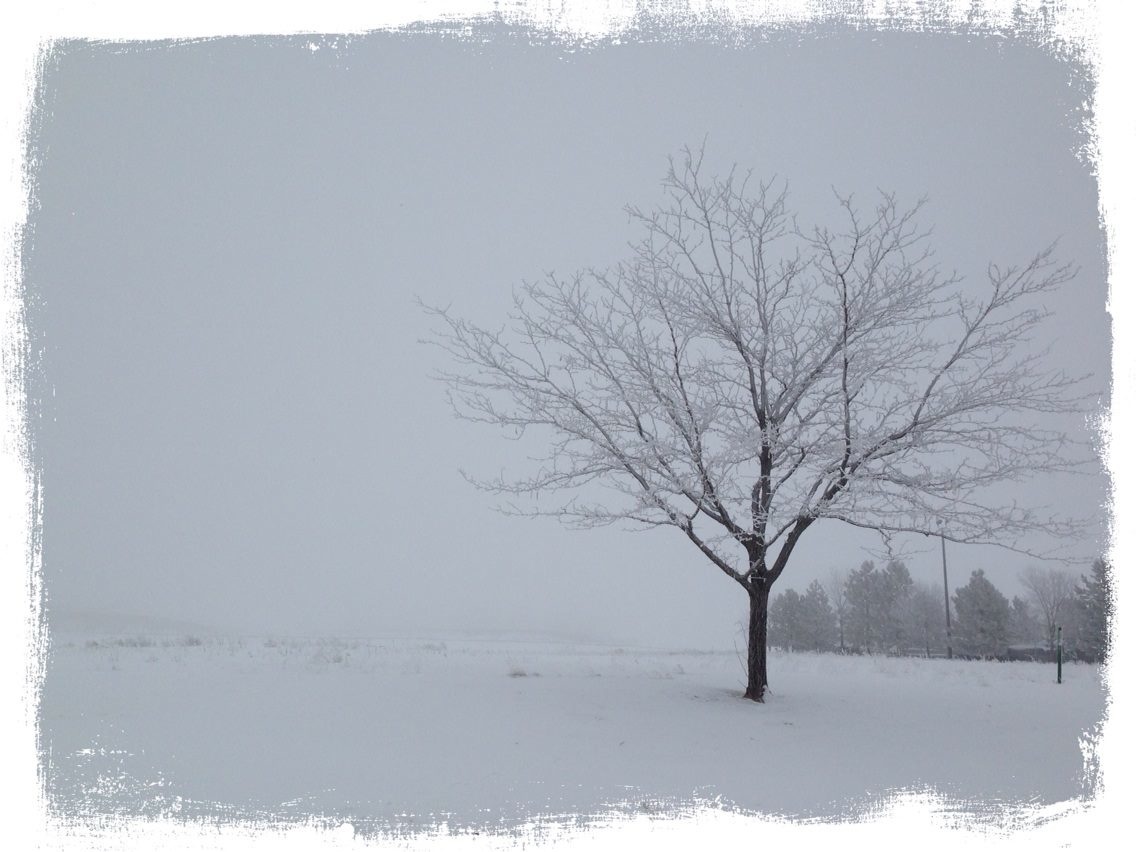 One of my writing friends polled those of us in our writing group about a piece she’d found on her computer. She didn’t think she’d written it, but none of us claimed it, either. Coming across published pieces you’d forgotten about is equally disconcerting. I’d completely forgotten about this particular piece which was published in Poetic Justice.
“Ice-god”
Dream with me…
we will meet
in winnowing moonrays
silent as distant suns.
You place your fingers on my cheek,
small cool touch,
needlepoint of starlight.
Your eyes like cloudless nights,
moonless wind,
like frost
freeze
my soul
into endless dreams
of you
looking away…
I did remember this next one since I often think of it when I’m picking berries. It was published in another little journal, The Yellow Butterfly.
Wild Berries
Stooping among brambles
I envision you holding women
for I know there have been many.
With each searing thorn
I wonder if you pause,
remember me
your first you said
and love you said
and like a bitter berry
curse the men
who’ve held me since.
(photo credit: Kathyrn Taylor, Feb 2014. Used with permission.)
Is a Unique Setting Necessary to the Goodness of a Novel?
Posted by c2london in Reading, Uncategorized, Writing on February 9, 2014
 Maybe there are two kinds of posts, those that are opinion and those that require research. The second could also include opinion, of course. After reading a comment by Saytchyn (see comment to previous post) that didn’t actually make it into the comments section for some reason, I decided to write separately about my thoughts on the ten characteristics of a First Class Novel.
What she said was that what met the criteria was subjective, and of course it is, but it also seems as if at least a few of the categories might have more objective measures. For one, transporting us to “unlikely cultures or times” seems as it can be objectively determined, although I’m not clear on the qualifier, “unlikely.” The reader should know if a book is set in a culture, country, or time in which they have never participated. Yes, few of us alive have been to a time prior to 1914. Does that give all historical fiction a point in the 1st class category? The book that Saytchyn mentions, The Bone Key by Sarah Monette, is set in England. If the reader has never traveled to London, does this qualify it as an “unlikely culture”? What if you have visited? What about an English reader living in London? Are they likely to think less of the book if they are familiar with the setting?
Here is the list of the first ten adult fiction books I have listed on Goodreads. Not sure why they are in the particular order they are, maybe by date I rated them? I’ll give a quick assessment of whether or not they meet the culture/country/times criteria.

1. Dancer (Colum McCann)–set in Russia and the world of dance YES

2. Confederacy of Dunces (John Kennedy Toole)–New Orleans of the 1960s. Setting marginally meets the criteria but possibly the characters make it an “unlikely” culture. Yes

3. Let The Right One In (John Ajvide Lindqvist)–Sweden world of vampires. YES

4. Mother of Sorrows (Richard McCann)–suburban Eastern US, 1950s or 60s.This would seem like a no for anyone over 40. No.

5. Chang and Eng (Darin Strauss)–mid-1800 world of Siamese Twins in the US. YES

6. Sense of an Ending (Julian Barnes)–contemporary and mid-1900 England. A very little bit, but how different in England from the US? not really

7. What’s Eating Gilbert Grape? (Peter Hodges) mid 20th century mid-American small town. No, at least if you’re over 25.
8. A Dangerous Woman Mary McGarry Morris  –20th century small town. No, again, if you are over 25.

9. Nobody’s Fool and Straight Man Richard Russo–upstate New York, small town, 2oth century and college town in the Eastern Us. No.
10. A Patchwork Planet (Anne Tyler) –20th century Baltimore. Again, not really.
What does this short analysis say? That I like books with a change in culture/time/country, but it isn’t necessary for me to think a book first class. I know from that sampling that my love of Sense of an Ending was driven by the beautiful writing. The last five were related to the characters. Overall, for me, although a unique, interesting, or foreign setting adds to my assessment of a book, it’s not strictly necessary for me to call a book First Class.
8]Name a “First Class” Novel
 Recently Donald Maass published an article,The New Class System, about his take on the world of publishing in Writer Unboxed. In it he listed classes of novels. I am creating a checklist of his First Class Novel points. My first impression was that few novels would fit in this category, and of course, it probably isn’t necessary for all good novels to meet every point.
Here’s the list, taken from his post:
1. Memorable Characters
a. singular destiny
b. likeable
c. self-aware
2. Unique Premise
3. Instantly “real” story world
4. Gripping plots
a. gripping even when slow
5. Gorgeous writing
6. Surprising themes
a.which are challenging
b. change us or see the world in a different way
7. Break rules
8. Transport us to a different culture or time
9. Teach things we knew little or nothing about.
10. Overall “utterly unique”
For my first attempt at “rating” a book I thought I’d have to use something I’d read in the last year, but when I looked at my bookshelf, I realized I have other candidates. For my first attempt at analyzing a book, I am going to use Lambs of God by Marele Day.
1. Memorable characters. Yes, although I can’t, off the top of my head, name any of the nuns or the priest.They are likeable, although they have varying degrees of self-awareness. And yes, at least two of the main characters, including the antagonist, Father Ignatius, have singular destinies.
2. The premise: a group of nuns live isolated in a forgotten monastery have their new traditions and routines interrupted when a man (Father Ignatius) appears with orders to close their sanctuary. I’ve never read a book with this outlandish premise before, and it is hard to see how anyone else could propose it.
3. Story world immediately real. Yes.
4. Plots that grip. I read it quite awhile ago and plot is not usually a major factor for me, nor are nuns the characters I’d put at the top of my interesting traits/occupations list. Glancing at the book now, I’d say it takes a little (p. 5) to actually get into. I suspect it is mostly slow but still entertaining and interesting.
5. Gorgeous prose. This is another characteristic that I’d have to reread to accurately access. I found this novel hilarious and think comic novels can get away with a different level of good prose.
6. Themes: To definitely decide, reread, but probably yes, although obviously not memorable enough I can spout them now.
7. Breaks rules. Again, this is hard to access since I’m not sure what rules are being spoken to, but yes, a book with one male character set in an isolated spot probably breaks many rules.
8. Cultures and times. My recollection from an interview is that the author made up most of the Catholicism for this novel, but it fits due to the cutoff nature of the group. So in the world of fantasy, yes an unlikely culture.
9. Teaches things. I did have to look up the geography since the author is Australian and I was curious as to the setting. I was also curious as well as the accuracy of the theology. Although I may not have learned much about either in the book itself, the book could be considered a vehicle for learning.
10. Utterly unique. My initial thought was, “Yes, this is unique,” but on reflection, I think it could fit into a genre of science fiction/fantasy–isolated outpost. It might have some similarity to Lord of the Flies, (William Golding) and possibly The Sparrow (Mary Doria Russell.)
I guess I’m calling it as having at least six attributes of the First Class Novel, with three unknown due to the necessity of rereading. The last is a draw since I would have said yes, utterly unique, but on second thought, it does share characteristics with some other stories.
Overall score: 6+
I would love to hear YOUR ideas of First Class Novels and how they rate using this system.
Have YOU used Learning Opportunities on the Web?
Posted by c2london in Online and multimedia learning, Writing on February 3, 2014
 Today I’m embarking on a second Rocky Mountain Fiction Writers’ workshop via yahoogroups, Editing and Revising for Fiction Writers. So far the number of participants seems more manageable than the Heros, Henchman and Sidekick class I took recently. The class length is a bit longer, and there are a few more self-identified mainstream writers. My first problem is to pick a manuscript to work on. The first assignment, though, is to write for twenty minutes without censoring ourselves, so the necessity of picking a manuscript can be put off a day or two.
Meantime, I’ve been checking out some of the online college courses to see how they compare to The Great Courses. As one of the drawbacks of The Great Courses is the cost, I was trying to find free college courses on the web, mostly because I’d heard talk of such. Here is an overview of what I’ve found so far, although I have not taken any of these courses. I did find a few other sites that wanted all sorts of information before you could view offerings; I did not look into their offerings.
Coursera: There are plenty of subjects and classes listed. When I put “creative writing” in the search field, the only class that came up was a Writing Like Mozart class that sounded like it was geared to music.
TED: Under the heading of writing, 33 talks came up. From my brief scan it looked like most of those related to writing were of the inspirational sort and on the short side, making them easy to fit in during down times. They included ones like this: J.K. Rowling: the fringe benefits of failure. This youtube video may be the same or slightly different:
edX.org: has free classes and many interesting ones, although when searching the topic of writing, the ones I found were not currently offered. Another interesting looking class was taught in Mandarin.
This website could also be useful when looking for free online classes: MOOCS: Top Ten Sites for Free Education with Elite Universities. When I followed the links, I came up with UCLA. Unfortunately, all the courses I checked on writing had a fee, the lowest of which was $145.
I hope to have some time in the future to check out a few of these offerings and continue my search for information on the web. I would, though, be very interested in hearing what courses you have tried and what luck you’ve had finding inexpensive or free programs.
The Great Courses, Writing, and Me
Posted by c2london in Flash Ficion, Writing on January 30, 2014

I’d seen their ads in magazines and The New York Times for years before curiosity finally got the best of me and I ordered one of The Great Courses. I’d watched a number of them, such as The Joy of Thinking and Understanding the Brain, before the Literature and English Language subheading caught my eye. Currently there are 59 different courses listed under this category on The Great Courses website. Thirty-six of them on sale. I’m not sure if anyone every actually buys courses that aren’t on sale as they are quite costly and routinely are put on sale. A number of offerings, such as Building Great Sentences: Exploring the Writer’s Craft, and Writing Creative Nonfiction are directly related to the craft of writing. Many other titles are related to language, words, or reading, all useful adjuncts to the writing trade.
Other uses for the courses range from the obvious–history classes as research–to the more subtle. While watching Games People Play: Game Theory in Life, Business, and Beyond, I came up with an idea for a flash fiction series which has yet to see paper and ink. Many of the courses could be of assistance for times when characters have interests you know little or nothing about. Some of the courses are as short as 6 lessons, while others are as long as thirty-six. Most are a half hour in length. Some are 45 minutes. All are taught by professors from around the country who are considered to be the best teachers in their fields. You can order the courses in a number of different formats for different prices, and many libraries carry a few of the series. Lately, most of them seem to come with free streaming. I prefer the DVDs as I like to listen to them while I’m exercising, and watching on the TV screen is more engrossing for me than on my laptop. I have, though, ordered Latin 101 to listen to on my computer and I’ve listened to others in the car. A few may only be available as audio CDs.
In future posts, I will discuss and review the various courses I’ve found that have been useful in my writing.
 Cuisine of Loneliness