It’s all in the Voice
It seems that most of the new bands/singers I’ve found and liked recently have one thing in common; I love the singer’s voice. It’s possible that I like the music surrounding their songs, too, but the primary reason I bought an “album”/sought them out” was because I was mesmerized by the voice. One of the most entrancing voices I ever heard belongs to a man I can’t locate again. I was in Santa Fe during some kind of festival. There were musical acts in the square across from the portico where the Native Americans lay out their wares. I was in the art museum’s gift shop about a half a block away when I heard a singer. His voice almost literary scratched at my brain. I had no choice but to put back the item I was looking at and walk, almost run, as if he were the Pied Piper, to see who it was that was singing.
This was two or three years ago, and voice is difficult to describe. I’d say his was a purr like the best of Elvis Presley or Jim Morrison. And who was singing? A short, maybe 5’2″, rotund, slick-backed hair, middle-aged or older Hispanic man. I would have bought a CD, but they were sold out. “I’ll remember the band’s name,” I thought, but of course, I didn’t. They had recently won a competition in New York City, but that is all I remember. What category of music did they play? Salsa? Tejano? Mariachi? I don’t remember that, either.
Mid afternoon on Friday I was driving to work. I tuned in public radio, because I was too lazy to look for another station. As I got close to my office, a song came on. I had a similar reaction as I had to the Santa Fe voice, although I wasn’t 100% clear if it was a male with a somewhat high voice or a woman with a deeper voice. All I knew was that I was in love again. The song was “I Don’t Want to Be Loved,” and my car stereo said it was by Me and Appollo. Okay, I could remember a name as simple as that, especially since Appollo was spelled wrong. When I got home, I put that into Google and found a band called You Me and Apollo. (Maybe the ticker had the band name right, and I thought the song was called I Don’t Want to Be Loved by You.) Although an acoustic session, it determined the singer was a male.
The band played a recent show in my town! A little more research turned up that this was a local band! And they would be playing at our free weekend of music, Bohemian Nights in August! I also found a Facebook page. I liked it and posted a comment, and they responded almost at once.
When I scroll through my limited online library, I do find examples of songs/artists whose music I like even if I don’t think voice is the primary attraction. Here Comes the Mummies, Fela Kuti, and others feature a lot of horns, which might substitute for voice, but others have different characteristics I respond to.
For me, voice is all important in fiction, too. Voice is most often the characteristic that makes me read a book beyond the first page. It’s an intangible quality that can’t easily be quantified and not every book with great and appealing voice exhibits the same characteristics. Of course, all books I read and like don’t have what I’d consider a great voice. The book I’m currently reading is science fiction. I’m not sure it has a voice I’d be able to identify, but it has an intriguing enough premise and odd enough alien characters I’ll probably read the whole book.
I’d attempted reading two other novels before I settled on this as my next read. Two of these I picked up as freebies at the recent Crested Butte conference. One is a fantasy set in early 1900s San Francisco and is another candidate in my search for women’s fiction. The idea of ghosts attaching themselves to people and the woman who was able to see them seemed intriguing, but I didn’t get far before I decided it wasn’t what I wanted to read at that moment. Maybe I’ll never go back to it. The synergy between character/voice/story wasn’t there for me. The book before that, Mark Helprin’s In Sunlight and in Shadow, very well might have extreme voice, but it’s another tome. Although I found the voice mesmerizing, I knew it was going to take awhile to read, and I wanted to get in at least one more quick book before tackling it. My thoughts after only reading about six pages is that the voice is magical, a bit old-fashioned as befits the time period of the novel, and full of astounding language.
The Given Day, which I wrote about in an earlier post, had a voice that at first interested me, but which I tired of toward the end. I’d Know You Anywhere had a mixed voice, part dull and boring, part exasperating, each attached to different characters. The other book I spoke of recently, The Execution of Noa P. Singleton, had a smart-ass voice that made me not like the first person narrator but probably did keep me reading.
Can you identify books that you read mostly because you liked the voice? What sort of qualities would you say the voice had? And is that one of the reasons you like the artists and songs you do?
On Death Row–Literary or Women’s Fiction?
Posted by c2london in Reading, Uncategorized, Writing on July 6, 2014
I’ve mentioned my quest to figure out what women’s fiction is, most recently in a blog on book covers. I picked up I’d Know You Anywhere at a recent bookswap, thinking it was women’s fiction. The title sounded like one my WF writing friends had mentioned. Also, the paperback cover features two pictures of the backs of women in what appear to be raincoats. Not the dead giveaway of flowers or children, but hinting it might be for and about women. The book did receive accolades from the likes of Stephen King, as well as decent reviews.

This cover looks even more representational than the real one due to the glossy nature of the material. I had to use a flash.
A month or so prior to reading the above, the Board of the Friends of the Colorado State Library sponsored a talk by Elizabeth L. Silver. She spoke about her 2013 novel, The Execution of Noa P. Singleton. At least two versions of the cover of this novel include a partial face of a woman. What I take to be the hardback edition features only text, with some of the words crossed out. This, too received good reviews, although I am not able to unearth a review on the NYTimes.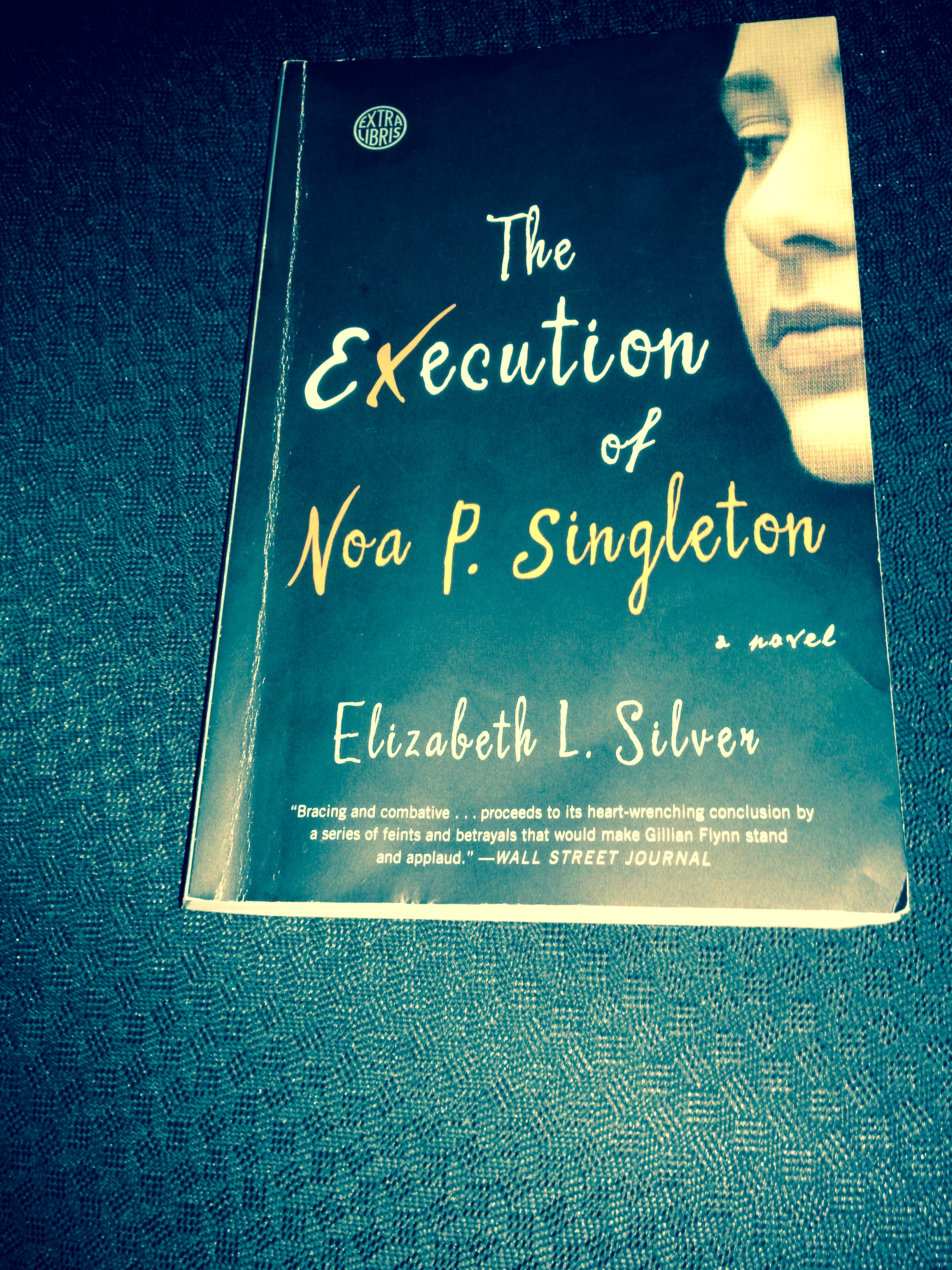
What do these novels have in common? Each has a female protagonist. Both have murderers on death row facing dwindling days to their execution. Laura Lippman’s story is told in alternating past and present chapters recounting the story of Eliza’s kidnapping, and what she’s doing now. A few other points of view are included. Occasional sections are about the mother of the young girl for whose murder Walter is to die. Sections of Noa P. include letters the mother of Noa’s victim wrote to her daughter.
How would I categorize these two novels? Are either women’s fiction? In a short article, Rebecca’s Rules: Defining Women’s Fiction (Booklist, March 15, 2013), Rebecca Vnuk suggests that women’s fiction deals with emotions and relationships of a female protagonist, and that “the main thrust of the story is that something happens in the life of that woman.” She then tries to set romance, women’s fiction, and literary fiction apart. One clue, Vnuk says between women’s fiction and literary is if you pay more attention to the beauty of the words than the story. She notes that the two can be confusing to distinguish and also says there is nothing wrong with filing a book under “general fiction.”
Although a large portion of IKYA is from the male antagonist’s point of view, the above definition allows both books to fall into the WF category. Somehow or other, I would never think to call Noa P. a work of women’s fiction. Probably IKYA was published as suspense or crime fiction, but to me, a non-expert on WF, it seemed very much like a novel that could be called women’s suspense fiction. What marked the difference between these two books and their classification?
Both deal with the aftermath of a murder on both the perpetrator, the families of the victim, others involved in the subsequent legal case, and the death penalty itself. Another clue Vnuk gives to distinguish between women’s fiction and literary or general fiction is if the main character can be substituted with a man. Probably this would not work, or would be a completely different story in the case of the Lippman book. In the case of Noa, it might be possible, although it would again make it a much more common story.
The main difference between the two books, and where I would classify them, is in the writing, but not necessarily because I spent more time “admiring the use of language” in Noa than enjoying the story. I didn’t much like the character of Noa. I didn’t like Eliza, either, but for different reasons. Noa was unpleasant but, as someone with at least psychopathic tendencies, interesting. Eliza was plain dull, a wife, a mother, with few interests or thoughts outside of that role. If Lippman’s purpose was to show how being the victim of a crime dulls the senses and impacts the personality, she may have done an excellent job, but it seems to me if that was the intent, there should have been some way to show us that that was what she was doing. Every once in awhile Eliza would know something or show interest in something that seemed to me, as a critical reader, more to advance the story of make a more interesting observation than as something this character would actually say or do or know.
The other characters in the Lippman book–with the exception of Walter whom I felt was well portrayed–were right out of central casting. So many books have a best friend/older sister who feels like every other best friend or sister in every other book in the world. In Eliza’s case, the older sister might be described as “lovingly bullying,” but possessing all the expected traits: the Golden Girl to Eliza’s housewife, the smart one to Eliza’s dropping out of her masters program, the single career woman to Eliza’s long marriage with the “perfect” children. Noa’s only friend, who died in childhood, did not seem like her traits had been purchased in the stock store of characters, although her early demise did not flesh her out.
Eliza’s parents were both oh-so-perfect psychiatrists; again, more a role than real characters. Noa’s mother is quite awful. Her father is a reformed convict and not much like fathers in other books. Both are believable, but not particularly likeable. Eliza’s husband is too good/smart/understanding to be true. I kept expecting him to fail her, to in some way make her perfect life a lie. That would have made the story more complex and interesting, but in the end, he’s left home so that the sister can finish out the novel with Eliza.
Noa P. was told in the first person while Eliza’s story was all third. Eliza’s thoughts and feelings were explained and then explained again, while Noa held back information and lied, making you have to work to figure out what was going on in the dialogue as well as the rest of the story. This telling of emotions very well might be what I most objected to in the Lippman book. This over-explaining with dialogue that seldom rang true was for me what made this a less interesting read. I wonder if this problem might have been fixed if Eliza had told her part of the story in the first person.
I have to continue my search for “real” women’s fiction. I hope that some of what, for me, are deficits in the style of writing do not define the “genre.”
The Hidden Unlikeable Character
Recently, I suggested The Given Day by Dennis Lehane to a writer friend. He blogged about one of the characters here. I recently finished the book myself, but part way through it, I started realizing I really didn’t think much of most of the characters. The one B.K. talks about, Luther, is probably my favorite imagined character. I also like Babe Ruth, who is used as a frame for the novel, but this device was not universally thought to have worked. (review by Jonathan Yardley.)
First, let me say I did like this book. The writing was always good, sometimes wonderful. The history is incredibly interesting, especially since I didn’t know much–or really any–of it. It demonstrated that problems in our current age have had counterparts in the past. There were terrorists before Oklahoma City. There was labor unrest that wasn’t related to mines. Neither AIDS nor Ebola were the first diseases to wield fear in the populace. ![Molasses tank explosion injures 50 and kills 11 [Boston Daily Globe, January 16, 1919]](https://live.staticflickr.com/4077/4901511479_f8834aa938_c.jpg)
For the most, part the story is riveting. Even though Mr. Lehane, in a 2012 interview, stated he didn’t think the novel would ever be filmed, it would make an interesting mini-series. One top of all that, the WWI time period is one of the most fascinating to me. I didn’t recognize my problem with the book until I was close to done. It is just over 700 pages and took me quite some time to finish. I’m not sure where I started to realize I didn’t like most of the characters. Luther Lawrence was interesting, possibly due to this flaws. As referred to in the blog post mentioned above, I did care about him and wanted him to be okay. The sad thing is, I didn’t care about the main character, Danny Coughlin.
Now, I don’t think characters, even the main character, has to be likeable in order for me to read a book or to like a book, but in this case it wasn’t really a question of likeable; it was more a question of believable. He seemed to be one of those characters who is in almost all ways perfect. Handsome, smart, an honest policeman, good in bed, a ladies man who loves the one lass he eventually wins. He stands up to his father, tries to maintain contact with his brothers. He befriends Luther, who is a black man on the run and a one-time servant of the Coughlin family. Why, he even has the perfect name as his real name is Aiden. True, he has a few flaws. He is less than generous toward his one-time police partner who contracts the Spanish flu and ends up destitute. He also has a bad temper and bashes in a man’s face. Possibly that act was what made me start to question, then realize even in his anger he was just too close to perfect. One character of this sort would not normally be a problem for me, but most of the other policemen seemed to be from Central Casting, especially those in Danny’s immediate family.
What probably nudged me to the edge of shutting the book was the less-than-stellar portrayal of the women. Most of them are, again, just about perfect, or if not that, barely there. Danny’s mother is mostly off scene, in bed. There is an Italian who likes sex, doesn’t care about her baby, and can’t speak much English. She isn’t who she appears to be and none of her stories add up, yet she never becomes more than words on the page. One not fully developed caricature might not be noticeable, but most of the secondary characters seem to be cut from the same cloth. The love interest, for me, was the most egregious as not just Danny, but one of his brothers, and possibly all other men she encounters, love Nora. Why? I know almost nothing about her, how she thinks, why she does what she does. Most mysterious is why Danny’s father rescued her and brought her home naked? She then becomes the family maid who also works a second job but fascinates the brothers. I didn’t buy her for a second.
In many ways I hope Dennis Lehane’s prediction that this book will never be filmed doesn’t come true. The story is all there and with good actors playing the various parts, the characters might come alive and stop being cardboard cutouts of perfect people.
Below is a documentary about the period of history illustrated in the book. It contains many photos, but it is long.
50th Published Post: So Now What do I Do?
Posted by c2london in Uncategorized, Writing on June 23, 2014

Sock animal and a C2 doll on my bookshelf.
This is going to be my 50th published post. Even though this is close to a post a week for a full year, it appears my first effort launched in September. I received notice of an automatic payment for my URL due in July, so I must have had the blog in mind for awhile before I actually wrote anything.
One of the reasons I started the blog was that I attended the Writing and Yoga Retreat and Linda Epstein, the agent who was one of the two people running the retreat mentioned she checks online presence while she waits for requested material. This made me think, “Oh, maybe I really do need some sort of web page.” So I bought a URL and then set about learning a bit about setting up a blog site.
Because the manuscript I was hoping to sell at the time had at least a secondary theme of friendship, and because friendship theory has always been of great interest to me, I wanted to concentrate on writing about that. In college I did numerous papers on the subject, including my own theory, which I explicated briefly in my novel. I liked the idea of writing about something other than writing,because it seemed presumptuous to think I had something more to say about writing than one of the other 678,9452* other blogs out there addressing writing.
Besides, I’ve always been a bit contrary and wanted to write about something else. Something the rest of the world wasn’t addressing. I googled friendship and found a few websites but nothing that appeared active or addressed the aspects I was interest,ed in. So I thought I’d be okay.
But like most of my other blog ideas, this one was harder to write about than I thought. I have things to say; the question is, do I want to say them in a potentially public forum where I might be talking about someone who might read the post? It’s in the (remote) realm of possibility.
For awhile, it seemed that everything was saying, “If you write, you need a blog to attract readers.” I took a social media course through the Women’s Fiction Writers Association and it stressed you needed a place for your fans to find out about you. My thought was, “But I want readers, not fans.” I wasn’t looking for (unlikely) adoration, nor was I looking to become friends via my blog. I mean, I wouldn’t mind meeting people or even becoming friends, but that wasn’t the main purpose of the blog.
Now I’m seeing more and more articles/blog posts saying that you don’t really need to have a blog, or maybe you don’t need to spend that much time on one. (Here is one about blogging.) I enjoy coming up with topics, especially linking activities and objects that seem to have little to do with writing to writing. I find blog posting satisfying, if time consuming, and the time it consumes is that in which I should be working on my latest manuscript.
That last is a reason I should stop, but last week I finally had cards made up to hand out to people I meet at conferences and I put this web address on them.
I did manage to write enough columns to have bypassed my previous “record” of four posts, and I do have a second blog which I plan to keep going. The second is a quick weekly challenge that involves eating pancakes, so it has its own reward.
Maybe what I’ll change is the title of this blog. Probably what I should adjust is the focus. Since I am time-limited due to my work schedule, I will have to post this as it is right now and worry about those other changes later–or leave it for Post 51!
Why do you keep blogging? What keeps you from giving up?
*for my very literal readers, this is a made up number and, I hope, an obvious exaggeration.
The Blue Tongue Project: Finding Inspiration at the Denver Museum of Nature and Science
Posted by c2london in Reading, Uncategorized, Writing on June 15, 2014
At first glance this post about The Denver Museum of Nature and Science didn’t seem to have much to do with writing, reading, or friendship, but as I wrote it, I naturally found a way to tie in three of the topics of this blog.
In 2012, I attended the first Colorado State University Alumni Beer Tasting at which we not only sampled innovative small plates concocted with various beers, but also sipped selections from a number of breweries. The participants were treated to a talk on the history and science of brewing by Dr. Nicole Garneau, the chair and curator for human health in the DMNS Department of Health Science. She mentioned an experiment that was being conducted with volunteer visitors to the museum. As I am someone who loves many bitter foods but doesn’t like bitter beers (sours are another matter), I was greatly interested in this research into the genetics of “supertasters.” This was nicknamed the blue tongue project. Three thousand visitors participated in the study, and the results have been published in Frontiers of Integrative Neuroscience. Participating was fun, interesting, and exciting. What more do you need to be inspired? You could come with ideas for stories set in a lab, or with a character as a study participant.
Having my curiosity piqued energizes me and gives me the inspiration to work on my own writing even if it isn’t a science fiction tale of experiments gone wrong. Currently, the Genetics of Taste Lab is conducting a study on the ability to taste fatty acids. Pretty much all you have to do to take part is show up.
One of my favorite exhibits at the DMNS is hidden away on the third floor. I’m always afraid it is either gone, or I’m lost, when I walk through rooms of stuffed animals to find it. The delight Konovalenko: Gem Carvings of Russian Folk Life sets off in me is well worth the search.
The first time I encountered this room full of carvings and dioramas, I was one of the few visitors. Lately, it has become more crowded, limiting the time I can stand in front of each tableau and marvel at the use of the different stones and the expressions on the sculptures’ faces. I expect these miniature people to stand up and sing bawdy beer songs. It isn’t hard imagining them coming to life after-hours.
There is plenty of other inspiration to be found, especially in the rotating exhibits. Currently on display is MAYA: Hidden Worlds Revealed. This exhibit would be a must for anyone writing about that culture. The recently completed exhibit, Pompeii: The Exhibition, might have inspired those writing about that event, whether fiction or nonfiction. The overwhelming emotions the replicas of the dead brought up might provide inspiration for a natural disaster story or even pure horror. Remembering the exhibit made descriptions in Rising Fire by John Calderazzo come to life.
Many more opportunities exist at the museum, especially for members. The IMAX Theater is featuring three 3d films this summer. Topics include D-Day, lemurs, and pandas. The museum offers classes, bird walks, and programs for families, including sleepovers. During the summer, the museum is open some Friday nights during which you can enjoy their cash bar. Why not join and enjoy some new inspiration for your writing? You might even build on a friendship you already possess–or possibly make a new one!
Crested Butte Writers’ Conference, Really a Conference Like No Other!
Posted by c2london in Friendship, Writing on June 10, 2014
This past weekend I attended the Crested Butte Writing Conference which advertises itself as “An Experience like No Other.” More than one of the guest speakers agreed that this was true. One of my friends, and fellow attendees, was a finalist in their writing competition, The Sandy.* I suggested to her that this was a much more laid back conference than others she might have attended. There is no banquet, and although a list of the contest winners was included in the program, and each was featured during a panel, I never heard an announcement of the overall winner(s). Possibly this information was posted.
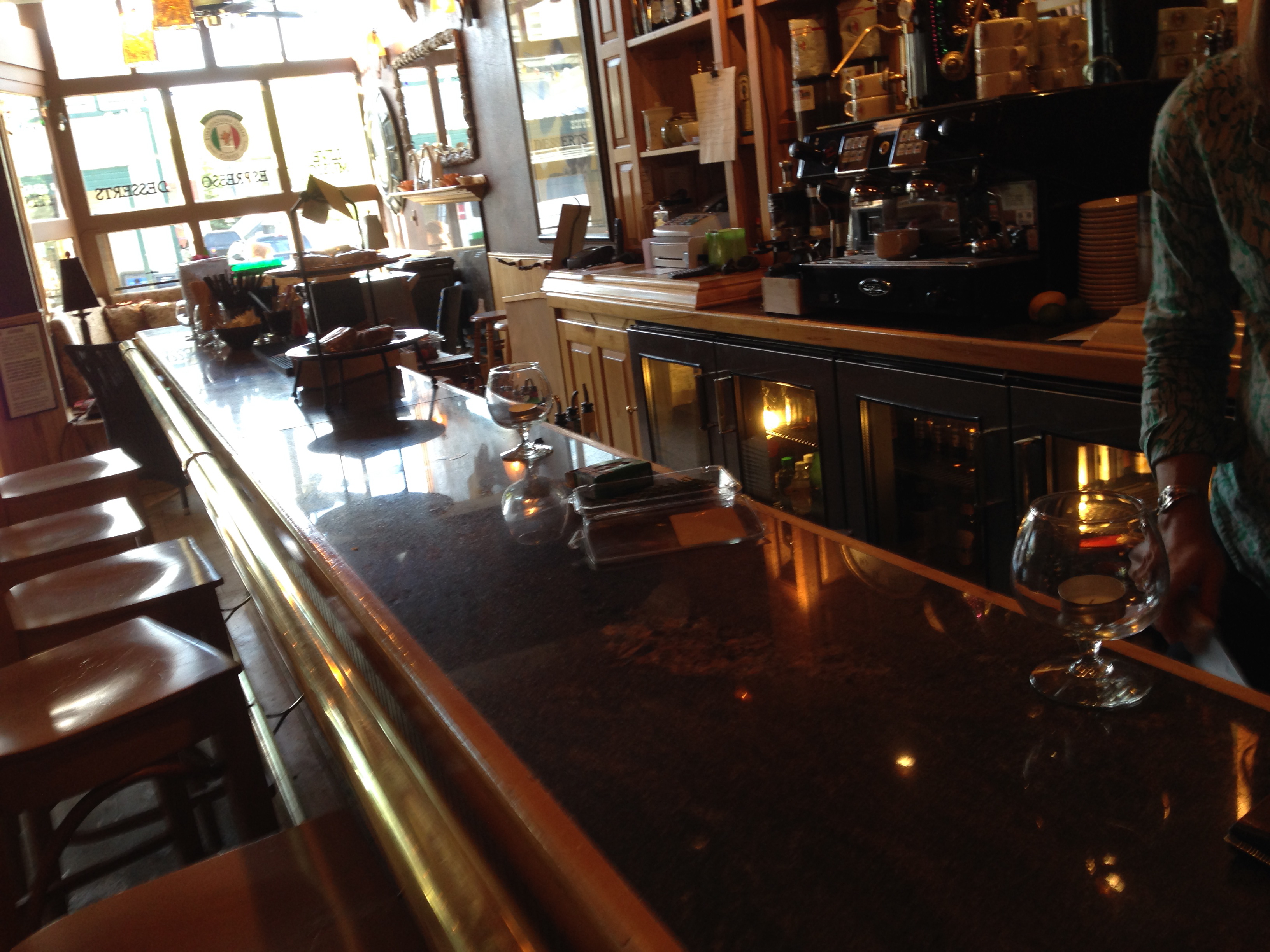
The Princess. A winebar.
There are no dinners provided. Instead, you are free to eat in your room. Many of the available rooms had kitchenettes or full kitchens. Or you could sample one of the many restaurants in the historic town of Crested Butte itself. The conference and most of the hotels are located in Mt. Crested Butte, which is a short (free) shuttle ride from the actual town of Crested Butte. (You might think of Mt. Crested Butte as the big fancy hotels and ski area and the town of Crested Butte as the hippie area with all the restaurants and funky shops.) One of the nicest aspects of this conference experience is that it currently is small, and even if you aren’t dining with one of the visiting writers, agents, or editors, you very well may run into them while having dinner. Or, as was the case for numerous attendees, you were invited (or tagged along) and had dinner in a large group with many of these same people.
This conference also runs its “pitch sessions” differently than most. Instead of making appointments with the agent/editors or accosting them in the elevator, never letting them have a moment’s peace, and causing many attendees to be both anxious and possibly less open to spending time with other writers, you submit your pitch and first page PRIOR to the conference. The a/e then receive a large document with all the pitches and pages and flag those they may actually be interested in. THEN an appointment is set for you to talk to the person who has preselected your material. I posit that this makes the conference atmosphere less anxious and more enjoyable for all concerned. You might wonder how those who are not selected to pitch feel? This was the second time I attended this particular conference. The first time, there was some sort of mix-up and I missed the deadline to submit. The current system is for you to be notified about a week prior to the conference if you have been given a pitch spot. If you have been, a slip of paper with the time and place is included in your registration folder. I heard nothing, but since I was doing an Advanced Read and Critique session, an add-on (as is the pitch session), I was okay with it.
There are other opportunities during the conference where you might catch an agent or editor’s attention. One is the ARC mentioned above. Another is the “first page read.” First page reads have become more common at other conferences in the last so many years, but the first one I ever participated in was at the conference five years ago. During this, someone reads a mix of first pages to a panel of editors and agents. Although you want to see how your first page is viewed, it is also educational to hear why an agent or editor might stop reading any page. The person who sets up this session mixes in some openings to books currently on the bestseller list and, yes, this does trip up the panel. This year’s panel was nicer than that of five years ago, and one manuscript was actually requested!
Other, unexpected benefits might ensue. The first day of the conference, prior to the ARC, a man who was attending asked me if I’d attended a few years ago. I said yes and didn’t think too much about it, but by the end of the weekend, I was curious why he remembered me. Had I said something especially obnoxious? He looked vaguely familiar, but I couldn’t think why he’d remember me. I hadn’t read during the open mike night. During the last session I asked him. He remembered a line from my first page read! That alone made me feel good, but the editor from my Advanced Read session had many good ideas to improve my selection and said she wanted to see it when I was done.
I consider a conference a success if I come away with at least one new writing friend. At least one other conference attendee found me on Twitter, and there is that Facebook page referenced below. I have the email address of three more, plus I know I’ll see a fourth at RMFW. One or two others also said they’d be there, and since a number of them are very tall men, I’ll more than likely see and recognize them.
If you are looking for a small, friendly conference were most of the speakers are approachable and the presentations are interesting, this is one you should look into next year!
*I currently can’t link to the conference page, but here is the link to the Facebook page. https://www.facebook.com/pages/Crested-Butte-Writers/188744957828306
Do Covers Define Genre? What Might You Include on Yours?
Some people know that I’m not fond of the category “women’s fiction,” at least partly because I don’t know what it means. Although I do belong to the Women’s Fiction Writers Association, I’m not convinced I’m a women’s fiction writer. I am female and I do write fiction, but I’d say it was mainstream.
I’ve had a difficult time tracking down novels in that category, or at least novels that aren’t also part of another genre, most commonly a historical novel or a romance. Yesterday I posted a query in a forum on WFWA asking for examples of “women’s movies.” Andrea J. Wegner who has a most interesting looking website, Write with Personality, suggested that women’s fiction is a marketing gimmick to target mainstream fiction to women. Her contention was that the main difference between regular old mainstream fiction and women’s fiction was in the books’ covers.

This is an interesting idea and worth a few posts. My first thought, though, was to wonder if any of my manuscripts were to be published, what would the covers look like? What three representative items might be on the cover? Picking out representations of your story is an interesting and fun hypothetical exercise for any yet-to-be-published manuscript.
Here’s my thoughts on some of my manuscripts, which are in various stages of doneness.
Man in the Middle:
An old Miss Havisham-type exterior of a house, large and looming with three stories and peeling paint. A cluster of women, including a gaunt, gray-haired woman, a grandmotherly woman with white hair, two or three tall, dark-haired women, a plump blonde teenager and a cross loooking redhead. Somewhere there would have to be the outline of a man who is an above the knee amputee.
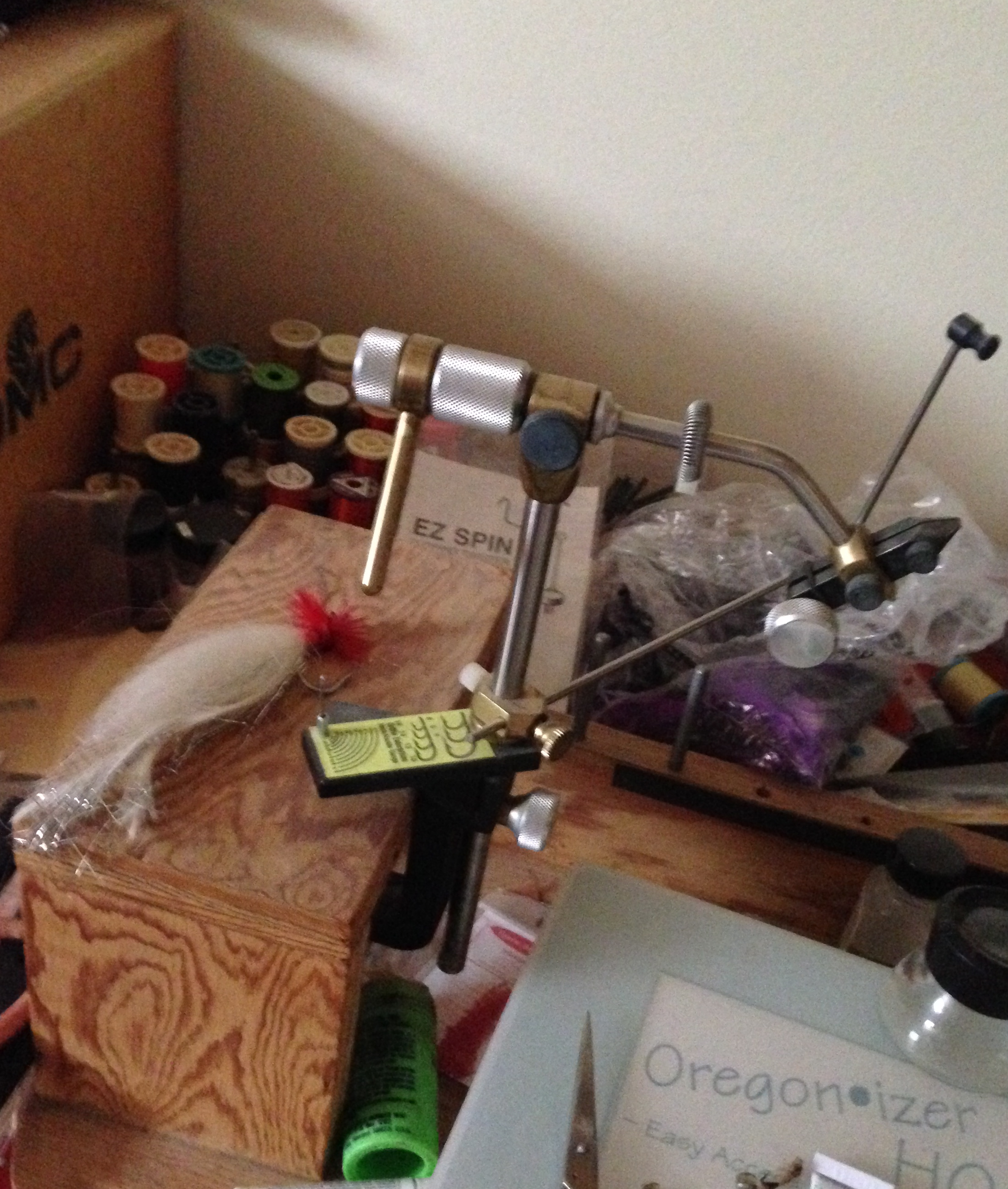
Alternate: the same man, fly tying equipment, possibly with a strand of the redhead’s hair caught in his vice. Those three images could be contained in the outline of the same house.
Trillium:
The obvious image here would be a representation of said flower, maybe with a dollhouse, a whiskey bottle and spilled glass, and a station wagon from the 60s, somehow drawn on each of a petal or at the tip of a petal. At each of the leaves there could be the representation of a woman—an older matronly woman, a middle aged but attractive woman, and a younger but harried looking woman. At the center would be a bald man.
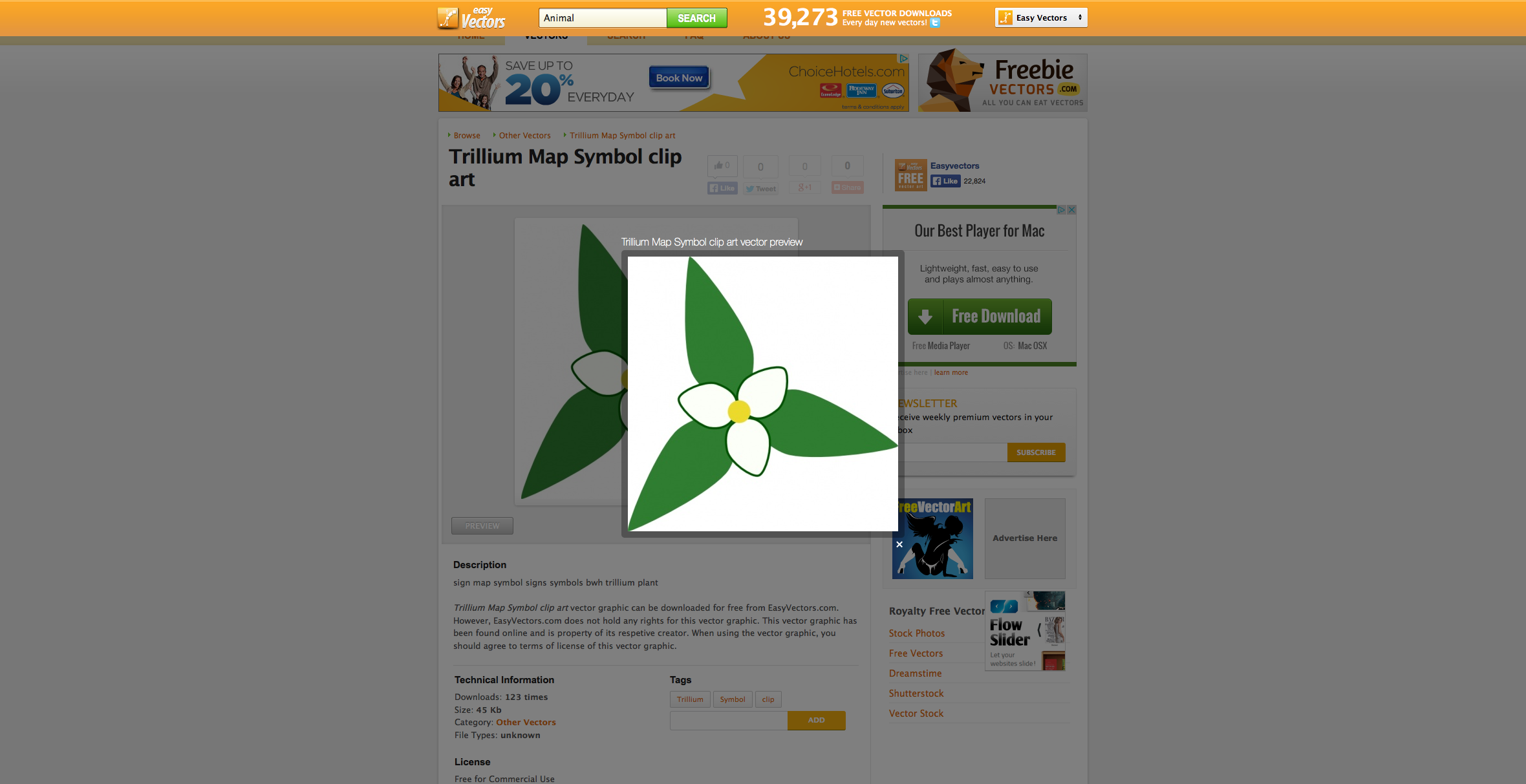
Alternate image: A Hawaiian shirt, a circuit board, a cabin in the woods with a Wired Hair Pointing Griffin in the doorway.

Cuisine of Loneliness: A spilled box of fettuccine. Or maybe the title could be made out of pasta.

Three dark haired men grouped in one corner. One a chef, another a doctor, the third that same amputee, but older. A balding red-haired man in the opposite corner with a dark haired woman with two Irish Water Spaniels in the middle.
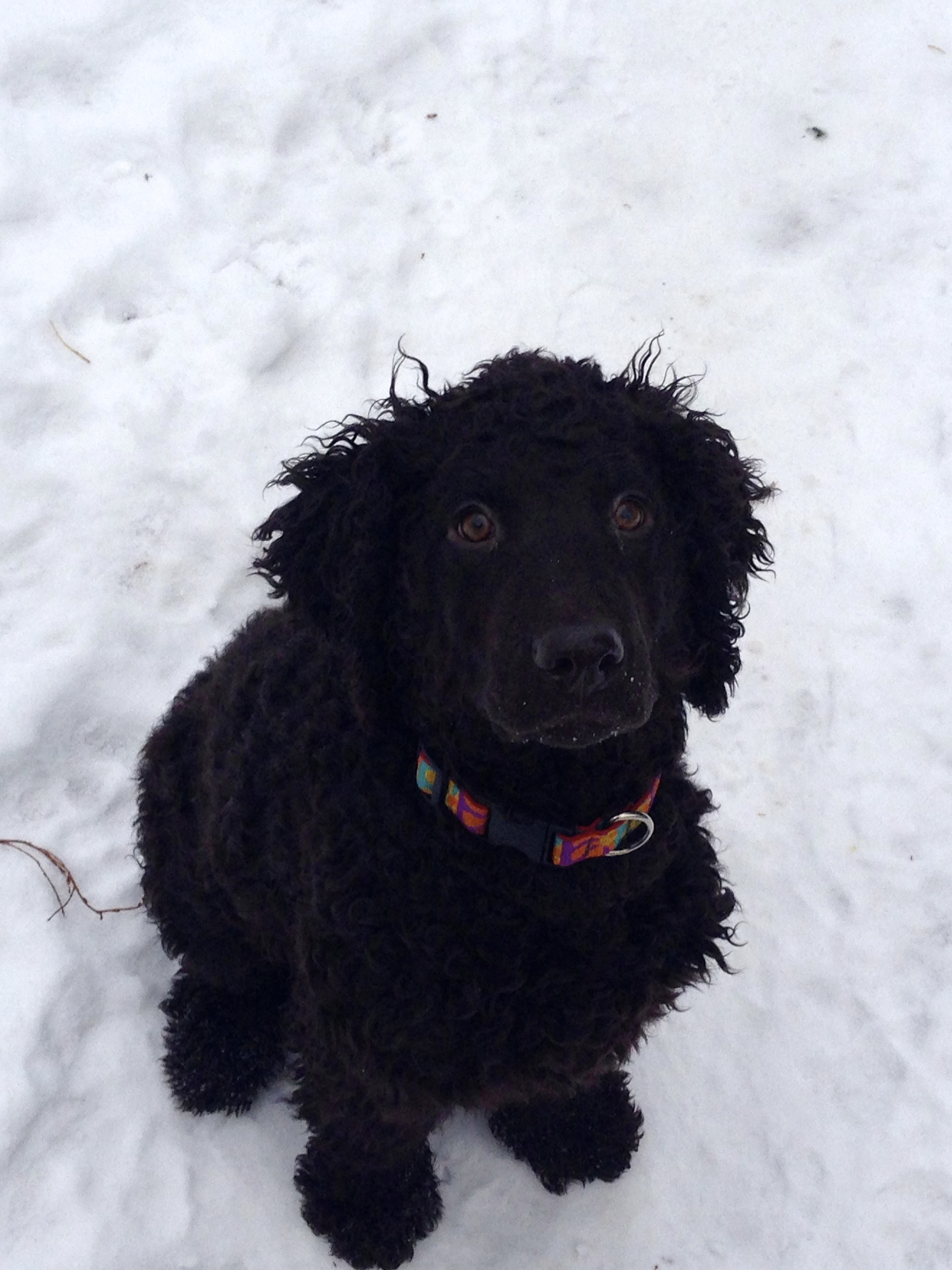
Alternate: A chef’s toque with a rolling pin flattening it, smashed china, and the skyline of Las Vegas in the background.,
The Lack: A wiry blond man sitting on the steps of a large Eastern house with a young girl on the porch next to him, a tall, dark-haired man with a small boy in front of a smaller house with boarded up front windows, a road running between the two and a woman in the middle, possibly with the roadway wrapped around her in a knot.
Alternate: A pistol, a tipped over coffee cup with only a drop of coffee left, a half-made wooden bow.

Do any of these conceptual covers appeal to you more than others? How would you represent your own novels in progress?
My Unfinished Love Affair According to Twitter and David Mitchell
 I was bored, or at least I was procrastinating, so I went to Twitter and what do I find but this:
Book Quotes @BooksBestQuotes
“A half-read book is a half-finished love affair.” – David Mitchell, Cloud Atlas
This strikes me as a rather silly thought, so I hope it was a character’s and not David Mitchell’s. I immediately thought:
“Or a boring discussion abandoned.”
“An unnecessary fight resolved.”
“An inadvisable relationship terminated.”
Okay, I actually only thought the first immediately, but I don’t, and never have, understood the necessity of reading a book, once started, all the way through. Granted, there are books I had to start and restart that once I did read them, I was grateful. Confederacy of Dunces is my prime example. I’d been told it was funny, but until I was stuck at my mother-in-law’s with nothing else to read, I couldn’t get into it. I’m sure by abandoning books, especially books whose topic didn’t appeal to me at that moment, books that sagged too much in the middle, or books I misplaced, I missed some wonderful books.
Possibly that last category is the one where this is most likely to be true. I have the unfortunate habit of losing a book at least once before I’ve finished it. For me, the most notorious example of this is A Suitable Boy. I still can’t figure out how I’ve managed to lose a 1349 page book not once, but at least twice. At one point I even bought a second copy. I did eventually find the first book with the flap marking my place—page 111—but many years had passed; I didn’t think I could pick up the story there, and I didn’t want to start over. Someday I may finish this because for me, this one is like a relationship that never quite got off the ground. Lots of kisses and late night discussions but nothing more.
I’m glad I’m getting this post out of the way. I’m going to post it early in the hope that I stop procrastinating and actually do a little work tomorrow. I leave you, oh dear one or two people who happen to stop by my blog, with the questions:
Do you agree with the tweet above? Why do you soldier on with any book, and if you do, is it more often worth it or a waste of your time?
I Hate the Tattered Cover (Although I Hate the New Flagship Store Less than the Cherry Creek Version.}
Of course I don’t really hate the wonderful independent Denver bookstore, but like the quote from Amadeus, “there are too many books.”
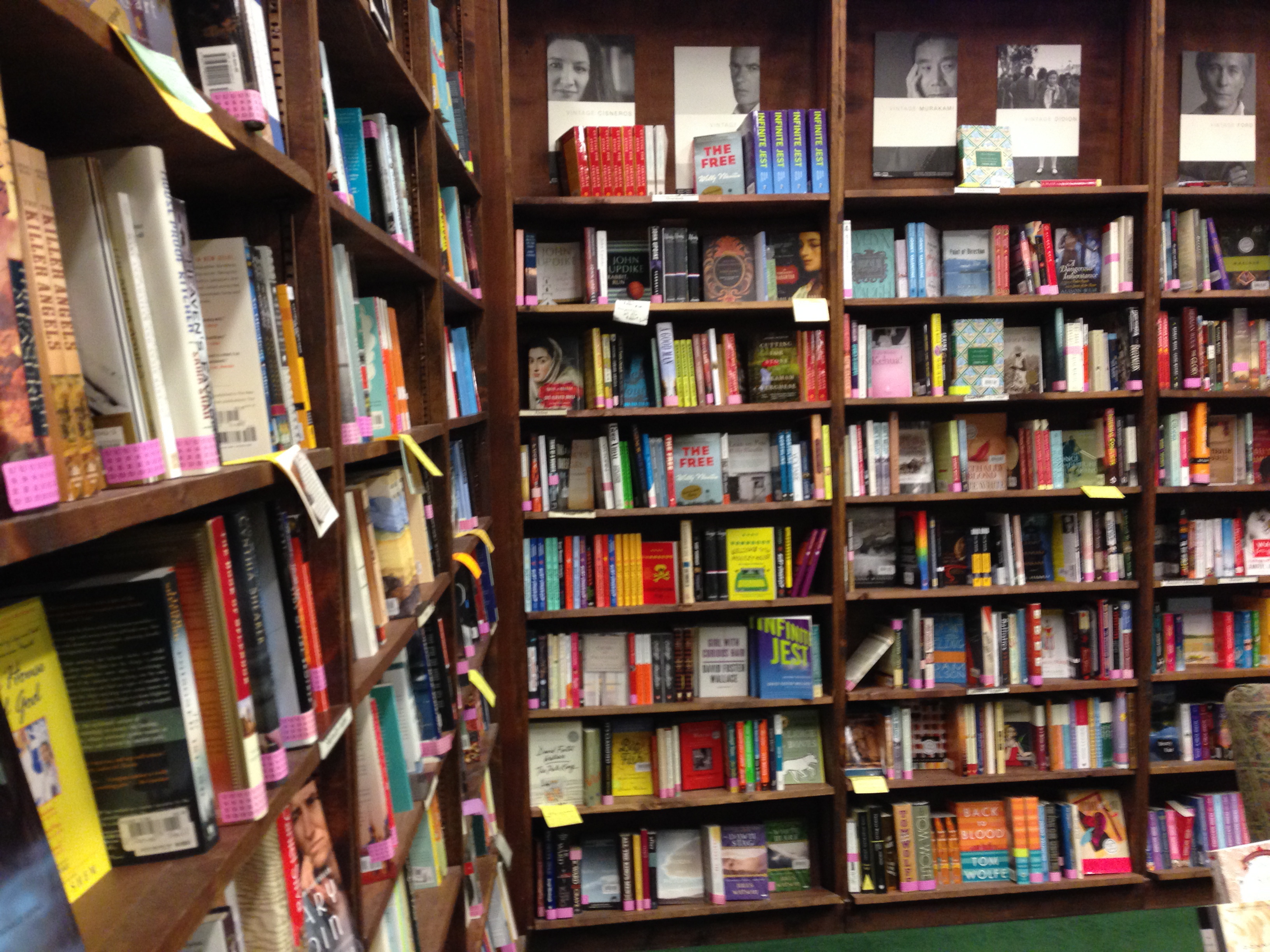
As well as too many recommendations. (Not really.)
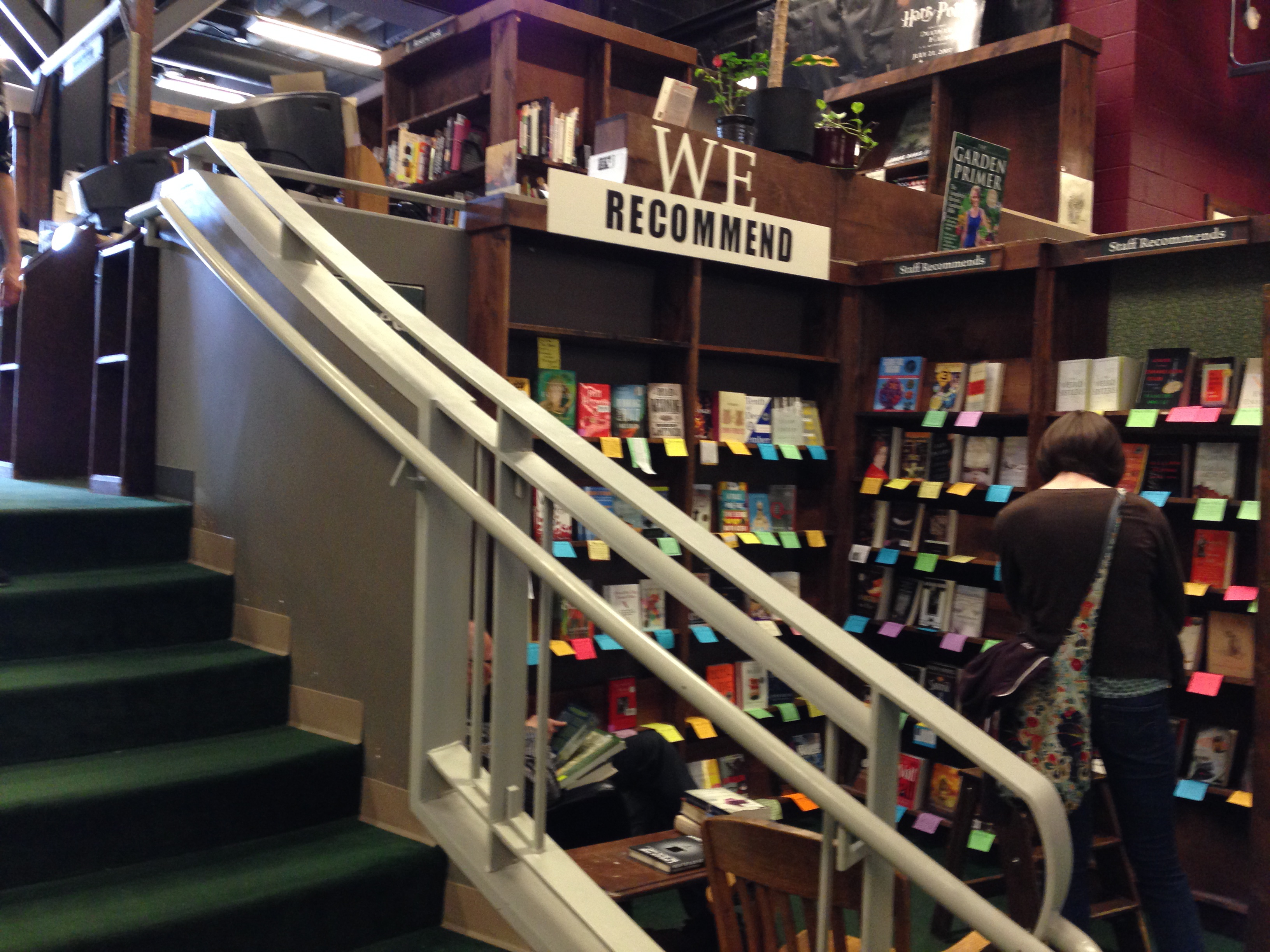
The original store opened in 1971. That small store had 950′ and two employees. In 1986 the expanded store moved across the street. This was the store I hated.
My memories of the Cherry Creek store: People bustling in from one of the various doors. You’d grab a map and have to hold it this way and that to figure out where you were since the mountains weren’t visible. (An orienteerer I’m not. I didn’t learn right from left until 6th grade and only know my way around Colorado when I am on one side or other of the mountains.) Then, usually up the wide staircase, which had books on the landings, books piled on the sides of the steps. Something would always catch my attention so I’d have to stop and skim it. Sometimes I’d get stuck in the magazine section, which included every conceivable topic in various languages. Too poor to buy a book? Try an obscure journal.
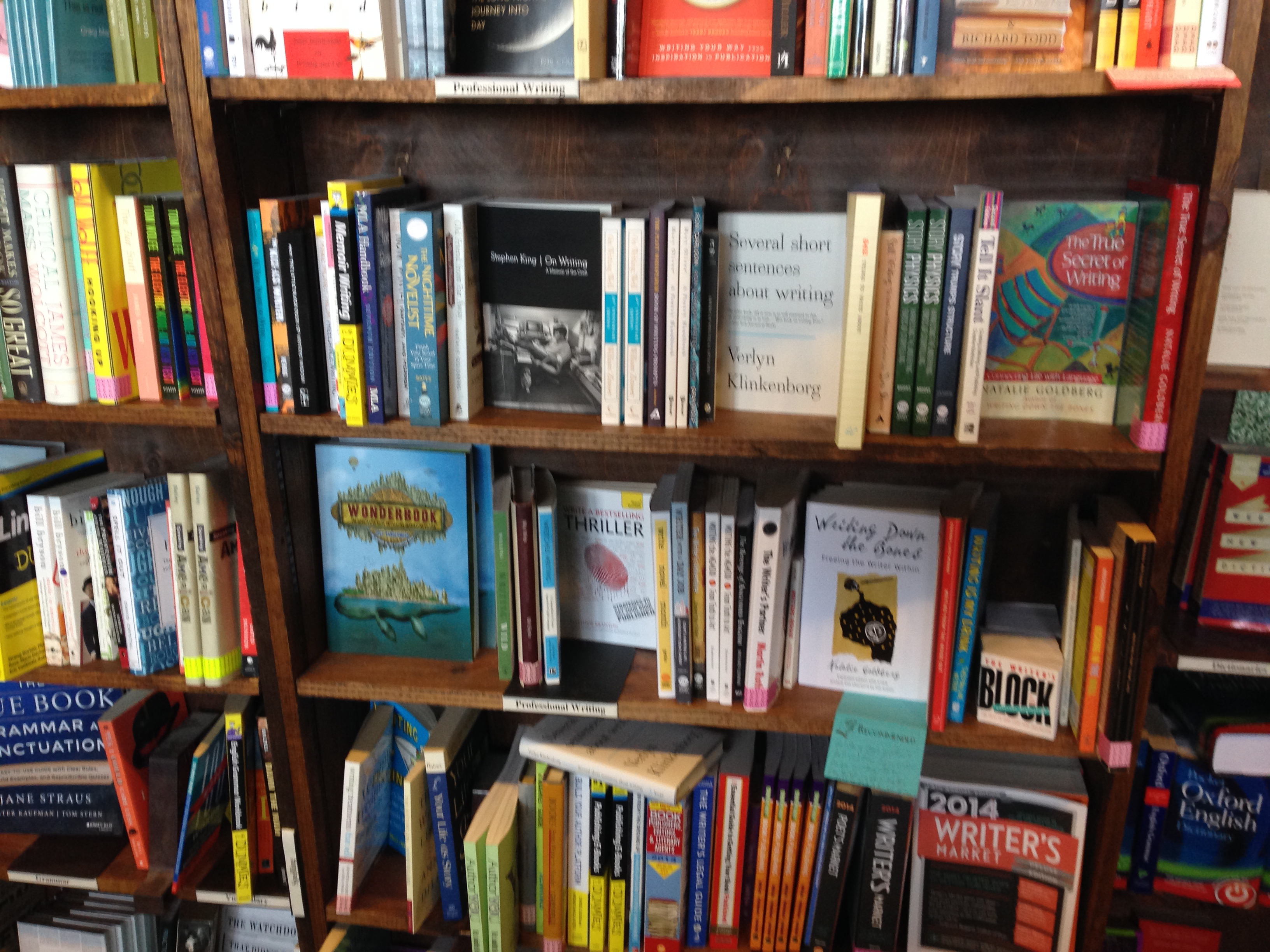
Books for writers (Colfax store.)
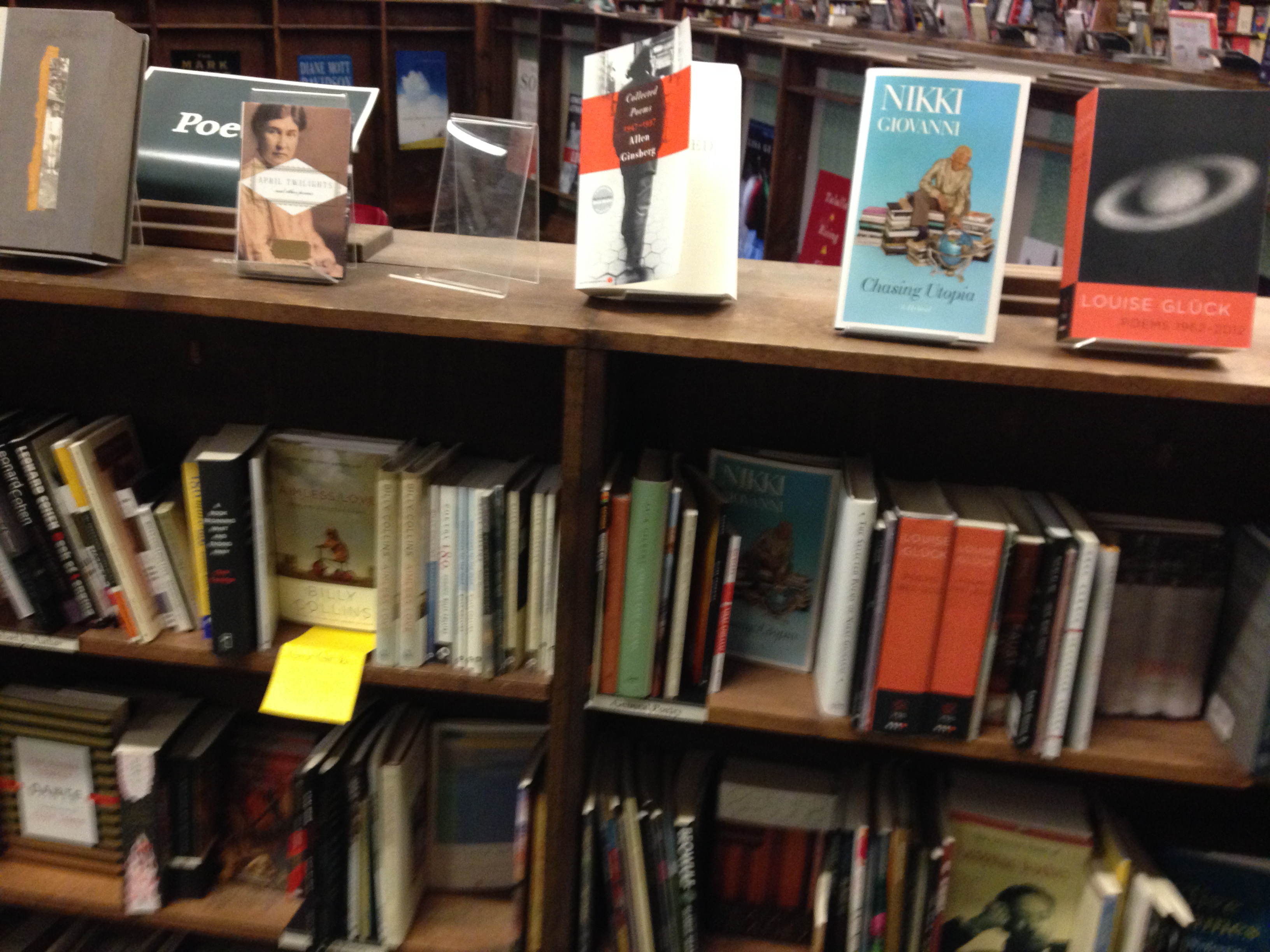
Poetry collection, Colfax store.
This incarnation had four floors, with a well-liked restaurant, The Fourth Story, on the top. There were information desks on each floor, chairs tucked in corners, and people everywhere. The lower level held the smell of coffee from the busy coffee bar. Six miles of shelves! You could get lost, and pre-cell phone days, you might wander for hours amongst those 150,00 titles, looking for the person you arrived with. I was overwhelmed, and remember plopping myself down, depressed that I could never read all the books, not even all the books that sounded really good and interesting since a good half of the titles would have met those criteria. Scanning the wall of recent arrivals, I despaired I’d never have a book displayed there. Unless I went into the store looking for a particular title, or had narrowed down what I wanted to a particular topic, it was too daunting to enter. Of course, a normal trip resulted in a large purchase since no matter how determined I was to buy just one title, something else jumped out as a must read.
When the branch store opened in LoDo, I liked shopping there better. It still had a ton of books, three floors (since consolidated to two) with books displayed or stacked on the landings, the wall of recent arrivals, and lots of magazines, but its smaller size felt more manageable, and you could met up at the coffee bar since it normally was less busy than the other store.
Since the Cherry Creek store closed in 2006, I’ve mostly shopped at the Colfax location. The new Colfax store has two floors, with fewer nooks and hiding places but now it has history as it resides in the renovated Bonfils-Lowenstein Theater. The building had been vacated about twenty years before it was converted to a bookstore. Udi’s Cafe faces the side street, with a coffee shop in the opposite corner. The website says there are about the same number of titles as in the old store, although the open space makes the overabundance of volumns look more manageable. This store has very tall shelves, but preserves many of the historic details of the old theater. I wasn’t aware of some of these features until I read the website. Most of the books are shelved in the proscenium. A bank of theater seats, as well as many other chairs, remains for reading pleasure.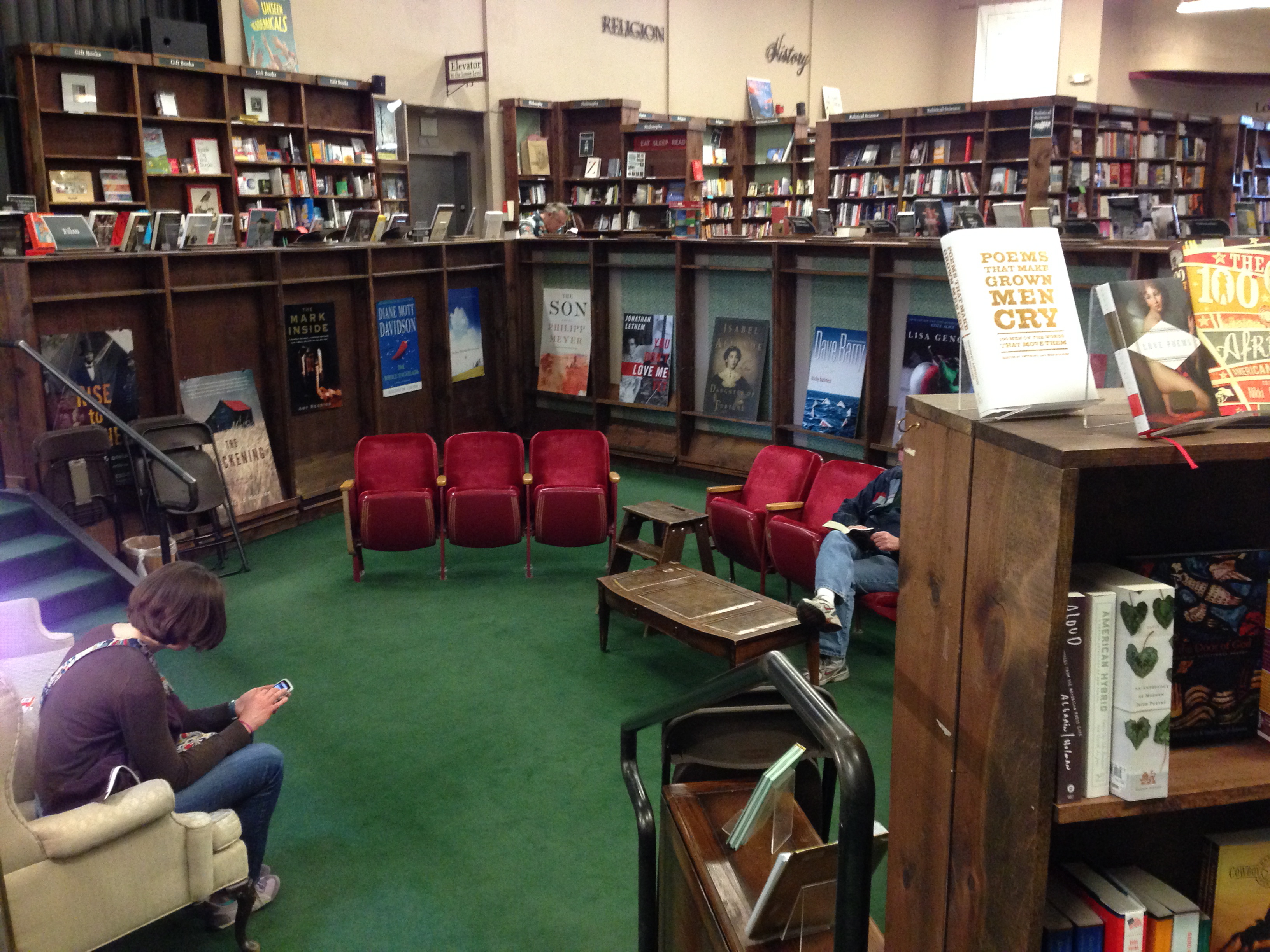 A new feature is used books commingled with new titles. On my recent trip I bought a used title, two discounted books I’ve been meaning to read, a discounted French Vegetarian paperback, and a hardback hot off the presses.
The history of the store includes numerous author talks and other events, which continue to this day. Its hallmark is customer service and a knowledgeable staff. On my recent trip, I tapped into the expertise of the head buyer, Kathy. Ordering titles online or by phone is another longtime service. Truly, the bookstore is a friend to any writer and beloved by the Denver metropolitan community in any of its incarnations. 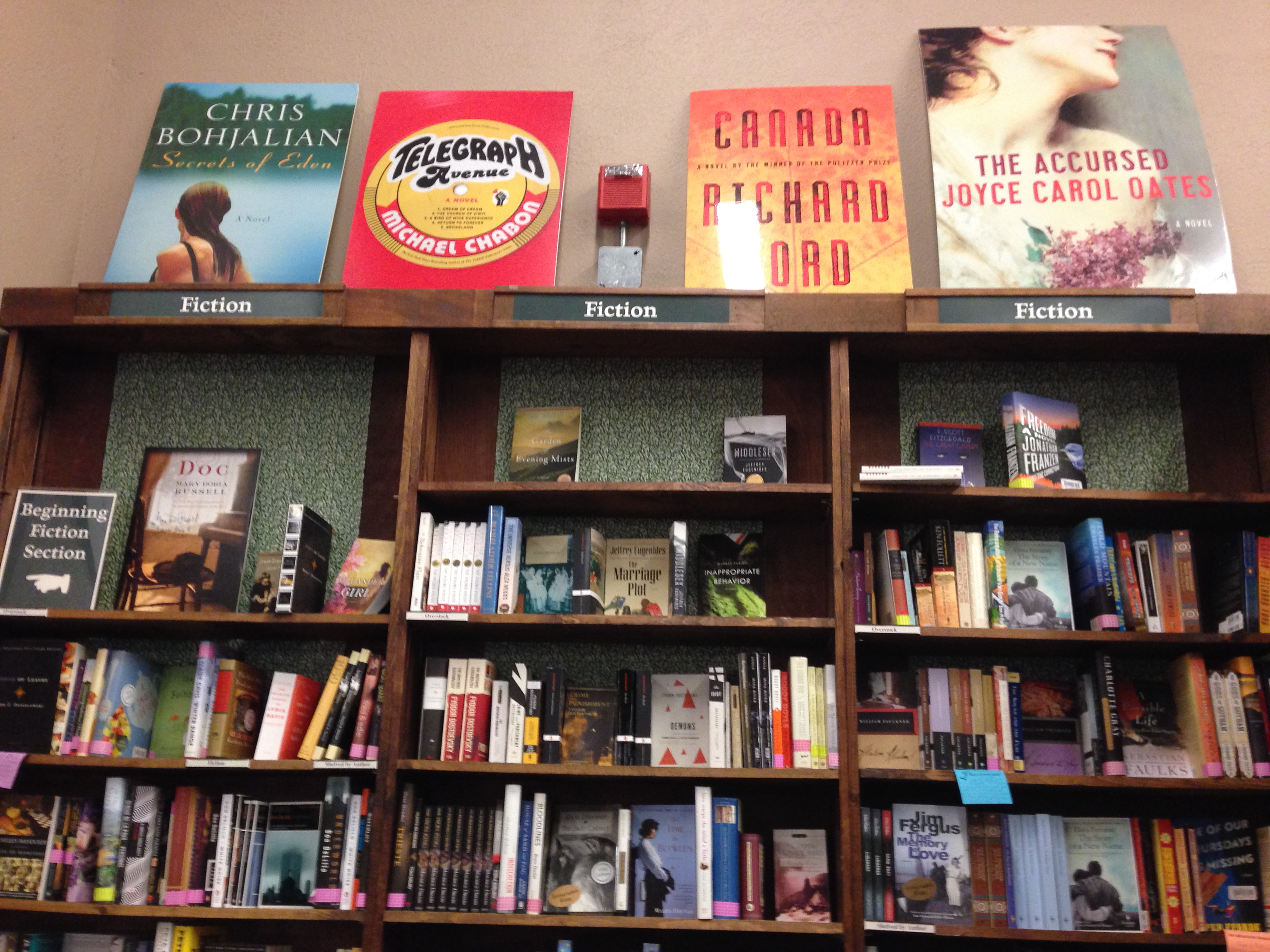 You can like them on FaceBook, order online, or, when in Denver, shop at any of their three locations. (Colfax, Lodo, or Highlands Ranch.)
Travel and Leisure Top Bookstores.
Flavor Wire Top 45 Indie Bookstores
 Cuisine of Loneliness