Archive for category Reading
My Unfinished Love Affair According to Twitter and David Mitchell
 I was bored, or at least I was procrastinating, so I went to Twitter and what do I find but this:
Book Quotes @BooksBestQuotes
“A half-read book is a half-finished love affair.” – David Mitchell, Cloud Atlas
This strikes me as a rather silly thought, so I hope it was a character’s and not David Mitchell’s. I immediately thought:
“Or a boring discussion abandoned.”
“An unnecessary fight resolved.”
“An inadvisable relationship terminated.”
Okay, I actually only thought the first immediately, but I don’t, and never have, understood the necessity of reading a book, once started, all the way through. Granted, there are books I had to start and restart that once I did read them, I was grateful. Confederacy of Dunces is my prime example. I’d been told it was funny, but until I was stuck at my mother-in-law’s with nothing else to read, I couldn’t get into it. I’m sure by abandoning books, especially books whose topic didn’t appeal to me at that moment, books that sagged too much in the middle, or books I misplaced, I missed some wonderful books.
Possibly that last category is the one where this is most likely to be true. I have the unfortunate habit of losing a book at least once before I’ve finished it. For me, the most notorious example of this is A Suitable Boy. I still can’t figure out how I’ve managed to lose a 1349 page book not once, but at least twice. At one point I even bought a second copy. I did eventually find the first book with the flap marking my place—page 111—but many years had passed; I didn’t think I could pick up the story there, and I didn’t want to start over. Someday I may finish this because for me, this one is like a relationship that never quite got off the ground. Lots of kisses and late night discussions but nothing more.
I’m glad I’m getting this post out of the way. I’m going to post it early in the hope that I stop procrastinating and actually do a little work tomorrow. I leave you, oh dear one or two people who happen to stop by my blog, with the questions:
Do you agree with the tweet above? Why do you soldier on with any book, and if you do, is it more often worth it or a waste of your time?
I Hate the Tattered Cover (Although I Hate the New Flagship Store Less than the Cherry Creek Version.}
Of course I don’t really hate the wonderful independent Denver bookstore, but like the quote from Amadeus, “there are too many books.”
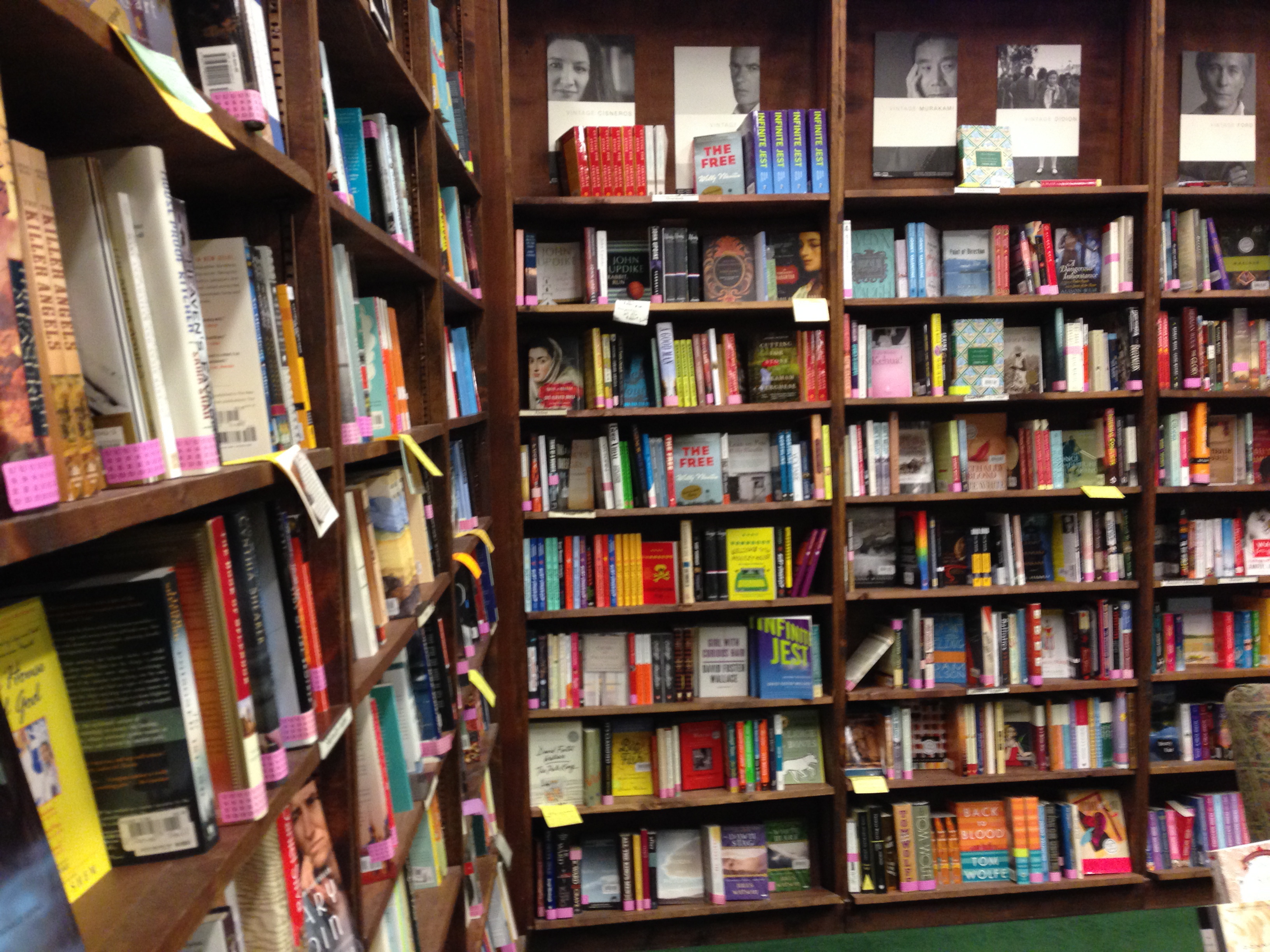
As well as too many recommendations. (Not really.)
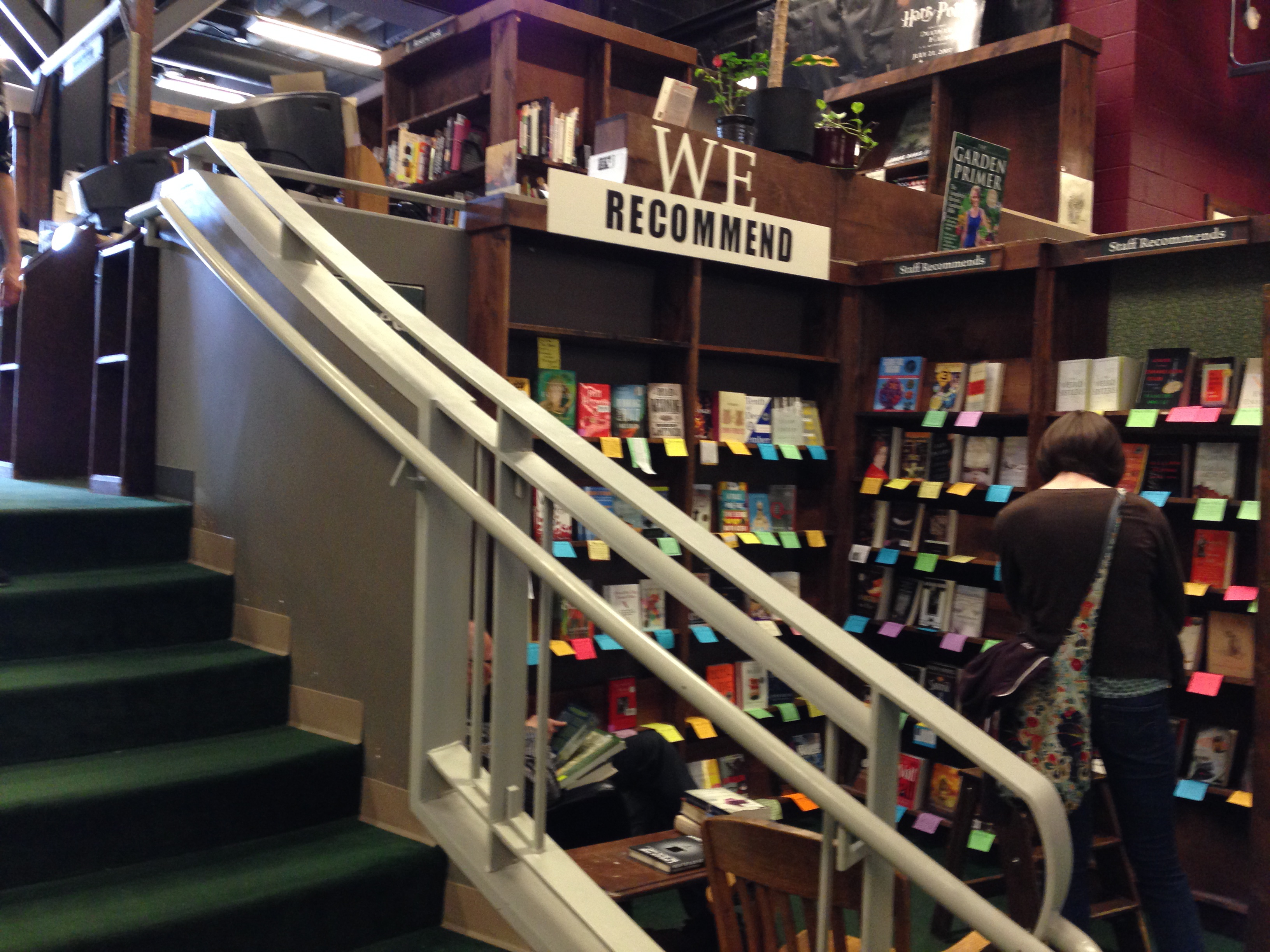
The original store opened in 1971. That small store had 950′ and two employees. In 1986 the expanded store moved across the street. This was the store I hated.
My memories of the Cherry Creek store: People bustling in from one of the various doors. You’d grab a map and have to hold it this way and that to figure out where you were since the mountains weren’t visible. (An orienteerer I’m not. I didn’t learn right from left until 6th grade and only know my way around Colorado when I am on one side or other of the mountains.) Then, usually up the wide staircase, which had books on the landings, books piled on the sides of the steps. Something would always catch my attention so I’d have to stop and skim it. Sometimes I’d get stuck in the magazine section, which included every conceivable topic in various languages. Too poor to buy a book? Try an obscure journal.
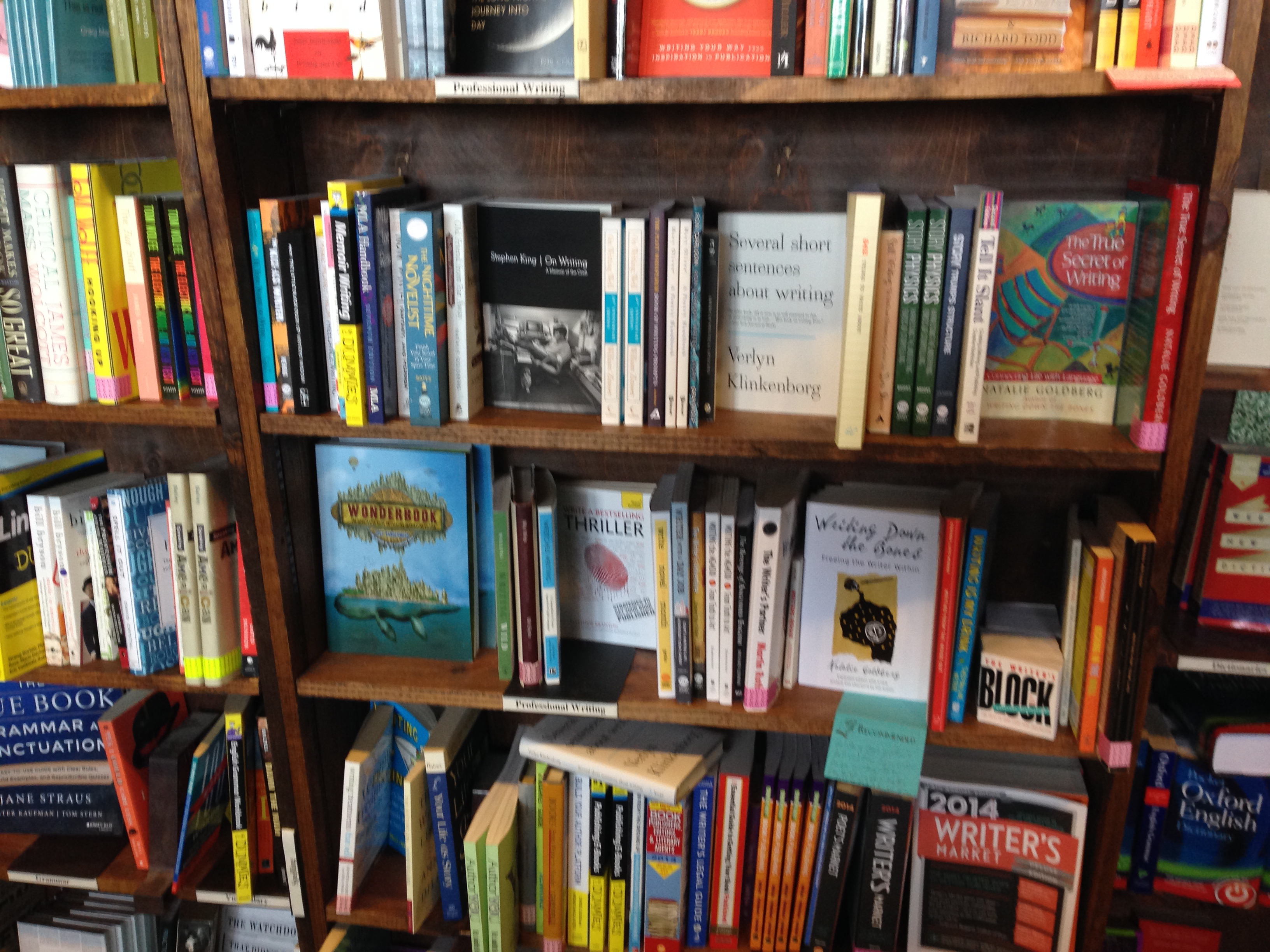
Books for writers (Colfax store.)
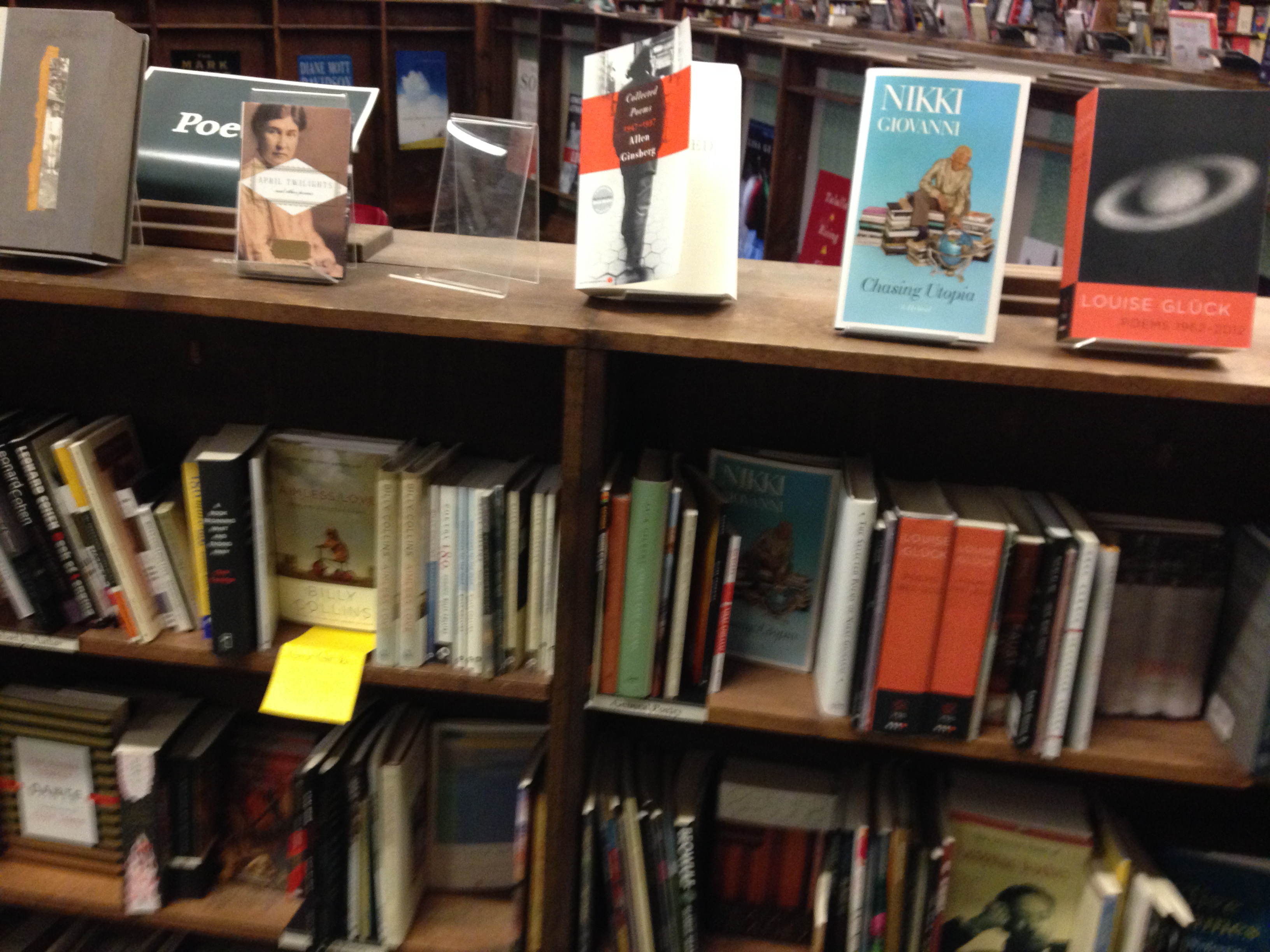
Poetry collection, Colfax store.
This incarnation had four floors, with a well-liked restaurant, The Fourth Story, on the top. There were information desks on each floor, chairs tucked in corners, and people everywhere. The lower level held the smell of coffee from the busy coffee bar. Six miles of shelves! You could get lost, and pre-cell phone days, you might wander for hours amongst those 150,00 titles, looking for the person you arrived with. I was overwhelmed, and remember plopping myself down, depressed that I could never read all the books, not even all the books that sounded really good and interesting since a good half of the titles would have met those criteria. Scanning the wall of recent arrivals, I despaired I’d never have a book displayed there. Unless I went into the store looking for a particular title, or had narrowed down what I wanted to a particular topic, it was too daunting to enter. Of course, a normal trip resulted in a large purchase since no matter how determined I was to buy just one title, something else jumped out as a must read.
When the branch store opened in LoDo, I liked shopping there better. It still had a ton of books, three floors (since consolidated to two) with books displayed or stacked on the landings, the wall of recent arrivals, and lots of magazines, but its smaller size felt more manageable, and you could met up at the coffee bar since it normally was less busy than the other store.
Since the Cherry Creek store closed in 2006, I’ve mostly shopped at the Colfax location. The new Colfax store has two floors, with fewer nooks and hiding places but now it has history as it resides in the renovated Bonfils-Lowenstein Theater. The building had been vacated about twenty years before it was converted to a bookstore. Udi’s Cafe faces the side street, with a coffee shop in the opposite corner. The website says there are about the same number of titles as in the old store, although the open space makes the overabundance of volumns look more manageable. This store has very tall shelves, but preserves many of the historic details of the old theater. I wasn’t aware of some of these features until I read the website. Most of the books are shelved in the proscenium. A bank of theater seats, as well as many other chairs, remains for reading pleasure.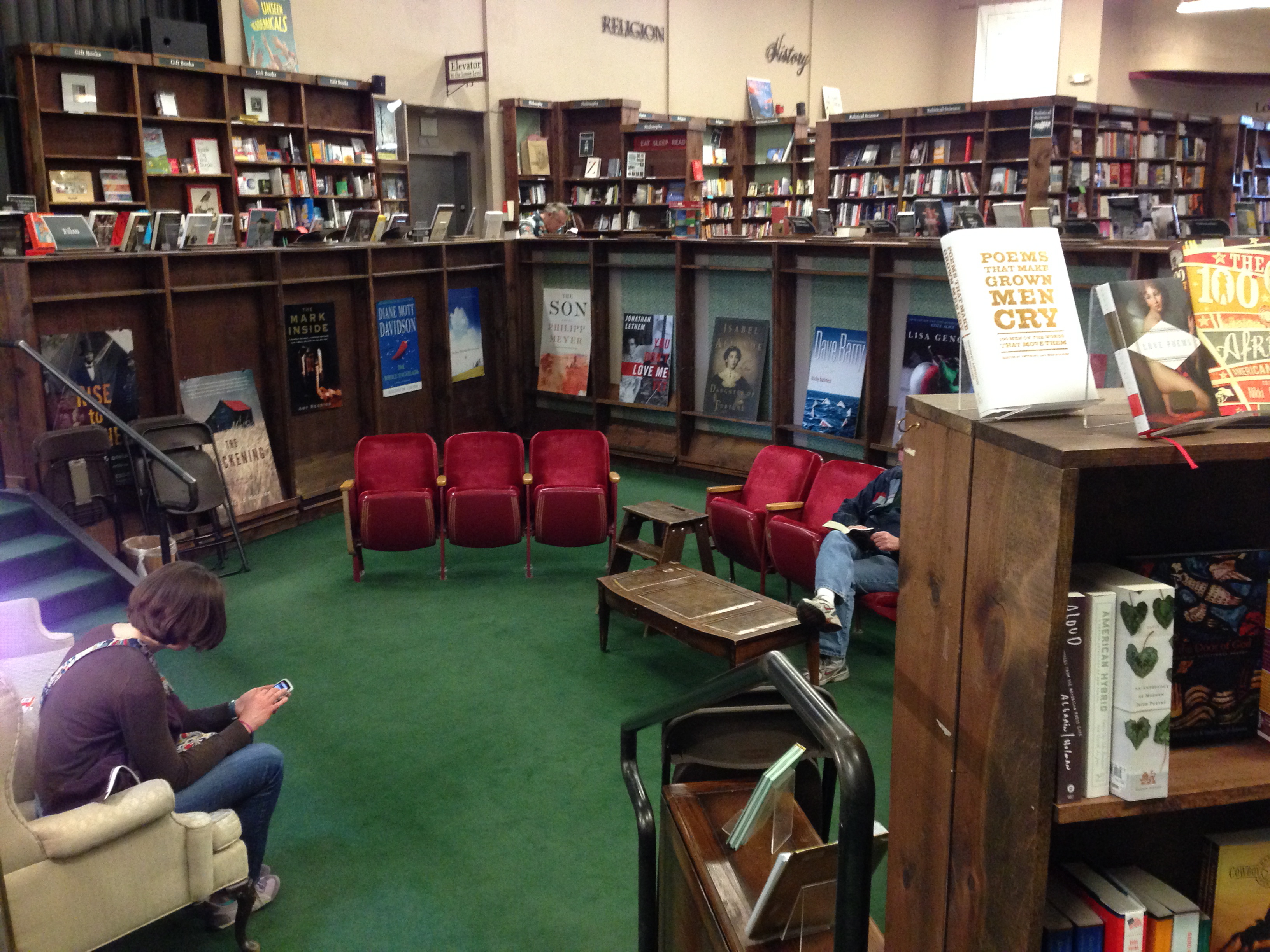 A new feature is used books commingled with new titles. On my recent trip I bought a used title, two discounted books I’ve been meaning to read, a discounted French Vegetarian paperback, and a hardback hot off the presses.
The history of the store includes numerous author talks and other events, which continue to this day. Its hallmark is customer service and a knowledgeable staff. On my recent trip, I tapped into the expertise of the head buyer, Kathy. Ordering titles online or by phone is another longtime service. Truly, the bookstore is a friend to any writer and beloved by the Denver metropolitan community in any of its incarnations. 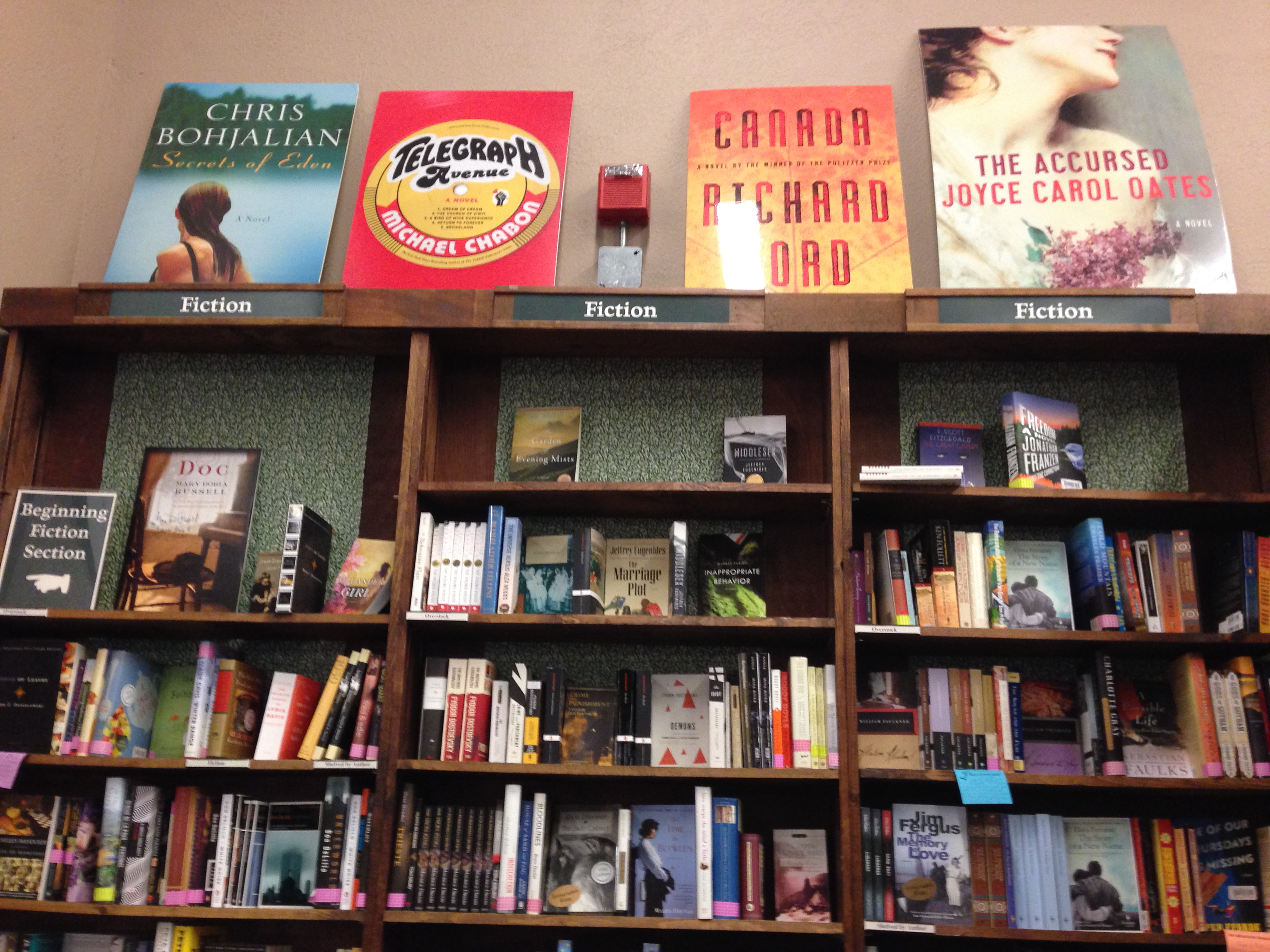 You can like them on FaceBook, order online, or, when in Denver, shop at any of their three locations. (Colfax, Lodo, or Highlands Ranch.)
Travel and Leisure Top Bookstores.
Flavor Wire Top 45 Indie Bookstores
What’s on YOUR bedside table?
The New York Times Book Review routinely asks the question above in its author interviews. Often, the books mentioned make me feel illiterate or at least lacking in erudition. I cheated a little on my own list below since one of the books I’m about to mention was actually on my chest of drawers. I relocated it to my bedside.
Here is a picture of the books that were next to my bed on Saturday, April 5.
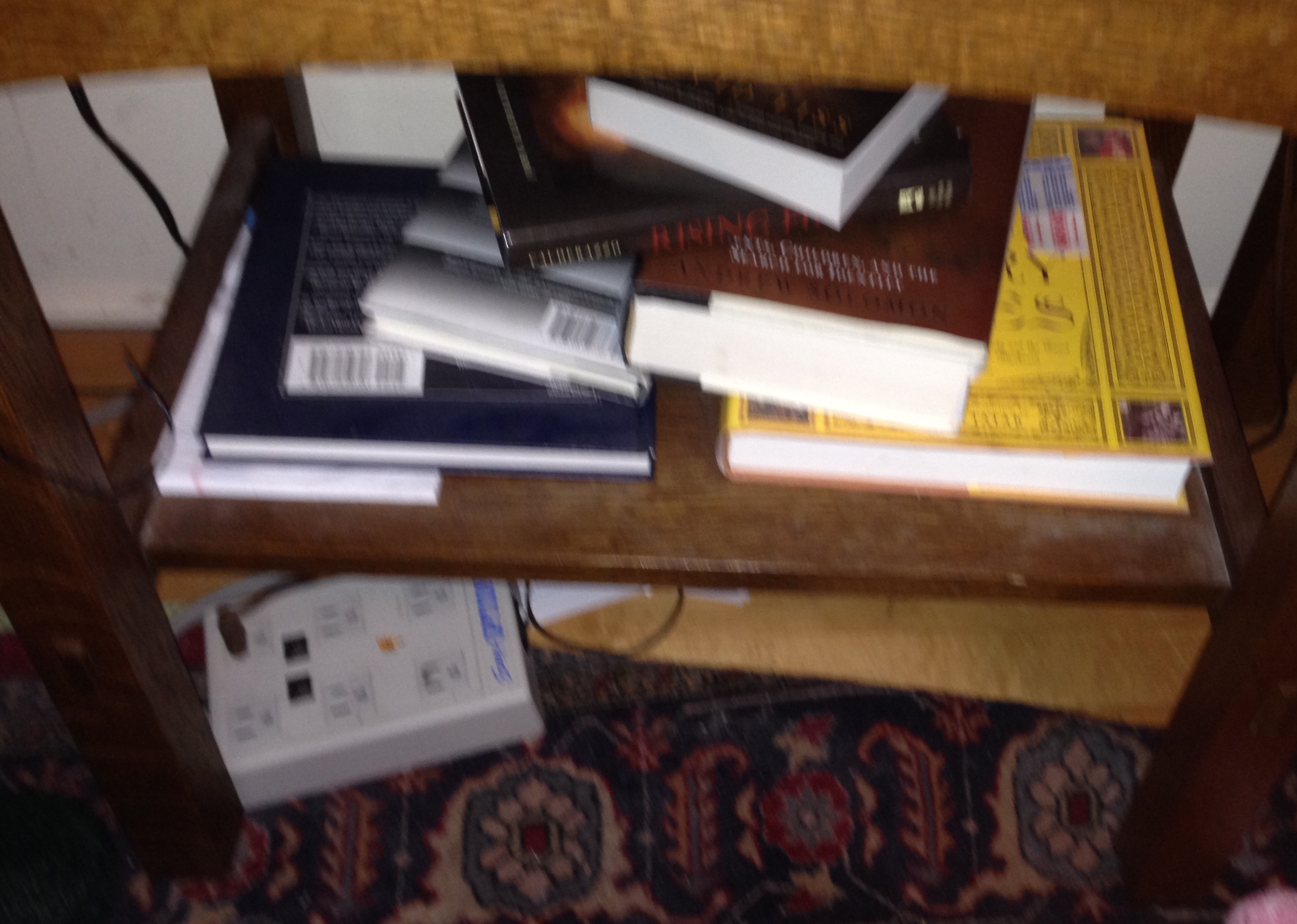
And here is each book with a short comment.
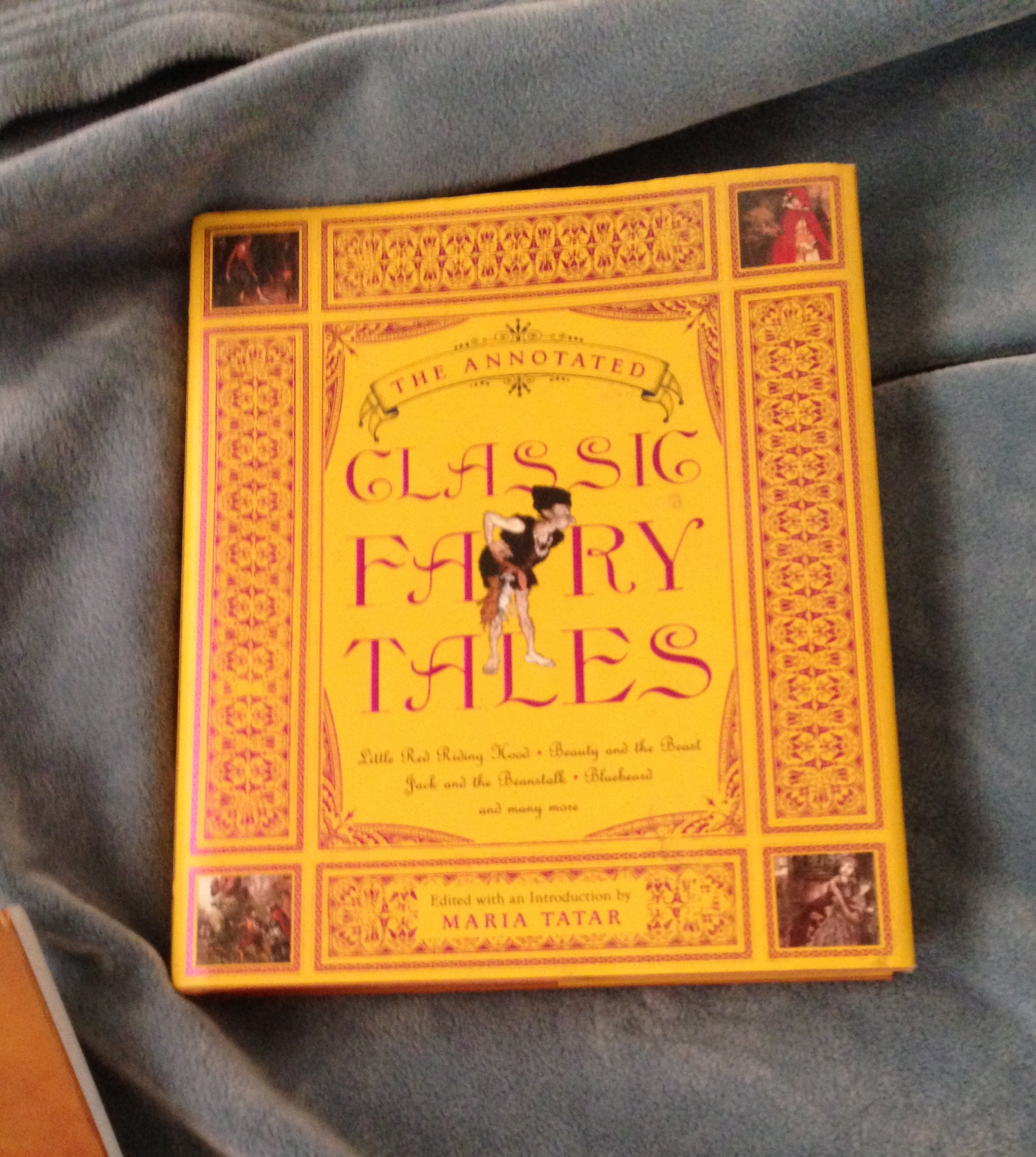
I’d totally forgotten I’d asked for a copy of fairy tales for Christmas–in 2010 maybe! My idea was to read one per night so I could incorporate them into my work. I might have looked at one entry.
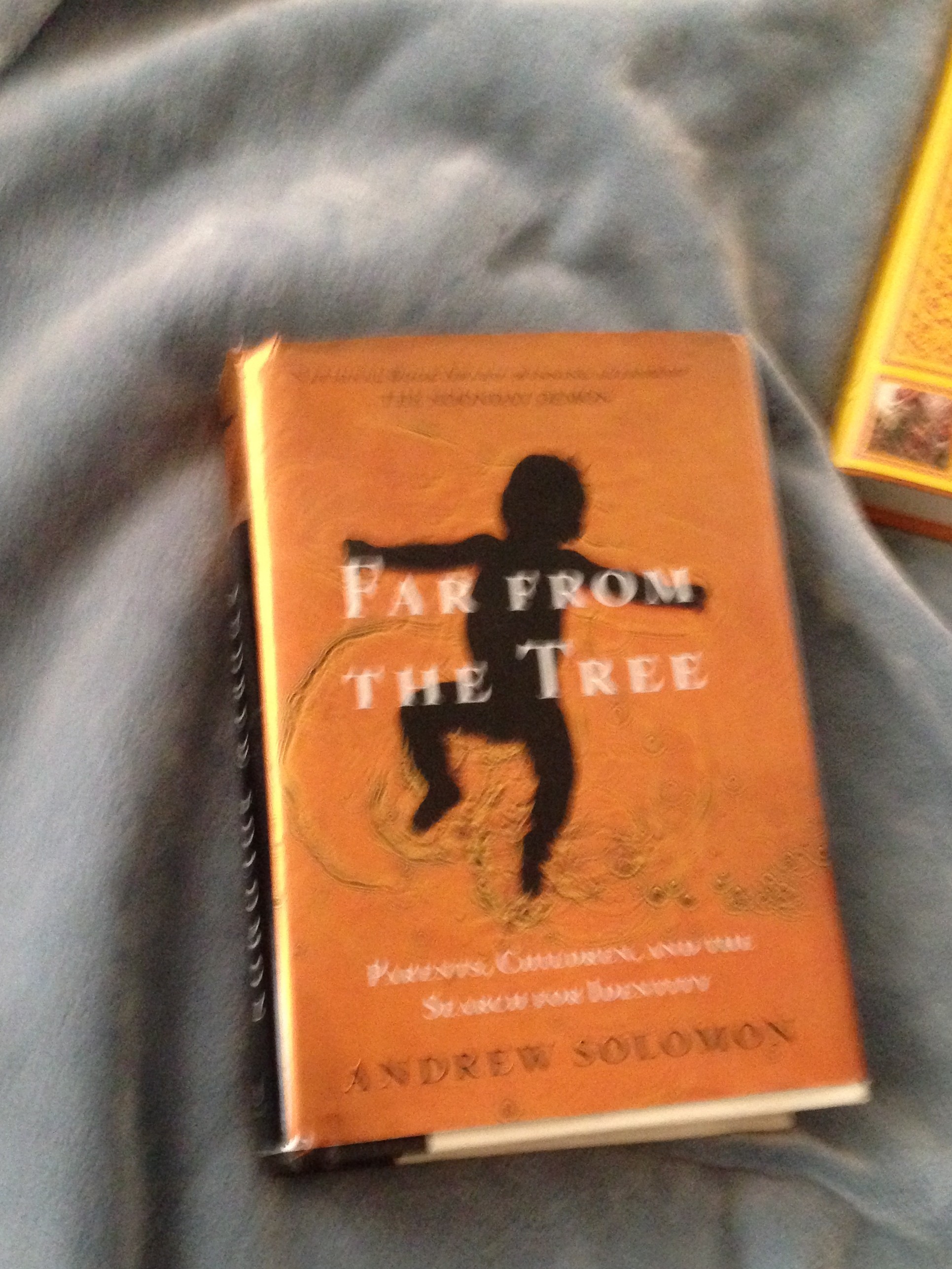
I asked for FAR FROM THE TREE for Christmas 2012. I read half of it and found it very interesting, but I had hopes of finding others who would like to read and discuss it.
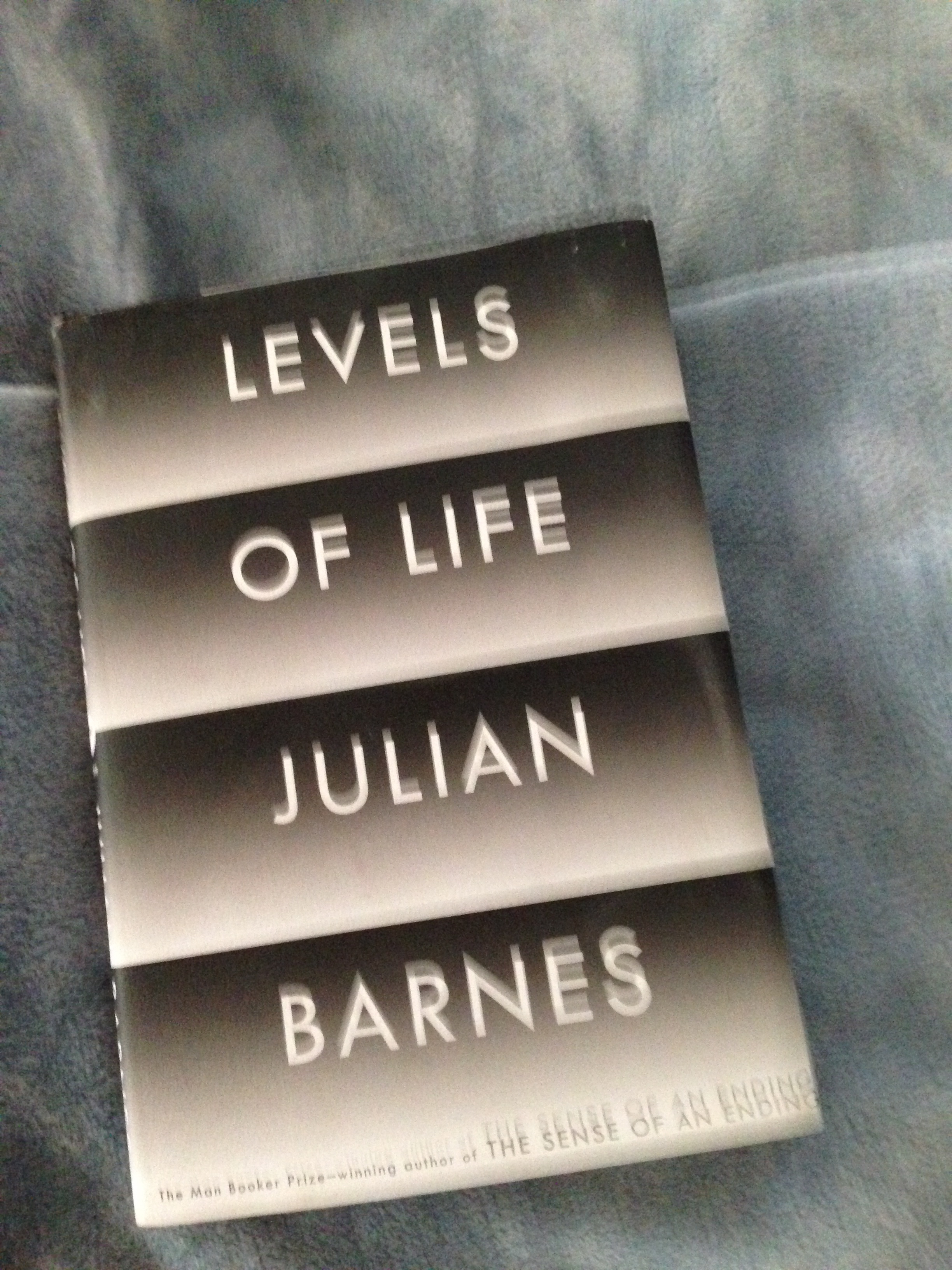
This book was probably my newest acquisition. I’d read SENSE OF AN ENDING and loved it, but I found this one difficult to get into. Too fragmented, and then when I was reading it at night, the fragments were fragmented.
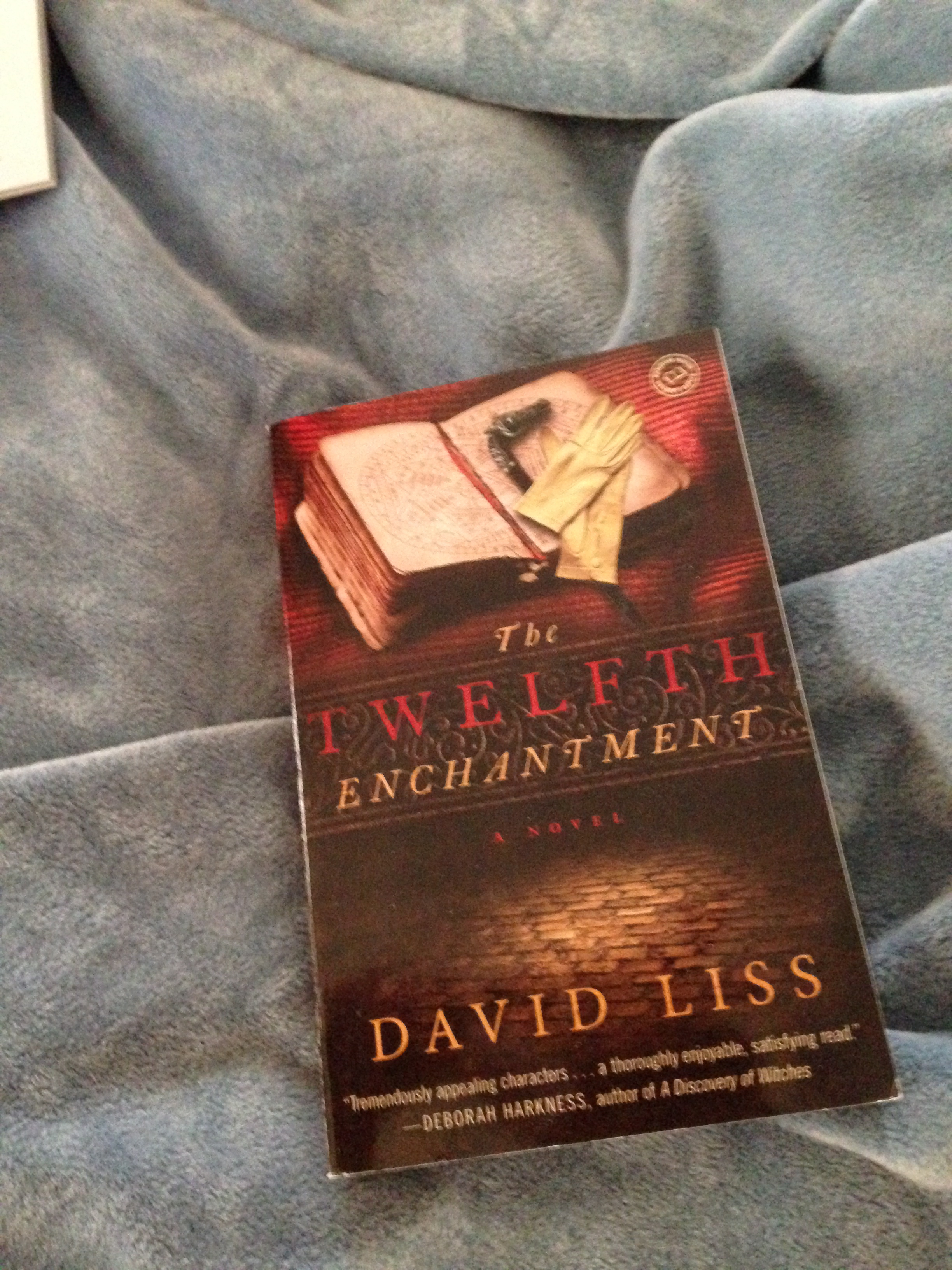
I have the bad habit of buying interesting sounding books at conferences and then never reading them
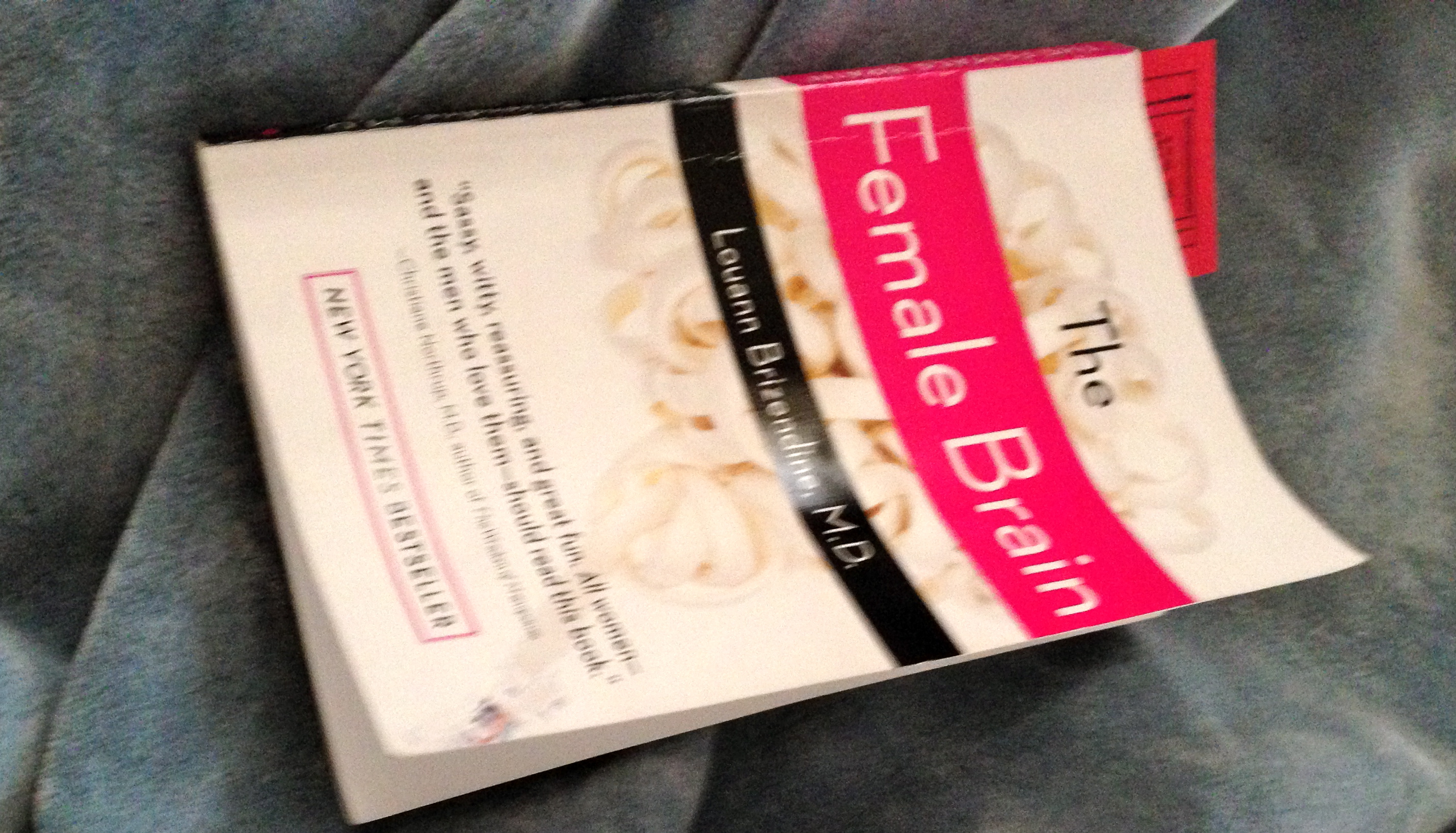
I loaned this to my friend N. so she could read the section on The Mommy Brain while I read about rearing babies the French way (see previous post). Although THE FEMALE BRAIN is interesting, it is more like a textbook that BEBE and I elected to finish BEBE before soldiering on in this one. I’m close to done.

RISING FIRE was loaned to me by a writing friend. I read the beginning and it is next on my reading list. It is written by a Colorado State University professor whom I once met at a picnic. I think he’s a friend of friends, too. Narrative/creative nonfiction isn’t my go-to style of writing, but after enjoying writing my blogging, I’m rethinking this as a possible creative outlet.

I started this novel, which I bought at an estate sale. I’ve seen Mystic River, of course, and enjoyed it, but I’d never read the author. The price was right so I picked this copy up this summer. Somewhere along the line. I started reading it, and even though I’m not a baseball fan, I enjoyed what I read. I put it aside to read THE FEMALE BRAIN. I may go back to it and read it concurrently with the nonfiction above.
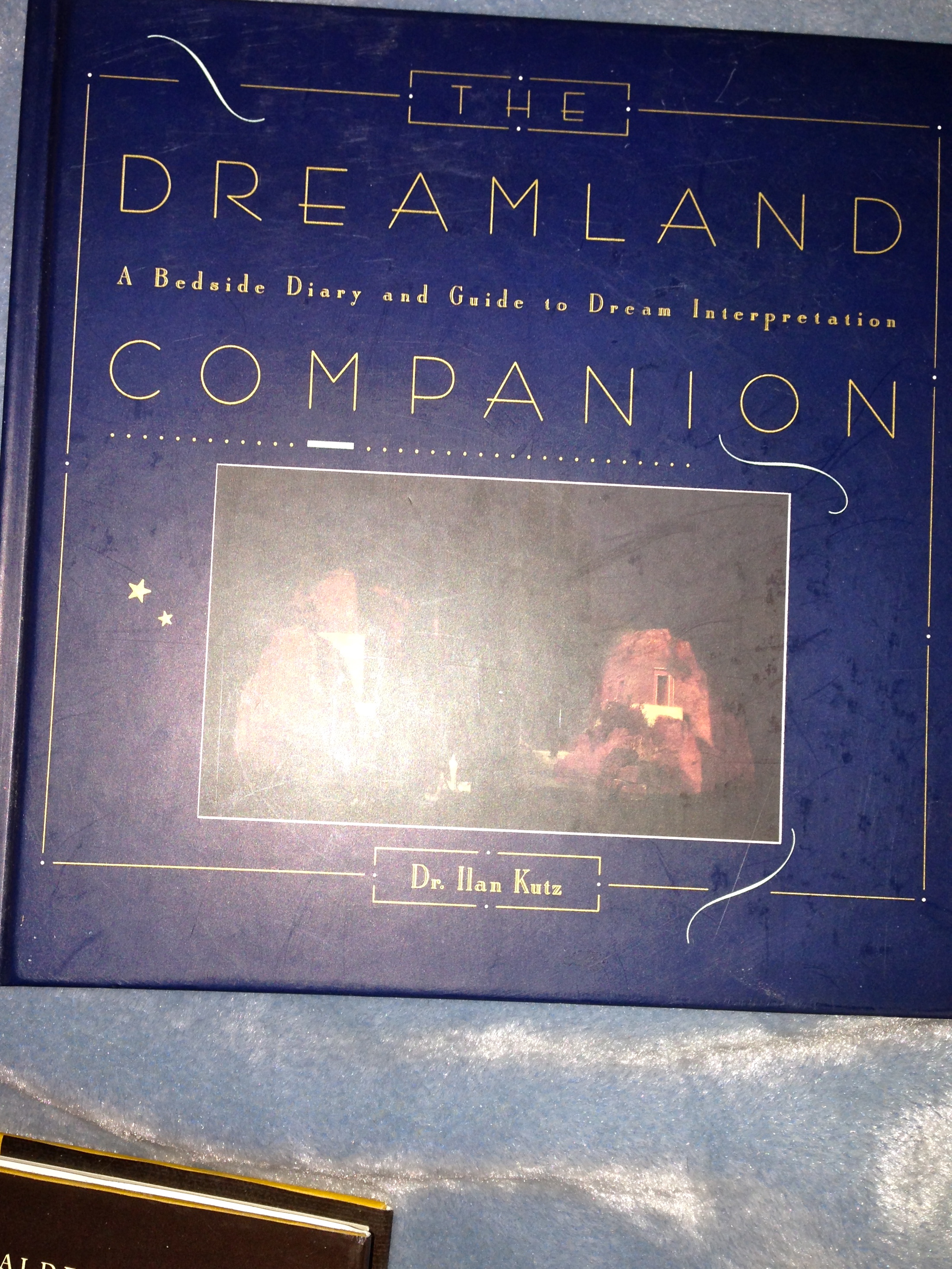
My last “book” on the nightstand is a dream diary. I’ve read up on dreams and kept track of dreams at various times in the course of my life. It’s waiting for me to remember a dream and write it down.
The last item on my nightstand is the cause of me being behind on my reading.
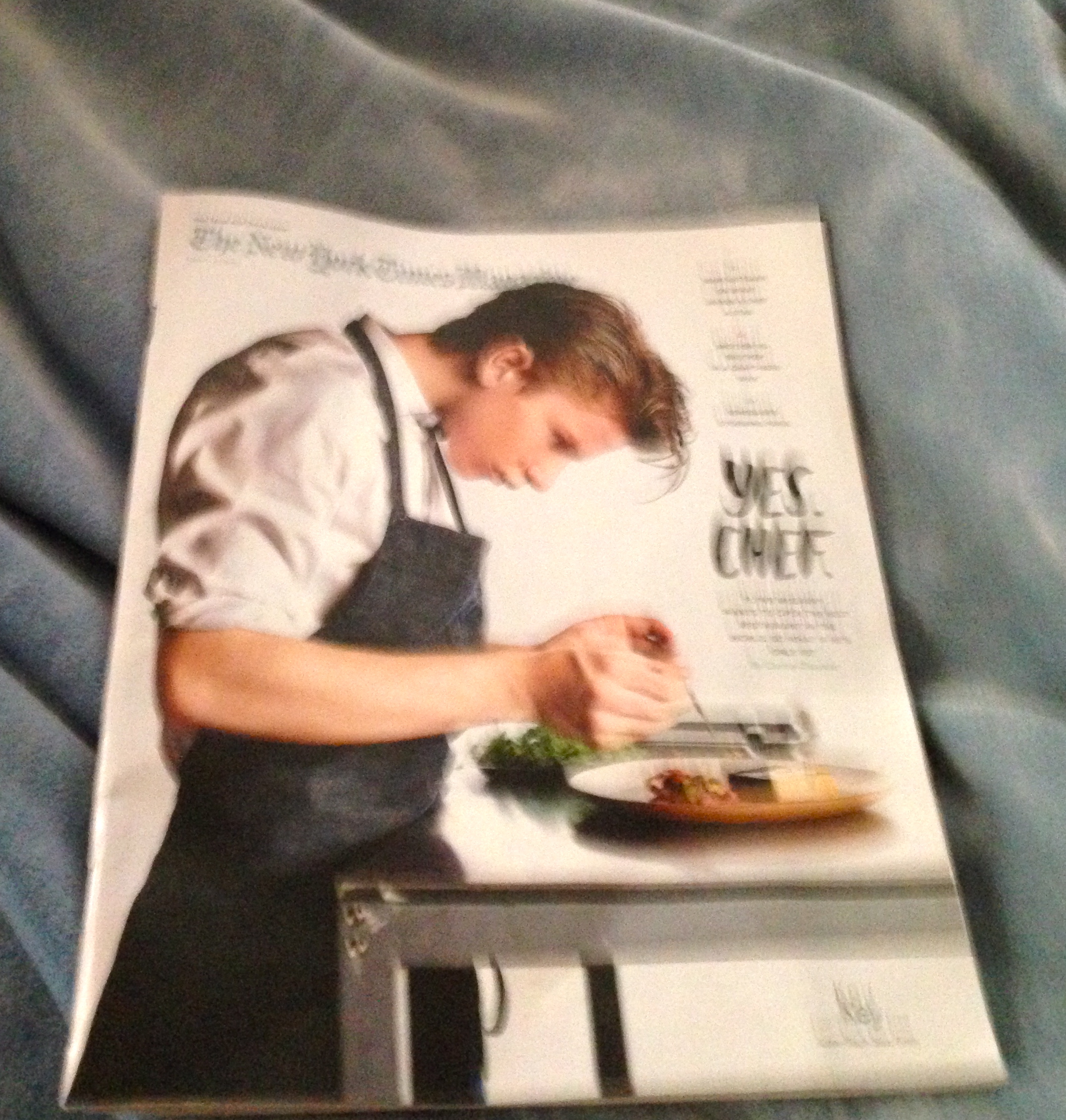
My goal every week is to finish the Sunday Times by Saturday so that I can start fresh the next morning. Sometimes when we’re away for the weekend, I ask my neighbor to please, keep the paper, so I can get a head start on other reading, but she usually gives it back to me anyway. I’ve read the Sunday Times since I was a teenager.
Probably I should say I read parts of the Times. We subscribed for the Book Review. If I read the whole paper all the way through, I’d be like my college friend June who saves the paper to read later but never gets around to it.

June last summer in NYC.
I’d probably read more books if I restricted myself to reading a few articles on line or had the Denver Post delivered instead of the Times. My latest excuse? You never know where an idea for a blog post might come from. I have a draft for a post generated from a story in last week’s edition and while glancing through today’s Styles section a feature caught my eye. I may want to address that issue here as well.
What books are next to your bed or wherever you tend to read?
Better off French? The writer and French children’s Literature.
A friend of mine has a 1-year old whose father is French. When N. was pregnant, I bought Pamela Druckerman’s Bringing Up BeBe for the parents-to-be. I thought it might have some good advice and I wanted to know if it mirrored J.C.’s experiences. I’d read an excerpt in the NYTimes and thought the “method” sounded promising. I have since borrowed back the book to read. I don’t have any children, but I enjoy reading on different subjects. As a writer, you never know when information will come in handy or present an idea for a story.

The son of N. and J.C. Photo by his mother.
All in all, most of the techniques described make sense, partly because, other than being served Camembert at 18 months, the style of parenting appears much like what my mother and other of my parents’ generation would have espoused. It sounds as if French children are far more internally motivated and less demanding of attention than their typical American counterparts. Now, there are caveats. Druckerman herself says what she describes applies mostly to parenting in Paris and, possibly, mostly to a particular socioeconomic class within Parisian society. Although she cites experts and other works, the book is based mostly on observation, not hard research.
What struck me as the reason I might be better off French was the short section on French children’s literature. Druckerman writes of American children’s literature, “…there’s usually a problem, a struggle to fix the problem, and then a cheerful resolution.” She adds, “… every problem seems to have a solution, and prosperity is just around the corner.” (p. 162) French stories, she says, start in a similar vein with a problem and struggle to solve the problem, but the solution doesn’t seem to stick for long and often there is no personal transformation or growth. Her interpretation of the less-than-perfect ending? That life is complicated, and no one is completely good or completely bad.
Of course not all American adult or children’s stories follow this format, but it seems there is a constant demand for growth and change in the characters; at least that is a criticism/question that often arises in critique sessions. Offhand, the only modern French novel I can think of that I’ve read is The Elegance of the Hedgehog. Certainly to me those characters were unlikeable, although I suppose they did change. With this as my only example, I don’t know how well adult French literature follows the model Druckerman describes in children’s books, but I know I would like to be free to write unlikeable characters who don’t necessarily find salvation by the end. And does the ending have to be happy? Most of my endings are more or less neutral, which some might see as “unsatisfying,” although the author Mark Spencer called one mauscript heartbreaking. (Yeah, yeah, it was as part of a class I paid for.)
What I desire is the ability to write “reality” without having to be considered literary. I don’t think my writing is insightful enough,”deep” enough, nor is the prose exceptional enough for that tag, which leaves “women’s fiction” the only category available to me. I’m not sure my writing meets the standards for this nebulous genre/category, defined at findmeanauthor.com as tapping “into the hopes, fears, dreams and even secret fantasies of women today.” The Women’s Fiction Writers Association exists for those who write about “stories about a woman’s emotional journey.” Other than the fact that women are the main characters, I still don’t see how this is different from what was once called mainstream fiction, and that’s why it might have been easier for me if I’d been French!
World War I, Writing Advice, and a Storybook Ending.
 Luck. A lot of luck is timing and that seems to be true with the story behind this novel, Somewhere in France. I haven’t read it, nor had I heard of it, until I found a link on Twitter. Although I’m not a big historical fiction buff, I am fascinated by World War I and may look for this after I finish the five or six books I’m currently reading.
From the interview above, Jennifer Robson mentions she wrote this novel, queried agents, and was told no one was interested in WWI. She apparently stopped trying to find an agent. When Downton Abbey became a hit, a friend suggested she try querying again. This year is also the centenary of the beginning of WWI. I had wondered at the proliferation of movies and books set in that time period but hadn’t made the connection with 1914. (The Well-Digger’s Daughter, A Young Doctor’s Notebook, The Given Day, others. It seems like I’m encountering these works every other day, although maybe it’s just me since the Dennis Lehane book is years old.)
Somewhere in France is definitely a case where the author wrote what she loved, and a good example of how timing played into interest in her book.
The Serendipity of Selecting Books, or How Do You Pick a Book to Read?
In the February 22 “By the Book” section of the New York Times Book Review Alice Hoffman gave this answer to the question: What book are you most eagerly anticipating this year? A novel I know nothing about that I happen to stumble upon, as I did once upon a time searching through my mother’s bookcase. That’s still the best reading experience: falling in love with a book I meet by accident.
I used to go along the library shelf and pick books by title, color, something else about the spine that caught my eye This method introduced me to authors I never would have found otherwise. I would read a piece of the flap or the first sentence or two to see if I potentially would like the book, but for the most part, those books were a surprise. I’ve never been one of those people who has to finish a book I start, so I wasn’t in danger of investing time in something I didn’t like.
For a few years, I worked in the children’s department of our public library. As the head librarian valued my knowledge of YA books and respected my ideas, it was a great job. Until she resigned. The new head of the department was a nightmare and I soon left, too. I avoided the library and started buying books. Suddenly I was pickier. Now I would be wasting money if I didn’t finish a book.
Although I may have still done some shelf-selecting, I tended to read authors I knew I liked or tried books from reviews. The reviews proved less than satisfactory; I might have been okay with these selections if I was getting them from the library, but when I shelled out dollars and used space on my dwindling bookshelves, I became more critical and often never finished a volume.
For a number of years, I belonged to a book club which provided me with books and titles I never would have read without the suggestion of the group. Not all of these were great (The Celestine Prophecy) and some of them weren’t worth reading (Bridges of Madison County.) Overall, though, I was introduced to new titles and authors, until the group disbanded when more people wanted to discuss work and vacations than the content of the books.
During this past summer, I attended a writing retreat on Long Island. One of the instructors read a piece from a Colum McCann novel. It was beautiful. I wanted to read that book, not one of his recent ones, but I didn’t remember the title. Old Firehouse Books, my local independent bookstore, carried only TransAtlantic and Let the Great World Spin. Although my nemesis had finally been let go, and the library was a safe place again, I was out of the habit of going there.
One day in the fall we were at The Tattered Cover  on Broadway in Denver. Truth be told, I prefer the LoDo location, but that day it was easier to access the main branch. I scanned the new titles but nothing looked like a sure thing, something I wanted to sink a large chunk of an afternoon’s salary into. As we were leaving, I remembered my desire to read Colum McCann. Like many bookstores, The Tattered Cover has added used books to its shelves, making its name more accurate. I found McCann on the shelf and pulled a book off, paid for it, and later that night started reading. It was lyrical, but it wasn’t what I expected. Many pages in, I turned back to the cover. Somehow I’d pulled The Mother of All Sorrows off the shelf, a book by Richard McCann, not Colum.
  Serendipity and a surprise book. Probably not something I would have picked to read on my own and an author I hadn’d heard of.
I’d made another serendipitous selection related to that trip to New York. Even though I’d brought a book with me to read on the plane, I like to browse airport bookstores. A friend had suggested In the Night Circus as a reading selection for my trip, but even though it was on the shelf, the pull of the unknown made me select another title, The Art of Hearing Heartbeats, a German bestseller. I hadn’t read a book in translation in awhile, the title sounded somewhat intriguing, and the first sentence or two worked, so I bought that instead. I don’t believe I know anyone else who has read this story full of magical realism set in a another culture.
Cognate questions: How do you find books? Have your ever found a book by accident?
Is a Unique Setting Necessary to the Goodness of a Novel?
Posted by c2london in Reading, Uncategorized, Writing on February 9, 2014
 Maybe there are two kinds of posts, those that are opinion and those that require research. The second could also include opinion, of course. After reading a comment by Saytchyn (see comment to previous post) that didn’t actually make it into the comments section for some reason, I decided to write separately about my thoughts on the ten characteristics of a First Class Novel.
What she said was that what met the criteria was subjective, and of course it is, but it also seems as if at least a few of the categories might have more objective measures. For one, transporting us to “unlikely cultures or times” seems as it can be objectively determined, although I’m not clear on the qualifier, “unlikely.” The reader should know if a book is set in a culture, country, or time in which they have never participated. Yes, few of us alive have been to a time prior to 1914. Does that give all historical fiction a point in the 1st class category? The book that Saytchyn mentions, The Bone Key by Sarah Monette, is set in England. If the reader has never traveled to London, does this qualify it as an “unlikely culture”? What if you have visited? What about an English reader living in London? Are they likely to think less of the book if they are familiar with the setting?
Here is the list of the first ten adult fiction books I have listed on Goodreads. Not sure why they are in the particular order they are, maybe by date I rated them? I’ll give a quick assessment of whether or not they meet the culture/country/times criteria.

1. Dancer (Colum McCann)–set in Russia and the world of dance YES

2. Confederacy of Dunces (John Kennedy Toole)–New Orleans of the 1960s. Setting marginally meets the criteria but possibly the characters make it an “unlikely” culture. Yes

3. Let The Right One In (John Ajvide Lindqvist)–Sweden world of vampires. YES

4. Mother of Sorrows (Richard McCann)–suburban Eastern US, 1950s or 60s.This would seem like a no for anyone over 40. No.

5. Chang and Eng (Darin Strauss)–mid-1800 world of Siamese Twins in the US. YES

6. Sense of an Ending (Julian Barnes)–contemporary and mid-1900 England. A very little bit, but how different in England from the US? not really

7. What’s Eating Gilbert Grape? (Peter Hodges) mid 20th century mid-American small town. No, at least if you’re over 25.
8. A Dangerous Woman Mary McGarry Morris  –20th century small town. No, again, if you are over 25.

9. Nobody’s Fool and Straight Man Richard Russo–upstate New York, small town, 2oth century and college town in the Eastern Us. No.
10. A Patchwork Planet (Anne Tyler) –20th century Baltimore. Again, not really.
What does this short analysis say? That I like books with a change in culture/time/country, but it isn’t necessary for me to think a book first class. I know from that sampling that my love of Sense of an Ending was driven by the beautiful writing. The last five were related to the characters. Overall, for me, although a unique, interesting, or foreign setting adds to my assessment of a book, it’s not strictly necessary for me to call a book First Class.
8]Name a “First Class” Novel
 Recently Donald Maass published an article,The New Class System, about his take on the world of publishing in Writer Unboxed. In it he listed classes of novels. I am creating a checklist of his First Class Novel points. My first impression was that few novels would fit in this category, and of course, it probably isn’t necessary for all good novels to meet every point.
Here’s the list, taken from his post:
1. Memorable Characters
a. singular destiny
b. likeable
c. self-aware
2. Unique Premise
3. Instantly “real” story world
4. Gripping plots
a. gripping even when slow
5. Gorgeous writing
6. Surprising themes
a.which are challenging
b. change us or see the world in a different way
7. Break rules
8. Transport us to a different culture or time
9. Teach things we knew little or nothing about.
10. Overall “utterly unique”
For my first attempt at “rating” a book I thought I’d have to use something I’d read in the last year, but when I looked at my bookshelf, I realized I have other candidates. For my first attempt at analyzing a book, I am going to use Lambs of God by Marele Day.
1. Memorable characters. Yes, although I can’t, off the top of my head, name any of the nuns or the priest.They are likeable, although they have varying degrees of self-awareness. And yes, at least two of the main characters, including the antagonist, Father Ignatius, have singular destinies.
2. The premise: a group of nuns live isolated in a forgotten monastery have their new traditions and routines interrupted when a man (Father Ignatius) appears with orders to close their sanctuary. I’ve never read a book with this outlandish premise before, and it is hard to see how anyone else could propose it.
3. Story world immediately real. Yes.
4. Plots that grip. I read it quite awhile ago and plot is not usually a major factor for me, nor are nuns the characters I’d put at the top of my interesting traits/occupations list. Glancing at the book now, I’d say it takes a little (p. 5) to actually get into. I suspect it is mostly slow but still entertaining and interesting.
5. Gorgeous prose. This is another characteristic that I’d have to reread to accurately access. I found this novel hilarious and think comic novels can get away with a different level of good prose.
6. Themes: To definitely decide, reread, but probably yes, although obviously not memorable enough I can spout them now.
7. Breaks rules. Again, this is hard to access since I’m not sure what rules are being spoken to, but yes, a book with one male character set in an isolated spot probably breaks many rules.
8. Cultures and times. My recollection from an interview is that the author made up most of the Catholicism for this novel, but it fits due to the cutoff nature of the group. So in the world of fantasy, yes an unlikely culture.
9. Teaches things. I did have to look up the geography since the author is Australian and I was curious as to the setting. I was also curious as well as the accuracy of the theology. Although I may not have learned much about either in the book itself, the book could be considered a vehicle for learning.
10. Utterly unique. My initial thought was, “Yes, this is unique,” but on reflection, I think it could fit into a genre of science fiction/fantasy–isolated outpost. It might have some similarity to Lord of the Flies, (William Golding) and possibly The Sparrow (Mary Doria Russell.)
I guess I’m calling it as having at least six attributes of the First Class Novel, with three unknown due to the necessity of rereading. The last is a draw since I would have said yes, utterly unique, but on second thought, it does share characteristics with some other stories.
Overall score: 6+
I would love to hear YOUR ideas of First Class Novels and how they rate using this system.
Anne Tyler, Emily Neville, and the Change in the Publishing World
For Christmas this year I asked to have hardback replacements for some of the paperback books I love. I thought this would be a good present since it was something I wanted and it would allow my husband to search ebay and other places online. I received copies of Morgan’s Passing (1980) by Anne Tyler

and the 1964 Newberry Award winner, It’s Like This Cat by Emily Neville. Overall, I’m not a rereader, but with the passage of time and new copies in my hands, I decided to reread both.
I first read It’s Like This Cat in 5th or 6th grade. My recollection was that it was funny, touching, real, and I liked the love story. Rereading it fifty years after it was first published, I can see the points that I probably thought were humorous. The love story was very tame and hardly drove the story since it was mostly about a teenaged boy and his relationship to his father. He does change in the course of the book, but as literature for kids in past often did, it was more of a told than an shown change. Not exactly preachy, but probably not something that would be considered great literature these days. Since the language and situations are very sanitized, I’m wondering if kids in 2014 would enjoy this book? Although it is about a 14 or 15 year-old, it seems more like a story for a contemporary ten-year-old.
I must have read Morgan’s Passing sometime after it was first published as I discovered Anne Tyler while taking an Adolescent Literature class at Colorado State University. The main requirement of the class was to read so many pages of books for adolescents. I don’t remember what our page count was, but I know I read many books and someplace I have the index cards I made for the class with a summary of each book. This particular class helped me land a job working in the Children’s Department of our library, the place were the YA books were then shelved.
The book I read was A Slipping Down Life. Most of Anne Tyler’s books would not be classified as young adult, so the others I read were not for this class. I think I’ve read everything she’s written but one. The problem is, I don’t know for sure which one that is since a number of the earlier ones tend to blend together. My favorite of her oeuvre is A Patchwork Planet, one of her more recent. Reading Morgan’s Passing, a book I recalled as having a very quirky (even for Anne Tyler) character, I was struck by how much the world has changed. The character does things that I’m sure readers today think of as sexual assault and stalking, although most of Tyler’s writing is remarkably free of actual sex scenes.
The world of writing and publishing has changed as well. Anne Tyler had the privilege of being a writer who has done very little self-promotion. In this interview from April, 2012 in The Guardian, it states this is her first face-to-face interview in over 40 years! In doing some research on Emily Neville, it appears she did little self promotion, too, as she soon became a lawyer and died with little notice in 1997.
Although my writing has been likened to Anne Tyler’s—the characters, not the prose—I would wish my writing life could emulate hers as well. I’m sure I’m not the only writer who laments the need for self-promotion. A question might be, does this switch to the author having to self-promote change the face of “literature” as currently published? I’m sure many would respond that it is change in publishing world that is driving the necessity for writers to become promoters, but as agents look for a different type of writer to pitch to editors, does the style of book change? Or maybe the question is, who is driving the change to the more visible writer–someone tweeting away, blogging, doing interviews on the Today Show, online, at conferences, etc? Is it the reader or the industry? If the industry, does this do the reader a service, or are we now stuck with the equivalent of the movie industry with the constant blow them up special effects blockbuster?
To further color the analogy, are “mainstream”–as in non-strictly genre books, or those shelved in Fiction A–Z—the equivalent of independent movies with literary novels in the category of foreign films? And if so, do these have the attendant problems that are accompanying this burgeoning source of DVDs? (See “As Indies Explode, An Appeal for Sanity.”) Possibly the many DVDs are more akin to self-published books?
And writers, which type of author would you prefer to be?
READCON: an Event for Readers and Writers. It Was All About the Book.

Teeshirt from High Plains Library Event, 11/2/13
A recent article in SALON, Better Yet, Don’t Write that Novel, lamented that NaNoWriMo is a month-long event for writers and doesn’t celebrate readers. Laurie Miller lauds the efforts of some reading challenges as being more rewarding than the intent of NaNoWriMo. Although I mostly agree with what she has to say, I don’t see a problem with people spending (wasting) their time trying to write 50,000 words in a month. I’ve done it before. The results were less than desirable and I ended up with a mess that is difficult to edit into something readable. Many of the comments to this article mention programs that do promote reading such as One City One Book, National Reading Month, Canada Reads, etc. The recent READCON put on by the Highplains Library District in Weld County, CO had something for both readers and writers. Three of the members of my writing group attended together.
The morning featured a number of writing-related sessions. Later in the afternoon a talk on self-publishing and how to do it right was presented by Jessica France from indieBook Library. This hour was an overview of a longer session on the intricacies involved in putting your own book out there and making it successful.
The first event the three of us participated in was a Zine Workshop, introducing us to a new concept. A volunteer from the Denver Zine Library gave us a very brief introduction to zines and allowed us to browse through a representative sample from the collection. Then we made our own. The majority of participants at this small workshop appeared to be high school-aged. Creating our own small booklet utilizing discarded library books and out-of-date issues of magazines was fun. Interestingly enough, the three of us, all writers, used mostly pictures and few of our own words to create ours.
Another event we did not attend involved creating bookmarks and a third was a contest to design the best library in Minecraft. A quiet space for those who where NaNoing was also available.
All of the planned events were free, but many were ticketed. A Steampunk tea–costumes encouraged–looked well attended and as if everyone was having a great time. Unfortunately, we hadn’t planned ahead and were only able to land one ticket. Our lunch also ran over, making us too late to attend. Instead, we toured the Bookmobile, something I hadn’t done since childhood. For at least one of my friends this was the first time she’d been in one. Each of us won a prize–a screen cleaner, a book, or a DVD, just for taking the quick tour. Each branch of the Library District had also created a display celebrating a genre of literature. Most of the displays included a small treat, an interactive feature, and a book list or two.
Sessions on establishing book clubs, a “whodunit” webinar, photo contest, reading recommendations, and more were presented for readers. The highlight of the event, though, were the talks by authors, including a local authors’ panel. This panel ran the gamut from a nationally known bestselling author to a self-published YA author. Two guests of honor were Craig Johnson, author of western mysteries, and the multifaceted Mary Doria Russell. This was what had interested me in READCON in the first place. I’d read The Sparrow when it came out as well as the follow-up book. After that I was vaguely aware that she’d written other things and had the idea she was writing historical fiction, but I’d never bothered to check out her other books. She was a delightful and funny speaker, as well as a gracious signer of books. I wished she was, if not in my writing group, at least my friend. Her talk about Doc Holiday convinced me to buy the book, Doc.
The last event we attended, and the other main reason we decided to make the trip to Greeley, was the book signing, which was accompanied by samples from two local breweries. I hadn’t expected the beer to be free. Since it was, we were able to purchase another book or two from more local authors. I enjoyed both the amber and chocolate porter samples from Wiley Brewing. 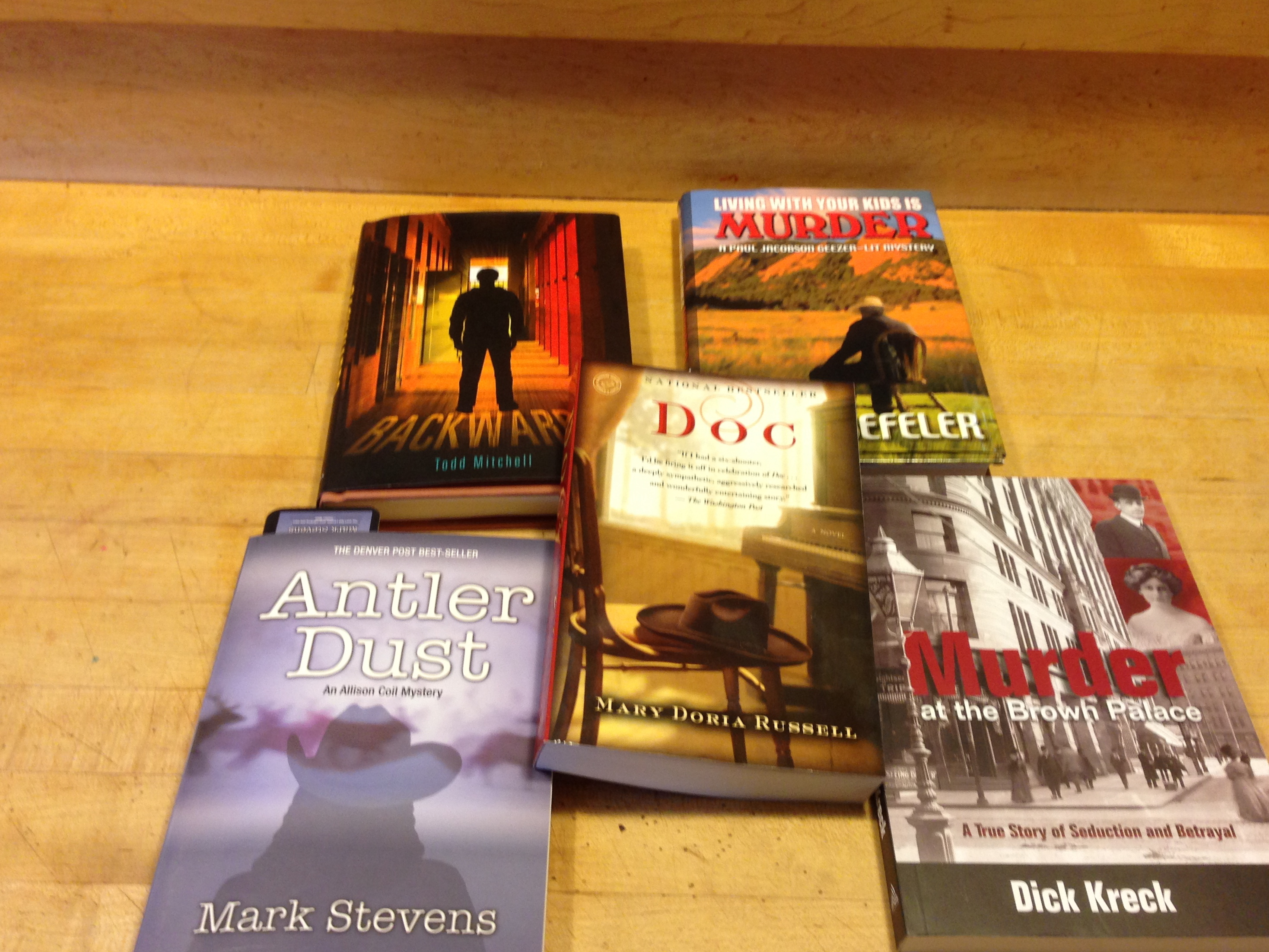 Books pictured: Doc by Mary Doria Russell. Murder at the Brown Palace by Dick Kreck, Antler Dust By Mark Stevens, Backwards by Todd Mitchell, Living with Your Kids is Murder by Mike Befeler.
I attended two writers’ conferences as well as a writers’ retreat this year and in many ways I enjoyed this event the most. Possibly it was because it was free. The shortness of it might have helped, or the fact I attended with two friends and met at least two new local writers. Possibly it was the lack of pressure; no agents to worry about impressing. As a non-overly gregarious introvert, I often watch as others butt into my attempt at conversation or negate my tentative beginnings. There was none of that here. It was all about the book. The lines to have books signed were either nonexistent or very short. Mary Doria Russell was completely approachable and gracious in responding to questions. (At an SCBW (not yet i) conference I once stood in a long long line to have a book signed only to have the author, who was chatting with a friend the whole time, look up when I got to her and say, “Oh, I’m not signing anymore.” I’d really admired her writing, but her less than friendly dismissal completely reversed my feelings. Possibly I should have blamed the organizers. They could have announced that after a certain time/number of people/some other marker the author would be done. I agree she had to eat lunch; the problem was the arbitrary and almost nasty way she decided to stop that bothered me.)
The High Plains Library District is to be commended for this fine program. Many of us will be looking forward to attending again next year. Oh, and the teeshirts were great. I loved the color on the front and the design on the back and that they were heavy and black.

 Cuisine of Loneliness