Archive for category Friendship
Celia: 8/19/53 to 3/9/91
Posted by c2london in Friendship on March 9, 2015
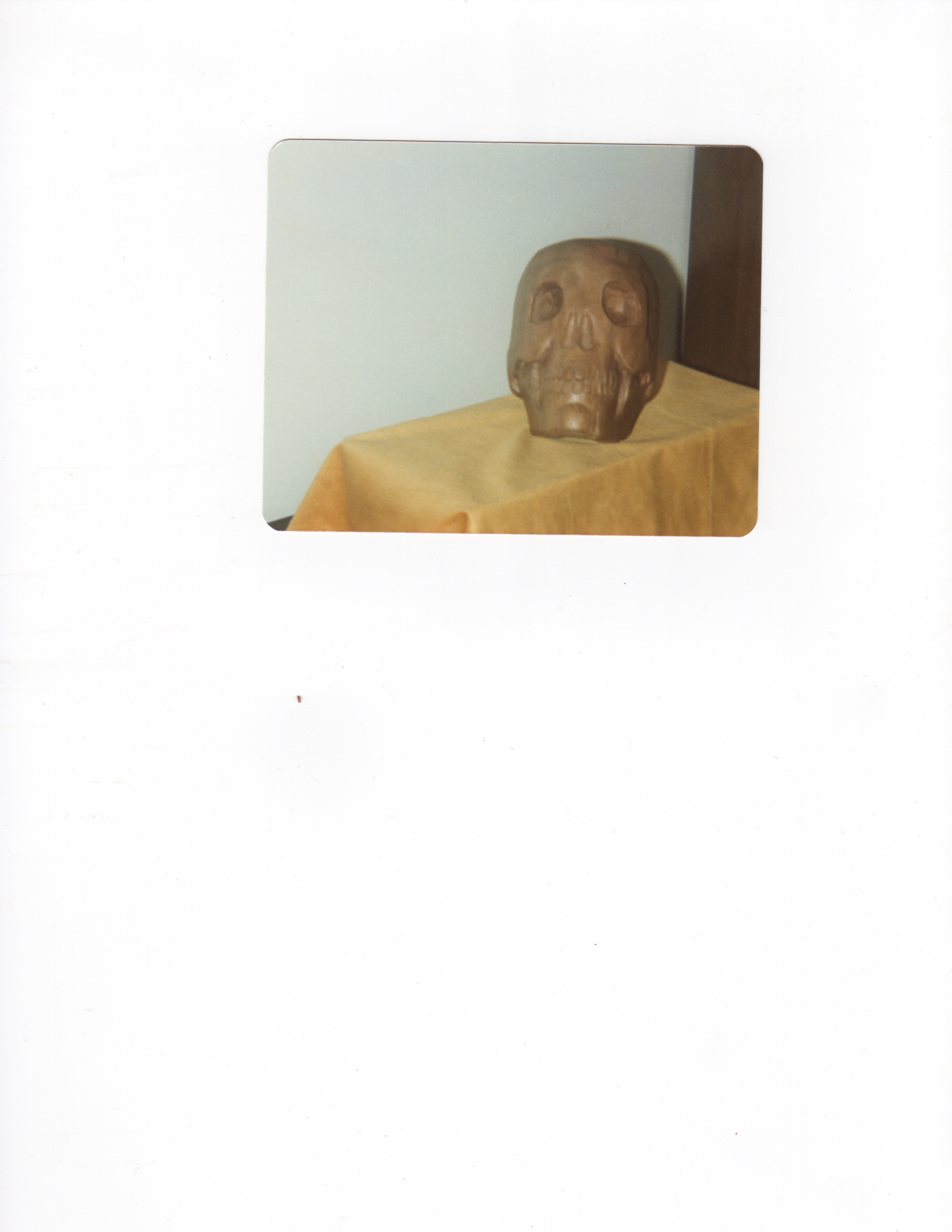
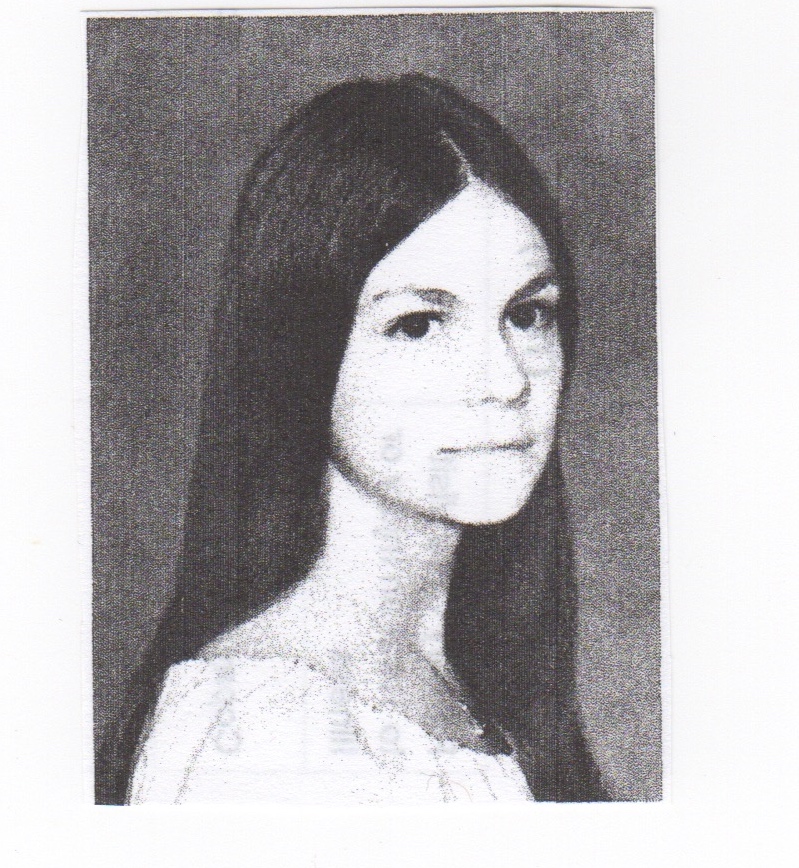 My friend Celia died young. She left two young daughters as well as a number of good friends. She had many varied interests in life. She was a wood carver/sculptor. I once said to her that she was lucky because with sculpting vs writing, she could leave her creations out and people would notice them. She laughed and said hardly anyone ever said anything about them.
Today is the 24th anniversary of her death, and in honor of her talent and lack of recognition I am posting two photos of wood she sculpted.

Is There a Good Platform for Online Critiques?
Posted by c2london in Friendship, Writing on November 10, 2014

November, Denver Botanic Gardens
I recently quit an online critique group. The other three women in the group were excellent critiquers so it was a hard decision to make.
One of my difficulties with the online group was the platform we were using, yahoo.groups. I have used this platform for classes and found it daunting. I couldn’t easily follow any conversation, partly because people would start new topics when merely responding to a previous post. This happened in my most recent group as well.
A disappointment with the group was that we didn’t interact around points made about each others’ work. In my live group, someone may complain about the premise of a story. The others chime in and agree or disagree, make new points, etc. The author may also ask a question or explain what he or she was attempting. Either of those scenarios may result in more discussion between the members. Sometimes this sort of conversation helps the writer see where something went wrong or find a solution for a perceived problem. Not doing any of this made the group feel more like individual beta readers. True, we posted our critiques and the other participants could read comments, and yes, that has some appeal and advantages, but I believe the interplay of the various readers is both fun, enlightening, and engaging. And this interplay, more than the shared work, might eventually develop friendships.
I’ve been following Writers’ Rumpus for awhile now, and as part of the weekly digest I noticed Marianne Knowle’s interview with a woman who has started a website set up for critiques. I glanced at the sample pages, and it looks like it might be useful. I’m wondering if any of my readers has used the site, Inked Voices, or if anyone has another site or method to recommend for online critiquing?
The Bechdel Test: the Right Question for the Unpublished Author?
Posted by c2london in Friendship, Movies, Writing on October 20, 2014
The WFWA newsletter has provided fodder for a post once again. This time it started with a blog from Writer Unboxed related to gender bias in publishing. I know many are tired of this subject, but this post by Julia Munroe Martin was slightly different and included a link to the Geena Davis Institute on Gender in Media. As many articles on this subject mention, this one discussed the Bechdel test. This test is normally applied to movies, with the basic requirements to pass being at least two named female speaking parts where the characters talk to each other about something other than the males in the movie.

Thanks to Aleska D and FreeDigital Photos.net
As noted, this test is mostly applied to movies, but comments on Munroe Martin’s post suggest applying it to books as well. Some suggested applying it to their own manuscripts. In a book is it “fair” to say that the test is passed if there are two female characters who talk about anything other than men for as little as two sentences? Does it have to be more of a sustained exchange? Do different genres have different likelihoods of meeting this requirement, or is it mostly realistic fiction that should be put to this test? I’m going to start paying more attention as I read and maybe produce a blog on this topic down the road.
For the time being, I’m immersed in critiquing manuscripts. Three of these are from my WFWA critique group, and others are from my mixed local writing group. I’ve read much of the work of one of my partners, and I have little doubt that if put under scrutiny her work would pass, since her characters, both male and female, are trying to solve problems not related to sex or gender but to life, death, and ghosts. A number of the manuscripts I’m reading are historical fiction. One involves a woman realizing she is a lesbian. This is set in the world of rodeo and other topics come up naturally. Another involves an English woman and her maid traveling out West to meet the lady’s husband. These two do talk about their travel and danger. A third is about a young wife and her engineer husband. My recollection is that she exchanges a few lines with a sister when they are children, but I don’t recall her as yet speaking with any other women. A romantic suspense has not as yet introduced the female lead and has been two men talking. In fairness I’ve read sixty or fewer pages of each of these and the tenor of the story very well may change and include other issues.
The last short story submitted by the male of the group involved a family of husband, wife, and two children. The mother and daughter might have had a brief exchange, but this story probably would not lend itself to this kind of analysis due to the tight knit group of characters. Possibly short stories are too brief and feature few enough characters that this test would seldom be passed.
How do my own manuscripts hold up? In the one I’ve submitted to my online group, one of the questions I’m trying to address is friendship. The main character asks others what components they feel are necessary for friendship. This alone should pass the Bechdel test. The problem I’m encountering, though, is that I’m told this exchange is either boring or seems like it doesn’t fit. The question that might be posited by my critiquers is, does this advance the plot?
I read sections of another completed manuscript and it might have problems meeting the test even though there are at least four important female characters. The plot of this particular book involves unplanned pregnancy, affairs, and jealousy, and revolves around the male lead. My two lead female characters are together only briefly, leaving them little time for interaction. The female protagonist does discuss their relationship with her mother. The two also talk about the protagonist’s children, but is this enough to pass the test?
Could it be that “women’s fiction” needs a slightly different test than the one applied to movies?

Side note: when looking for pictures of women talking, most were of either children or sexy, partially clothed women.
How would you rate your writings as far as the Bechdel test? Do you think it is a fair way to look at books, or should some other criteria be used? What might you recommend as more fair? And last, do you find conversations not necessarily connected to the plot, but part of character development, uninteresting or unnecessary?
Grading My Conference Experience
Posted by c2london in Friendship, Short Stories, Writing on September 8, 2014
I attended Colorado Gold, the 30th edition of the Rocky Mountain Fiction Writers’ conference this past weekend. Although I could get many other posts out of the conference, I’m going to start with grading my own experience.
Networking: (D- ) After the Crested Butte conference in June I had 500 business cards made. I handed out THREE. Although I chatted with a few people, I made no new contacts or even Facebook friends.
Hotel Location: (A ) Easily accessible from I-25 and N of the Denver metro area, which made the drive easy for those of us coming from the north. Not sure if people driving south felt the same way!

The hotel did have a spectacular view, although this is not it.
Hotel Reservations: (D- ) I never received a confirmation. When I called to check on this, I was assured by both the reservation service AND the hotel itself that I did NOT have a reservation. They offered to rebook me for $185 a night, seventy dollars over the conference rate! I made other plans. The only reason I’m not giving the hotel an F for this is they sent me a pre-arrival notice prior to the weekend so I was able to cancel the reservation I didn’t have before I was charged.
The Hotel Facilities: (C- to D) I’m not sure how a hotel in 2014 can get away without having Wifi in the conference rooms. Even worse, there was limited audio-visual ability. Most of the conference rooms were small. Many sessions held in those rooms required people to stand. Even after chairs were added, it was sometimes difficult to find a place to sit. The doors to the rooms opened at the front, making an early exit or late entrance noticeable and noisy.
Food: (C+) The rolls were good. Why there weren’t water pitchers on the table, I don’t know. The luncheon buffet tables were whisked away almost before everyone was served. The hotel restaurant had some interesting offerings, but my pinon-crusted French Toast featured nary a pinon.
Beverage Service: (B ) Four dollars for a club soda? Really? Last year I ordered club sodas and they gave them to me for free. Maybe it isn’t fair to compare last year’s hotel to this one. Water was offered in all sessions, which was fine, but again, the hotel last year gave us rootbeer floats for free! Okay, no more comparing. On the plus side, this hotel did supply real glasses for serving the water.
Speakers and Banquet: (B ) I suppose if you’ve been to a conference of almost any sort, you’ve sat through the messages and speeches and jokes. Unless you’re part of the inner group, they aren’t really of much interest.
The Running of the Conference: ( A) This is run totally by volunteers, and they do an exemplary job. There were a few glitches, some foreseeable, others possibly due to the layout of the hotel. Some might have been due to the unreasonable expectation that everyone was staying at the hotel and attending all functions. Most were minor, and if not self-correcting, easily explained by asking questions.
Other stuff (No grade): I overheard complaints about the lack of a rating sheet for each workshop. The conference chair did specify everyone would receive an email to a survey monkey in the next few days. This seems sufficient since it saves paper, many people don’t fill out surveys anyway, and the results will be easier to compile.
The Important Part: the Workshops
Probably your perception of the workshop offerings depends on how many conferences you’ve attended in the past, your level of writing experience, and your interests, as well as the ability of the presenters. I do know one person who said she was attending as much or more for the networking as for the workshops, but to me that is an expensive way to make contacts! I consider a conference a success if I come away with a new friend or contact, but the actual content of the conference is still of utmost importance.
The Friday morning add-on sessions didn’t interest me this year, either due to the subject matter or the presenter. There were small group critique sessions with agents and editors. Normally I might have availed myself of these. If I attended one of these, I would have wanted to have stayed overnight to make sure I didn’t get caught in rush hour traffic.That effectively would make the cost of the critique session more than $150 as I would have had to pay for the session, an extra night of lodging, dinner, and breakfast.
I was most looking forward to the Writing with Scrivener class. It was good, but I would have preferred to have spent all that extra money mentioned above in order to attend a longer session.
My other main objective during this conference was to acquire more social media knowledge. I was disappointed in the few offerings. A local writer commented that she felt there weren’t that many offerings, because most people already knew all they needed or weren’t interested. I attended Marketing for the Introverted Writer, which touched on social media, as well as the two dedicated classes, Websites and Social Media and How to Manage Your Author Social Media Platform in 30 Minutes a Day. Both classes offered a plethora of information on what to use. New, useful websites were mentioned and useful handouts provided. What I was looking for, and what I overheard many others say they needed, were the nuts and bolts of how to make these techniques work. This workshop was missing from the conference schedule. Again, I would have been willing to pay extra for an in-depth explanation. Another option would have been a series of free sessions on each of the various social media outlets. In truth, this might have been very difficult with the limited audio visual and lack of Internet connectivity.
Up until late Saturday afternoon, I would have said the conference wasn’t really worth the cost, but finally the session on science fiction got me excited and smiling. Although I still might not have thought I’d gotten my money’s worth if I’d gone home at that point, at least I would have been happy.
Unfortunately, Sunday morning had the most enticing classes. Why unfortunately? Because most of them overlapped. I could have attended any of three of the 8 am sessions, but two of my critique group members had stories in the RMFW’s anthology, Crossing Colfax. I had agreed to attend the panel discussion on the formation of the anthology, which was concurrent with the other three sessions of interest. I did enjoy the panel and hearing the impetus behind the accepted stories.
The speaker for the New Golden Age of Short Fiction, Thea Hutcheson, was a dynamic presenter. Her enthusiasm was contagious and her insights and ideas useful. Literary Pulp: What it takes to Write Literary Genre Fiction was my last session of the conference. It might not have completely filled the premise of that title, but the speaker, John Blair, was interesting and entertaining. He engaged the audience and we left on a positive note.
At the 2013 conference I met Najah Lightfoot. This year she was presenting. I planned to attend her session, Show and Tell: Magic and Magick Tools of the Trade. I wanted to be a supportive friend and also thought I might glean some interesting tidbits I could use in a story. Instead of that small expectation being met, I thought the first half of Najah’s session had to be one of the most interesting and best presentations of the conference. As I was also looking forward to the session mentioned above, I only attended half of the magic session, but that half was moving and wonderfully presented. I hope that I can someday listen to the rest of her session. Thank you, Najah.
If I were to actually grade the sessions, I would say the Sunday sessions brought up the average. Since they were last, the impression I was left with was of success. I’d have to give the overall conference an A. Okay, to be true to my curmudgeonly self, I’d give the overall sessions an A-.
Were you there? What did YOU think? What was your favorite session?
Crested Butte Writers’ Conference, Really a Conference Like No Other!
Posted by c2london in Friendship, Writing on June 10, 2014
This past weekend I attended the Crested Butte Writing Conference which advertises itself as “An Experience like No Other.” More than one of the guest speakers agreed that this was true. One of my friends, and fellow attendees, was a finalist in their writing competition, The Sandy.* I suggested to her that this was a much more laid back conference than others she might have attended. There is no banquet, and although a list of the contest winners was included in the program, and each was featured during a panel, I never heard an announcement of the overall winner(s). Possibly this information was posted.

The Princess. A winebar.
There are no dinners provided. Instead, you are free to eat in your room. Many of the available rooms had kitchenettes or full kitchens. Or you could sample one of the many restaurants in the historic town of Crested Butte itself. The conference and most of the hotels are located in Mt. Crested Butte, which is a short (free) shuttle ride from the actual town of Crested Butte. (You might think of Mt. Crested Butte as the big fancy hotels and ski area and the town of Crested Butte as the hippie area with all the restaurants and funky shops.) One of the nicest aspects of this conference experience is that it currently is small, and even if you aren’t dining with one of the visiting writers, agents, or editors, you very well may run into them while having dinner. Or, as was the case for numerous attendees, you were invited (or tagged along) and had dinner in a large group with many of these same people.
This conference also runs its “pitch sessions” differently than most. Instead of making appointments with the agent/editors or accosting them in the elevator, never letting them have a moment’s peace, and causing many attendees to be both anxious and possibly less open to spending time with other writers, you submit your pitch and first page PRIOR to the conference. The a/e then receive a large document with all the pitches and pages and flag those they may actually be interested in. THEN an appointment is set for you to talk to the person who has preselected your material. I posit that this makes the conference atmosphere less anxious and more enjoyable for all concerned. You might wonder how those who are not selected to pitch feel? This was the second time I attended this particular conference. The first time, there was some sort of mix-up and I missed the deadline to submit. The current system is for you to be notified about a week prior to the conference if you have been given a pitch spot. If you have been, a slip of paper with the time and place is included in your registration folder. I heard nothing, but since I was doing an Advanced Read and Critique session, an add-on (as is the pitch session), I was okay with it.
There are other opportunities during the conference where you might catch an agent or editor’s attention. One is the ARC mentioned above. Another is the “first page read.” First page reads have become more common at other conferences in the last so many years, but the first one I ever participated in was at the conference five years ago. During this, someone reads a mix of first pages to a panel of editors and agents. Although you want to see how your first page is viewed, it is also educational to hear why an agent or editor might stop reading any page. The person who sets up this session mixes in some openings to books currently on the bestseller list and, yes, this does trip up the panel. This year’s panel was nicer than that of five years ago, and one manuscript was actually requested!
Other, unexpected benefits might ensue. The first day of the conference, prior to the ARC, a man who was attending asked me if I’d attended a few years ago. I said yes and didn’t think too much about it, but by the end of the weekend, I was curious why he remembered me. Had I said something especially obnoxious? He looked vaguely familiar, but I couldn’t think why he’d remember me. I hadn’t read during the open mike night. During the last session I asked him. He remembered a line from my first page read! That alone made me feel good, but the editor from my Advanced Read session had many good ideas to improve my selection and said she wanted to see it when I was done.
I consider a conference a success if I come away with at least one new writing friend. At least one other conference attendee found me on Twitter, and there is that Facebook page referenced below. I have the email address of three more, plus I know I’ll see a fourth at RMFW. One or two others also said they’d be there, and since a number of them are very tall men, I’ll more than likely see and recognize them.
If you are looking for a small, friendly conference were most of the speakers are approachable and the presentations are interesting, this is one you should look into next year!
*I currently can’t link to the conference page, but here is the link to the Facebook page. https://www.facebook.com/pages/Crested-Butte-Writers/188744957828306
March 9, 2014
Posted by c2london in Friendship, Uncategorized on March 10, 2014

Celia near Pompelli’s at 18.
We’d been friends since 7th or 8th grade. She sat across the aisle from me in homeroom and we’d converse in sign language, the going communication method in those days. When we couldn’t sign fast enough, or the teacher wasn’t around, she’d talk in an almost monotone, swinging her foot, staring straight ahead, almost unaware of her words. She was the first of my circle of friends to have a steady boyfriend. That boyfriend put a year or two rift in our friendship, since she wasn’t as available t o talk, but when she dumped him at the end of junior year, we called each other nightly.
For years we wrote letters, but she died prior to the dominance of the Internet and email. I often wonder what would have happened if she’d lived into the days of quick and easy email. Even during the last year of our snail mail correspondence the frequency dropped. Would we—I—have been able to pace an email exchange so that neither of us was exhausted or bored?

Celia in the Hickories at 28.
Although my brother had died prior to Celia, his death had been more or less expected whereas hers was unexpected, sudden, and mostly unexplained. The March day I found out was similar to this March day in Colorado. It was warm enough to have the front door open, and the park across the street was full of kids playing. My husband had gone fishing. I’d hung up from talking to a friend who wanted me to go to the movies with her—I said no—when the phone rang again and Celia’s husband told me she had died. I said, “Okay,” and sat on the stairs and cried.
Later he sent me the letters I’d written to her over the years. She had unfolded them and kept them in a file. I had all hers but I’ve never attempted the task of matching mine to hers because she was notorious for leaving off the date. One of my earliest blog posts (Sept 28, 2013) used a quote from her letter, which is still hanging on my bulletin board.
She’s hard to forget and someone I will always miss.
Lessons Resolutions Have Taught Me
Posted by c2london in Friendship, Uncategorized, Writing on January 1, 2014
I’m not sure I’m ever going to get around to writing the post I was thinking about all week, so I’m taking the easy way out and discussing resolutions.
I haven’t often made those lose weight/exercise more resolutions that are easy to make and easy to discontinue when February rolls around. In the past, I’ve attempted to resolve to do something I’d want to continue for many years. One year my goal was to entertain in some capacity at least monthly. Another year I planned to do something cultural on a monthly basis. That kind of goal prompted me to do something that I enjoyed and probably wanted to do but had been finding excuses not to do. Even though I don’t set either of these as current goals, the fact that I did them for a full year helps me stay in the groove. For various reasons, entertaining has morphed into a goal of twice a year–once outside in the summer and once at the holidays, but the mere fact that I once did this more often encourages me to exceed my goals.
I started implementing my resolution for 2014 more than a month ago. This year I am putting things where they belong in the first place. No more jackets thrown on chairs or mail shoved to the side. This should help me be both neater, making it easier to clean the house, as well as accomplish more since I won’t have to be looking for missing items. If I open the mail and pay the bill, throw away the donation request right away, etc. I won’t have missing bills or other mail avalanching off my desk. This resolution is a direct result of B.K. Winstead’s post Mindful Writing, Mindful LIfe.
The advantage of making a resolution and sticking with it for a year may be that remnants of it continue to influence in later years. I might not entertain monthly these days, but I do still think to ask people over; I look at occasions as a possible time to entertain and I am more willing to take the time to attend a concert or visit an art museum. In the back of my mind, I’m still counting how well I’m doing with both those goals. They are now part of how I operate. My writing goal for this year is to post a blog a week. I believe I posted my first blog on Sept. 27 and although all my posts have not been scintillating, I have already posted often enough to average once a week. This is, then, both the last entry for the past year and the first of the new one.
Since for me writing is all about interaction, I’d love to hear what your writing goals are for the year and how you plan to implement them. At the end of the year we can all see how we did! Happy 2014.
Secret Santa, Gift Card Rant
Posted by c2london in Friendship, Uncategorized on December 18, 2013

I’ve played Secret Santa at two work places. If you don’t know what Secret Santa is, it is an activity where you pick a recipient and secretly provide a small gift, usually each day the week, before the holiday. There normally is a spending limit. In years past, we had a very low dollar limit for all five gifts combined. We drew names early enough shopping wasn’t a hindrance. In anticipation of the following year, I usually picked up holiday related items at post-Christmas sales.
My current workplace has increased the dollar limit to $20, the time limit to NINE days–you pick at least four–and we fill out a preference sheet as our ticket to participating. We draw our recipient four days before we start. Granted, this gives us a weekend to shop, but with the preference sheet, it makes me feel pressured. What if I don’t want to, or can’t, shop that weekend? For me, the fun is getting a small gift daily as well as trying to sneak a gift to my person each day, but nine days is too many!.
What I most object to, though, is the preference sheet. Yes, it is nice to know that someone is allergic to nuts or hates dark chocolate since you always wonder, do they like purple or should I have gotten the yellow Santa? Okay, so some basic information is nice if your organization is large enough you don’t know everyone. But when the questions involve hobbies and what stores you prefer, I feel as if I’m being handed a checklist and if I don’t purchase at least one item on that list, I’m a bad Santa.
To me, this is similar to the proliferation of gift cards or money as requested presents. Sure, now that postage often costs more than the gift you want to mail, gift cards are a good alternative for those at a distance. Before gift cards were the preferred present, my sister’s mother-in-law sent gift certificates along with a catalog with ideas circled. No rule you had to purchase that exact thing, but if it happened to be a sweater, it was nice to pick blue over pink, or make sure you ordered a size that fit. This year I’m giving my nieces gift cards to a local restaurant. With gift cards it is possible to be creative, but with money I feel like I’m nothing but the bank. I want to say to my sisters, “Why don’t we add up all the gift-giving occasions, multiply by twenty-five for each gift/person, subtract what you’d spend on me, and I’ll give you a check to cover the kids’ lives.”
I don’t believe Secret Santa gifts need to be practical;frivolous and silly serves the purpose. I also don’t believe most gifts need to conform to what you want or what you expect. The best gifts both reflect the giver and the recipient. How will you ever know you like something new and different if you aren’t given the chance to explore possibilities beyond your usual field of interest or knowledge? The very best Secret Santa gifts I received were from a Danish woman who made me paper ornaments and Danish cookies. I have those Danish stars hanging on my tree today, twenty years after I received them. I never would have written on my preference sheet, “White handmade paper stars,” but I love them and look forward to taking them out every year.
The group at the first workplace, a nursing home, was small enough we knew or could tease out likes and dislikes without resorting to a list. (The year the handyman selected my name and immediately cornered me to say, “So, you like to ride your bike?” I knew immediately he was my Santa.) My current organization, although not huge, is spread out and many of us seldom interact with others. Maybe I’m the only employee who feels closer to my Santa and recipient. I can point out which teddy bear was given to me by whom, which Santa tin was presented by another work friend. For me, Secret Santa provides a chance to make connections and have some fun.
I wanted to relate Secret Santa and writing in some way but when I attempt this, it gets convoluted and involved and better saved for other, more specific blogs.
Facebook, Friends, and Writing
Posted by c2london in Friendship, Writing on October 24, 2013
For me, one sign of a good workshop or conference is making a new friend. Pre-Internet I meet a woman at the first conference I attended, the Southwest Writers’ Workshop. We reconnected at the yearly conference. Between times we exchanged manuscripts. By the time email became the main mode of communication, we’d lost touch. She divorced and I don’t have enough information to find her again.
In 2008 I participated in an online writing workshop. The teacher suggested we join Facebook. So I did.At first my only friends were the other members of the group, as well as a friend’s daughter who felt sorry for me when I told her every time I opened the site it announced, “You have no new friends.” Probably those of us in the workshop were too busy critiquing and discussing on the workshop site. Side conversations were via email. When the workshop ended, a few of us kept in loose touch through Facebook. I met two of the workshop members at AWP in Denver. One of them, M.E. Parker is the founder of a well-received photography and writing journal, Camera Obscura. Even five years later I sometimes exchange critiques with another member.
I met at least four of my Facebook friends at a conference/retreat held at a dude ranch outside of Tucson. I’ve met up with two of them at other conferences and occasionally interact with them on Facebook. At this Springs’s Pike’s Peak Writers Conference I met a woman who became the newest member of our writing group. During the recent RMFW Conference I added three writers to my list of friends.
My most recent foray to a retreat yielded twitter contacts, no new friends. This small retreat was held in a lovely mansion hotel on Long Island. Meals were included and were served off a menu; not your usual banquet chicken! About eight years ago I attended another small workshop and thought I had not come away with any new contacts but last month I did reconnect with another participant at RMFW. Possibly somewhere down the line I will be in contact with some of the other writers from the Writing and Yoga Retreat. This event is sure to grow and include more participants in years to come.

The Glen Cove Mansion, home of the Writing and Yoga Retreat
The lack of a compatriot at this last retreat might have been, in part, due to the small size of this retreat. This was the initial foray of the two leaders into putting on a retreat. The likelihood of making friends might depend on a critical number of participants. The Tucson workshop had been small, too. There were 12-16 of us. I garnered four friends from that group. This last retreat had a mere five women, plus the two leaders. Three of the women were close in age and bonded easily. One of the other participants was related to one of the leaders, and both leaders were already friends. This left me as the outlier with no natural partner and although I am following or being followed by four of the six others, I feel each is a tenuous connection at best.
Not long ago I ran across an article, Whether Facebook Makes You Lonely Depends on How You Use It. I posted this on my wall and asked my friends which way they felt. Those who commented said happier. My response would be mixed. Probably the largest proportion of my contacts consists of high school classmates, whom I “collected” for a recent reunion. The rest are workmates, neighbors, a few people from college, my “real life” friends, and sundry others. Some posted often in the past but have either gotten bored and moved on or now interact with a select group that doesn’t include me. Many never comment or post status updates. A large number post only lost cats, recipes, photos of dogs, and quotes of others. Some are lurkers. A few routinely send holiday and birthday greetings and then sink back into the sand of anonymity. Possibly I shouldn’t expect more; this may be who they are in their everyday lives. Maybe this lack of interaction is related to differences in personality type, but I find the lack of response and interaction frustrating. Often it makes me unhappy and I wonder why I bother checking in.
But when it comes to my writing connections, I find Facebook both useful and entertaining. Many friends post interesting articles related to writers, writing, and publishing. Recently one acquaintance reviewed a book she found in a used bookstore that sounds right up my alley. I plan to look for it. I’ve asked for book recommendations and help with problems related to the mechanics of writing, computer glitches, and story concerns. I belong to at least one page that lists calls for submissions. My writing group created a private group to conduct our business. We’re currently doing our October short story writing month and sharing prompts.
Because of its usefulness to me as a writer, I’ll remain a dutiful user of Facebook until something better comes along. Google+? If you know of something, let me know, but until then, I hope to continue to expand my circle of writer-friends.
Words of Encouragement from the Beyond
Posted by c2london in Friendship, Writing on September 27, 2013
Like many blog writers, I’ve started more than one. One of my writing group friends had a short-lived blog, which she recently wiped off the Internet. I’d posted one comment to something she asked, and she kindly sent it my way prior to eliminating that entry. I think she must have asked what was on our bulletin boards. My response was this:
I decided to see if I had a quote of any sort on my bulletin board. Usually I have some vocabulary words posted, but I didn’t even see them. The only writer-related thing on my board, which mostly had pictures from a calendar tacked to it and a check I needed to cash, was a letter my friend Celia wrote to me a few months before her death in 1991. It said in her large print, some words capitalized, others underlined with a inch of emphatic scribble:
Catherine, LISTEN UP: I don’t think you should ever quit writing. Even if you do it now and then as a hobby. Keep your hand in, for crying out loud. You write very well, and it would be a horrible waste if you quit. DON’T DO IT.
She might have been slightly biased, but who can give up when you have friends who believe in you?
What keeps you going in the face of rejection, finding out the response you’re waiting for is never going to come because the story you thought you’d sent never arrived, etc, etc?
 Cuisine of Loneliness