Archive for September, 2014
Chomp! Does Gum Chewing Help Writing?
Every week during the volleyball season, I attend a cocktail hour with our volleyball coach. He normally brings a player along and we ask questions. Last week’s guest was our star middle blocker. One of the academics in the audience asked her about the wad of gum that was her trademark.

Coach Tom said when he first started coaching, he banned gum, just as our teachers and other adults did for much of our lives. Another coach, though, took him aside and suggested he allow his players to chew. Tom said he was told chewing gum tricked the brain into thinking it was getting an infusion of glucose. He also mentioned this affected the right side of the brain. He related this to creativity. I’d assume being in the right side of the brain helped them get in the zone.
As a near constant gum chewer, this theory interested me. I especially chew a lot when I’m writing. I did some preliminary research on the Internet to see what I could find. An overview article–with links to original research and references–from Forbes mentions many brain benefits of gum chewing, including possible anti-depressant effects, and a boost to both alertness and intellectual performance.
A number of articles referenced chewing and an increase in concentration, with a few in dissent. A Psychology Today summary mentions increased reaction time, which might be why some volleyball players find chewing beneficial. A second study found that chewing decreases anxiety, another factor that might help in a team sport. I’ll continue to look for a connection to creativity or being in the zone while I chomp on!
And if you’d care to comment, I’d find it edifying to hear if gum chewing, donut eating, or anything else helps you concentrate or increases your creativity while writing.
Which is like a Made-for-TV movie? Me Before You or The Revised Fundamentals of Caregiving?
 I had breakfast with one of my librarian friends this past Friday. I related my feelings of a recent book I read, one that IS, I believe, classified as women’s fiction: Me Before You by Jojo Moyes. I read this book because some of my younger writer friends were mentioning it on Facebook, and I thought someone had said that this author was really good. My feelings about the book were hard to sort out. I certainly didn’t love it and felt as if I should get out my editing pencil, but I didn’t find it so uncompelling I wanted to stop reading. I wanted to finish it, but I also didn’t pine to pick it up. What I finally settled on was that it reminded me of a made-for-TV movie. I guess I’d categorize this sort of TV show as usually not very deep, probably with a happy ending, if it isn’t a three-hanky movie. The characters, who may be loveable, aren’t very deep and often have dramatic problems. I’d expect the dialogue is supposed to be witty or funny but is only marginally so.
Mostly I enjoy watching deeply affecting foreign films. Why foreign? It seems that these movies are more often aligned with literature than all but the very best of independent American movies. Possibly this is due to reading subtitles, or the allure of a foreign language, or the more exotic setting, and not due to the depth of the material.
If I’m going to continue with the movie metaphor, I could throw in Roger Ebert’s idiot plot, and it seems to me that some element of such was evident in this book. The protagonist, Lou, seemed to be lacking basic information that any thinking adult would have. She is only 26 and apparently lives in a small English village. Possible what seems obvious in American culture isn’t obvious in English culture, but I found it hard to believe that an adult in the 2000s would not be aware of handicapped parking spaces, entrances, etc. Somewhat more believable might have been that she had never seen, or apparently heard of, any of the movies made about quadriplegics. She did know Christie Brown, and I’m assuming that is a cultural difference. I would suspect many Americans would not know who that was, although they would be likely to know the movie My Left Foot.
Whose Life it it Anyway? (1981) may have a similar overarching theme of who gets to decide when life is worth living and when you get to die. Since I read Me Before You in physical book form, I can’t go back and check, but I believe it references The Sea Inside, which for me was a lyrical, beautiful film that contained genuine emotion. A more recent French film, The Intouchables presents the other side of the picture, a quadriplegic man who wants to live.
From the ratings on Goodreads, and the stellar review in The New York Times, I know I’m in the minority when I say I didn’t much like JoJo Moyes book. To me it felt like a first draft with characters that weren’t developed beyond the mechanics of the story. I did not shed a single tear, nor did I have a single chuckle. While I was reading this, a young women I know was also reading it. She admitted she also wasn’t that touched by it. In the NYTimes review, Liesl Schellinger mentions this book was called a “real weepy” in the British press. I don’t often cry over books and have cried onl slightly more frequently at movies. I don’t like being manipulated, and for me, that’s the meaning of a tearjerker. The term weepy may mean the same as a “three hanky” movie. Possibly weepy/three hanky movies encompass both tearjerkers and movies that contain pathos.
When looking at the films mentioned above, I mostly remember being infuriated by Whose Life. I had a similar reaction to Clint Eastwood’s Million Dollar Baby. I definitely would categorize this last as a tearjerker. I found The Sea Inside and The Diving Bell and the Butterfly both deeply affecting and intriguing.
A similar book to Me Before You is The Revised Fundamentals of Caregiving by Jonathan Evison. Although the protagonist in this book does not take care of a quadriplegic, but instead a teenager with muscular dystrophy, many of the issues and challenges in the two books, are similar.
The Revised is not quite as well-liked on Goodreads, but for me the writing is steps beyond that of the Moyes book.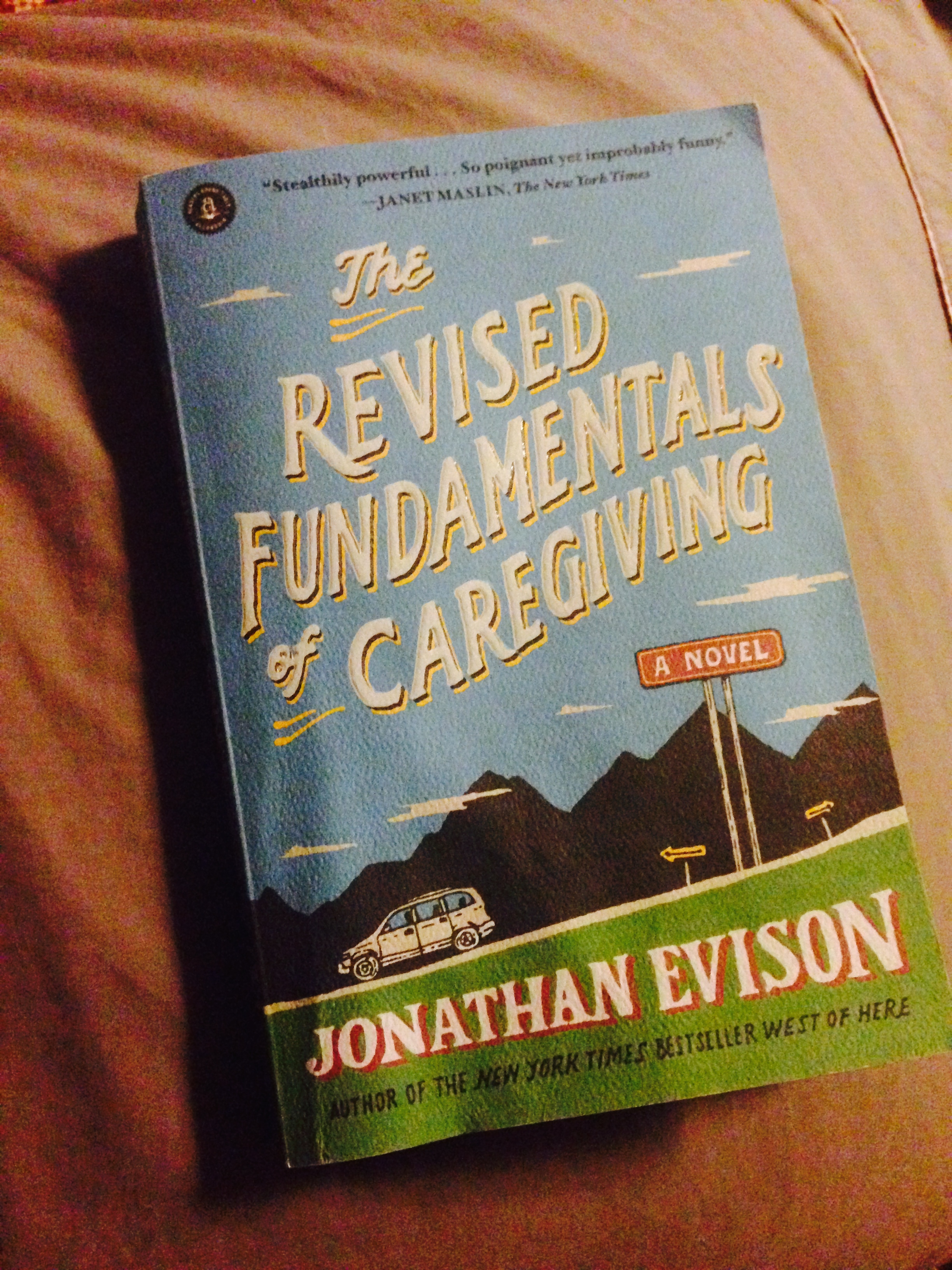
I may explore similarities and differences between these two books and the movie The Intouchables in a future blog post.
Have you ever thought what kind of movie your book might be compared to?
Twelve Years Later: Another view of the Colorado Gold
Next week will mark one year of blogging on this site. I started with the Rocky Mountain Fiction Writers’ Conference, which must have been a week or two later in September last year. I rated MY experience at this conference last week, and I do want people to note that I blamed no one for my lack of networking. I do think two things, other than my personality, didn’t help. First, I didn’t stay Friday night. Last year I was there on Thursday night, too, and I did meet two or three new women. I did see these women this year and talked to one of them a bit. I could have given her a card. In fact, I should have, but I never thought about it. The other woman, who is a Facebook friend, I barely said hello to and I don’t think she recognized me or something. The second problem was my perception of the hotel layout. There wasn’t a place to sit that made for easy mixing between sessions.
Here is another take on the same conference from one of my critique partners: http://cryptictown.wordpress.com/2014/09/13/happy-thirtieth-colorado-gold/
We met at that first conference and she joined our nascent critique group. I mentioned in another post that that group has been meeting for twelve years, and I guess this means we’re going on our 13th. Two other members of that group were also at the conference. One had attended many times before and many times before we connected. The other member was a first time attendee. Each of them reported a positive experience as well. When the first-timer gets around to posting his blog on the conference, I’ll link to that as well.

Part of the reason I don’t have time to write more this week.
Grading My Conference Experience
Posted by c2london in Friendship, Short Stories, Writing on September 8, 2014
I attended Colorado Gold, the 30th edition of the Rocky Mountain Fiction Writers’ conference this past weekend. Although I could get many other posts out of the conference, I’m going to start with grading my own experience.
Networking: (D- ) After the Crested Butte conference in June I had 500 business cards made. I handed out THREE. Although I chatted with a few people, I made no new contacts or even Facebook friends.
Hotel Location: (A ) Easily accessible from I-25 and N of the Denver metro area, which made the drive easy for those of us coming from the north. Not sure if people driving south felt the same way!

The hotel did have a spectacular view, although this is not it.
Hotel Reservations: (D- ) I never received a confirmation. When I called to check on this, I was assured by both the reservation service AND the hotel itself that I did NOT have a reservation. They offered to rebook me for $185 a night, seventy dollars over the conference rate! I made other plans. The only reason I’m not giving the hotel an F for this is they sent me a pre-arrival notice prior to the weekend so I was able to cancel the reservation I didn’t have before I was charged.
The Hotel Facilities: (C- to D) I’m not sure how a hotel in 2014 can get away without having Wifi in the conference rooms. Even worse, there was limited audio-visual ability. Most of the conference rooms were small. Many sessions held in those rooms required people to stand. Even after chairs were added, it was sometimes difficult to find a place to sit. The doors to the rooms opened at the front, making an early exit or late entrance noticeable and noisy.
Food: (C+) The rolls were good. Why there weren’t water pitchers on the table, I don’t know. The luncheon buffet tables were whisked away almost before everyone was served. The hotel restaurant had some interesting offerings, but my pinon-crusted French Toast featured nary a pinon.
Beverage Service: (B ) Four dollars for a club soda? Really? Last year I ordered club sodas and they gave them to me for free. Maybe it isn’t fair to compare last year’s hotel to this one. Water was offered in all sessions, which was fine, but again, the hotel last year gave us rootbeer floats for free! Okay, no more comparing. On the plus side, this hotel did supply real glasses for serving the water.
Speakers and Banquet: (B ) I suppose if you’ve been to a conference of almost any sort, you’ve sat through the messages and speeches and jokes. Unless you’re part of the inner group, they aren’t really of much interest.
The Running of the Conference: ( A) This is run totally by volunteers, and they do an exemplary job. There were a few glitches, some foreseeable, others possibly due to the layout of the hotel. Some might have been due to the unreasonable expectation that everyone was staying at the hotel and attending all functions. Most were minor, and if not self-correcting, easily explained by asking questions.
Other stuff (No grade): I overheard complaints about the lack of a rating sheet for each workshop. The conference chair did specify everyone would receive an email to a survey monkey in the next few days. This seems sufficient since it saves paper, many people don’t fill out surveys anyway, and the results will be easier to compile.
The Important Part: the Workshops
Probably your perception of the workshop offerings depends on how many conferences you’ve attended in the past, your level of writing experience, and your interests, as well as the ability of the presenters. I do know one person who said she was attending as much or more for the networking as for the workshops, but to me that is an expensive way to make contacts! I consider a conference a success if I come away with a new friend or contact, but the actual content of the conference is still of utmost importance.
The Friday morning add-on sessions didn’t interest me this year, either due to the subject matter or the presenter. There were small group critique sessions with agents and editors. Normally I might have availed myself of these. If I attended one of these, I would have wanted to have stayed overnight to make sure I didn’t get caught in rush hour traffic.That effectively would make the cost of the critique session more than $150 as I would have had to pay for the session, an extra night of lodging, dinner, and breakfast.
I was most looking forward to the Writing with Scrivener class. It was good, but I would have preferred to have spent all that extra money mentioned above in order to attend a longer session.
My other main objective during this conference was to acquire more social media knowledge. I was disappointed in the few offerings. A local writer commented that she felt there weren’t that many offerings, because most people already knew all they needed or weren’t interested. I attended Marketing for the Introverted Writer, which touched on social media, as well as the two dedicated classes, Websites and Social Media and How to Manage Your Author Social Media Platform in 30 Minutes a Day. Both classes offered a plethora of information on what to use. New, useful websites were mentioned and useful handouts provided. What I was looking for, and what I overheard many others say they needed, were the nuts and bolts of how to make these techniques work. This workshop was missing from the conference schedule. Again, I would have been willing to pay extra for an in-depth explanation. Another option would have been a series of free sessions on each of the various social media outlets. In truth, this might have been very difficult with the limited audio visual and lack of Internet connectivity.
Up until late Saturday afternoon, I would have said the conference wasn’t really worth the cost, but finally the session on science fiction got me excited and smiling. Although I still might not have thought I’d gotten my money’s worth if I’d gone home at that point, at least I would have been happy.
Unfortunately, Sunday morning had the most enticing classes. Why unfortunately? Because most of them overlapped. I could have attended any of three of the 8 am sessions, but two of my critique group members had stories in the RMFW’s anthology, Crossing Colfax. I had agreed to attend the panel discussion on the formation of the anthology, which was concurrent with the other three sessions of interest. I did enjoy the panel and hearing the impetus behind the accepted stories.
The speaker for the New Golden Age of Short Fiction, Thea Hutcheson, was a dynamic presenter. Her enthusiasm was contagious and her insights and ideas useful. Literary Pulp: What it takes to Write Literary Genre Fiction was my last session of the conference. It might not have completely filled the premise of that title, but the speaker, John Blair, was interesting and entertaining. He engaged the audience and we left on a positive note.
At the 2013 conference I met Najah Lightfoot. This year she was presenting. I planned to attend her session, Show and Tell: Magic and Magick Tools of the Trade. I wanted to be a supportive friend and also thought I might glean some interesting tidbits I could use in a story. Instead of that small expectation being met, I thought the first half of Najah’s session had to be one of the most interesting and best presentations of the conference. As I was also looking forward to the session mentioned above, I only attended half of the magic session, but that half was moving and wonderfully presented. I hope that I can someday listen to the rest of her session. Thank you, Najah.
If I were to actually grade the sessions, I would say the Sunday sessions brought up the average. Since they were last, the impression I was left with was of success. I’d have to give the overall conference an A. Okay, to be true to my curmudgeonly self, I’d give the overall sessions an A-.
Were you there? What did YOU think? What was your favorite session?
The Elephant and the Critique Group
 A national writers’ group I belong to periodically attempts to set up critique groups for those members who are interested. All or most of this is done online. Recently, I was given the names and emails of three other writers and we were on our own to get in touch and figure out how to construct an online group. This could have been an exercise in group dynamics or problem solving ability!
In short order we had the rudiments worked out, or at least partially worked out, for a trial run. We began with a ten page critique. I submitted first. The comments I received back were extremely helpful and insightful. Of course I did not agree with all of them, nor will I incorporate all of them, but overall, I was very pleased. What I wasn’t so pleased about was the apparent lack of interest in discussing/analyzing comments by the other members. There also appeared to be a restriction on the writer from asking questions.
This first short submission probably wasn’t something that would generate much controversy. The only comment I would have liked to analyze in-depth was one that would have generated a divide in the group. It is a topic that polarizes readers, as well as writers, and is mostly a matter of personal taste. Even though it is a debate I’d love to have, I was willing to ignore it for the sake of harmony. It also seemed like a topic to pursue once we knew each other better.
Because the others seemed to think that discussion would be detrimental to the group, I decided to poll the members of my in-person critique group, which has been meeting for twelve years. I asked what was the most valuable aspect of the critique process? Three of them responded. (The fourth was at work.) I stated that for me, the discussion is often the most helpful. Here is what each said:
1. I agree that discussion is valuable for helping to clarify points for the writer. I also find that receiving a variety of opinions is helpful, both for content and line edits. And suggestions that others have can be useful as well if they fit the writer’s vision of where the work needs to go.
2. Helping me see blind spots by editing/pointing out word choice; helping me with the logic of plot or character choices; helping me brainstorm endings; reminding me that writing is a valuable act to engage in; arguing over stuff.
3. Showing me when something I’m trying to do or convey isn’t coming across or working. Showing me weak or confusing spots in my story. Pointing out holes and logic problems.
When I explained that I thought some members of the online group were worried about arguments, #1 added, “It’s easy to manage if members are willing to just move on when it happens. Agree to disagree sort of thing. I think the benefits of discussion far out weigh the fear of an argument.”
#3 said she understood the point of not wanting to waste time and then added, “I can see how some writers would want comments from each reader and move on, mulling it all over later, rather than hear counter-comments.”
#2 said: Discussion is fun. Though not for the subject of, I suppose.
Yes, I very much value the line edits, and everything my partners above mentioned, but for me, listening to them debate points they might not agree about often gets to the crux of the issue. I know I have seen writers reach an epiphany when group members question them closely. Often this happens when a writer explains what they were trying to say or do, or why they said what they said. Then the group members say, “Oh? Now I get it, but why didn’t you tell us the baby elephant has been sitting on the coffee table the whole time?”
For those of you who have been in a critique group, either in person or online, what do you think are the most important aspects of your process? What rules do you have to govern how you approach a critique?
 Cuisine of Loneliness